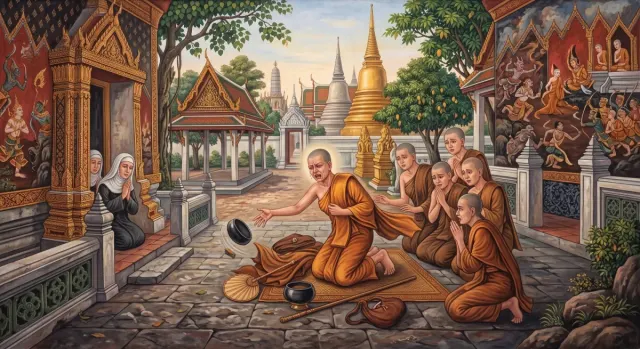
Bhikkhunī Vibhaṅga: Angry After Losing, Ready to Give Up Everything
Chandagāminiyo ca bhikkhuniyoThe nun Caṇḍakālī quarrels with other nuns and, in anger, declares that she renounces the Buddha, the Dhamma a…


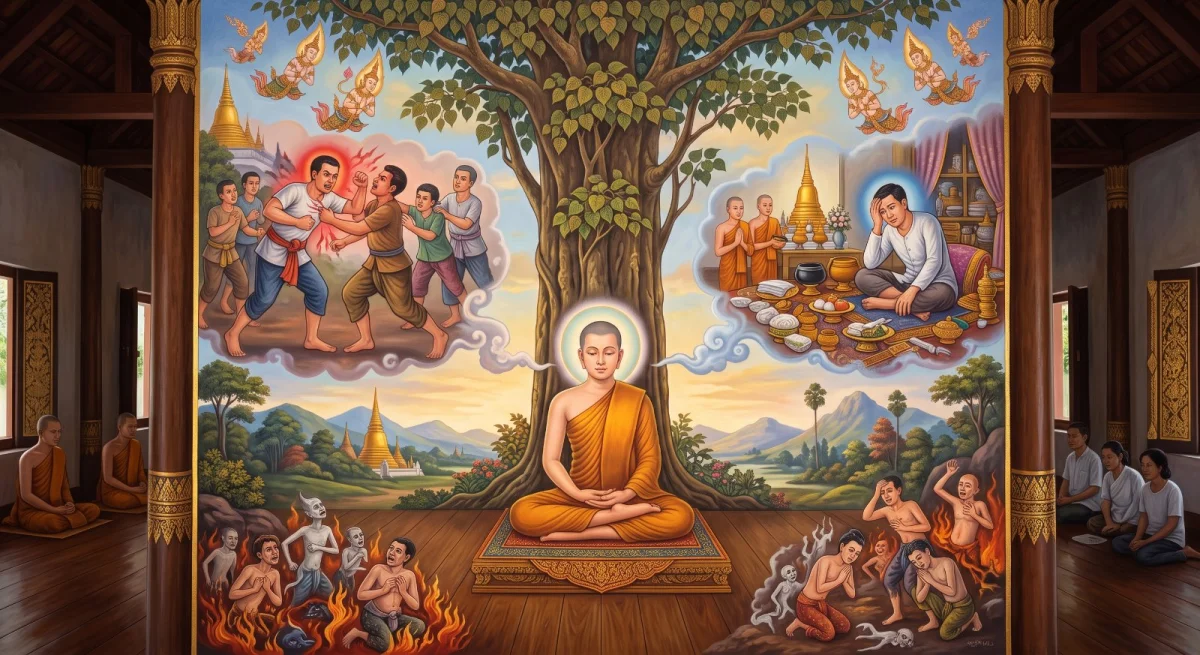
Tapanīyasuttaṃ
We burn with remorse later in two ways: over "the good I didn't do" and "the evil I did" — while one who has done good and not done evil is free of remorse on both counts.
The Itivuttaka is a collection in the Khuddaka Nikāya of short discourses opening with "This was said by the Blessed One" — what the Buddha said in this way. According to the commentary, these teachings were remembered by Khujjuttarā, a servant of Queen Sāmāvatī, who heard the Dhamma and passed it on.
In the first chapter of the Twos, two discourses form a pair. The discourse on what causes remorse names two things that bring torment: a person who has not done good, not done wholesome deeds, not made merit as a shelter from fear, but has done evil, cruel and harsh deeds, is tormented by the thought "I have not done good" and by the thought "I have done evil."
The discourse on what does not cause remorse says the reverse: one who has done good and not done evil is tormented by neither thought. The closing verses of both point to misconduct of body, speech and mind.
The Buddha says these two things cause torment: not having done good, and having done evil. Each is a source of burning regret from a different side.
When you feel uneasy about the past, sort out whether you regret something you "didn't do" or something you "did", because the remedies differ.
Some people have not done what is good and wholesome, and later are tormented by the thought "I have not done good." This remorse comes not from a wrong committed but from an opportunity let slip.
If there's someone you've long wanted to thank or apologise to, send a message today, before it becomes a good left undone.
Some people have done evil, cruel and harsh deeds, and later are tormented by the thought "I have done evil." This burning follows them even if no one else knows.
Before doing something you know isn't right, picture yourself a year from now, and ask how you'll feel looking back.
The discourse speaks of merit that serves as "a shelter against fear". One who has not made it has no refuge when fear arrives; one who has made it has this as a refuge.
Goodness built up little by little — honesty at work, care for your family — is what keeps the mind steady when life turns hard.
The discourse on what does not cause remorse says that one who has done what is good and wholesome and has not done evil is not tormented by the thought "I have done good", nor by the thought "I have not done evil."
Make hard decisions by asking which path you won't regret on either side — neither for not doing it nor for doing it.
The verse of the first discourse says that the unwise who commit misconduct of body, speech and mind and do no wholesome deeds are reborn in hell after death. The verse of the second says that the wise who abandon all three kinds of misconduct and do much good are reborn in heaven.
Review three areas before bed: did I do anything that hurt someone today, say anything I shouldn't have, or let a hostile thought linger?
The remorse these discourses describe is familiar to everyone. Sometimes it comes from what we did wrong, like hurtful words to family; sometimes from what we failed to do, like not visiting our parents while they were still alive.
The key point is that the discourses speak of remorse so that we choose a new path from today, not so that we drown in guilt. Useful guilt is the kind that pushes us to make amends and do more good.
If guilt weighs so heavily that you can't sleep, or you blame yourself constantly, talk to someone you trust or to a professional.
Tap to read the actual passage on the page cited.
The nun Caṇḍakālī quarrels with other nuns and, in anger, declares that she renounces the Buddha, the Dhamma a…

A rich man who shut his door to eat so beggars wouldn't see him, ghosts who amassed wealth for others to enjoy…

The Paṭisambhidāmagga sets out the patterns of kamma and its result in past, present and future: kamma whose r…
Generosity, virtue, renunciation, wisdom, energy, patience, truthfulness, determination, loving-kindness and e…