
The Udumbarikā Discourse: Strict Practice That Is Still Defiled
UdumbarikasuttaṃThe wanderer Nigrodha mocks the Buddha, who responds by inviting him to ask about the wanderer's own austeriti…


Sumedhātherīgāthā
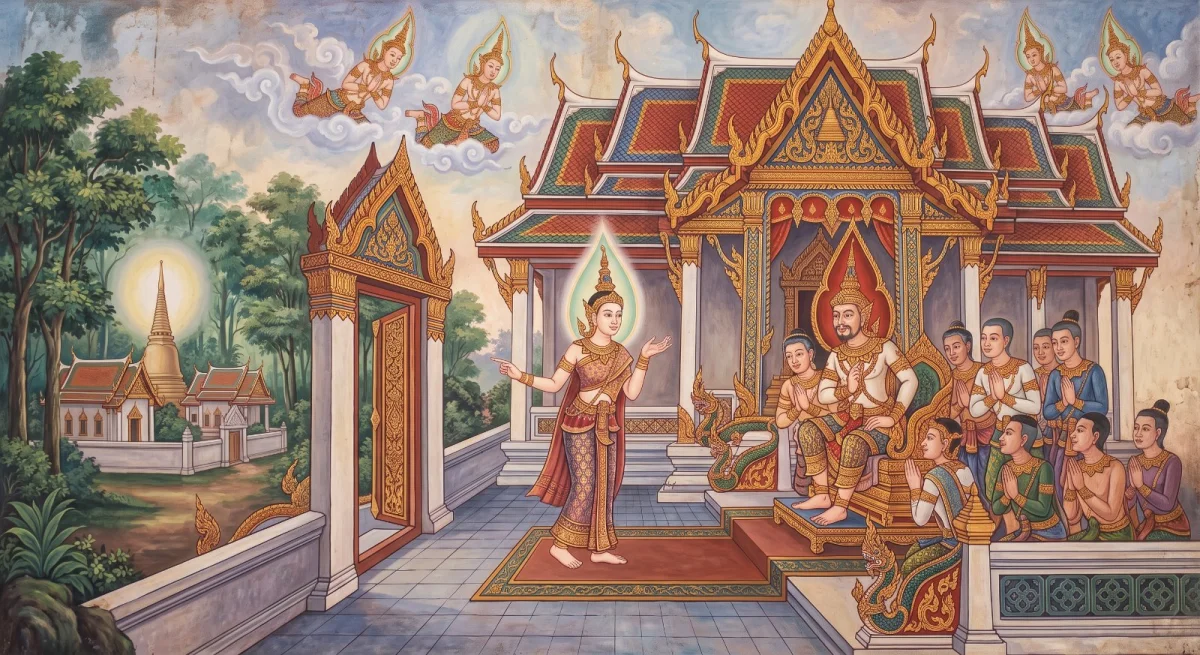
Princess Sumedhā was betrothed to a king but wished to go forth. She explained her reasons at length to her parents and her betrothed, cut off her hair to show her resolve, and in the end her betrothed himself asked her father to let her go forth.
The verses of Sumedhā Therī, in the Great Book (Mahānipāta) of the Therīgāthā, Khuddaka Nikāya — the longest set, closing the Therīgāthā — tell of Sumedhā, daughter of King Koñca of Mantāvatī. She was virtuous, well-spoken, learned and well trained in the teaching. She went to her parents, told them she delighted in nibbāna, and asked permission to go forth.
Her parents wept and said they had already given her to King Anikaratta of Vāraṇavatī; she would be his chief queen, with power, wealth and happiness. She answered with reasons about the impermanence of the body and of existence. When King Anikaratta arrived, she cut off her hair with a sword, closed the palace and developed the perception of impermanence.
The king pleaded, offering her his kingdom. She set out the dangers of sensual pleasures and the length of saṃsāra in detail, then threw her cut hair on the ground. King Anikaratta rose, joined his palms and asked her father to let her go forth. She went forth and attained the six higher knowledges and arahantship.
Sumedhā went to her parents and said: please listen to me; I delight in nibbāna, because existence, even divine, is not lasting. She asked permission to go forth openly, rather than slipping away.
When making a big decision that affects your family, start by asking for a proper time to talk, then say plainly what you want and why.
Her parents offered power, wealth and the position of chief queen, and said the holy life is hard. She didn't argue from emotion, but pointed out that existence has no core, the body is impermanent, and the aggregates, elements and sense bases are conditioned and rooted in birth, so they are no lasting refuge.
When someone opposes your decision, hear their concerns to the end, then answer point by point instead of raising your voice.
She told King Anikaratta that King Mandhātā, ruler of the four continents, died still unsatisfied with sensual pleasures. Even if it rained the seven treasures in all ten directions, there would be no satisfaction; people die still unfulfilled.
When you want something new, recall something you badly wanted a year ago, and whether getting it truly ended the wanting.
She gave many similes for sensual pleasures: like a burning grass torch that burns the hand of one who won't let go, like a dream, like borrowed goods. She warned not to be like a fish that swallows the hook and suffers later, and not to give up abundant happiness for a trifling pleasure.
Before accepting an offer that seems too good, ask what the hidden "hook" is and whether the later price is worth it.
She said: when my own head is on fire, what can others do for me? When ageing and death are pursuing, one should strive to be free of them. However much wealth others give, they can't solve this for us.
Distinguish which matters are "fire on your head" that you must deal with yourself now — health, relationships, training the mind — and don't postpone them.
She urged the king to recall the tears, mother's milk and blood of beings wandering on, more than the waters of the oceans; the heap of one person's bones in an aeon as high as Mount Vepulla; and that gaining a human birth is as rare as a blind turtle putting its head through a yoke floating in the ocean.
When you feel there's plenty of time, remember the blind turtle simile and use this life's chance for what truly matters.
Hearing King Anikaratta was coming, she cut off her jet-black hair with a sword, closed the palace and developed the perception of impermanence. After speaking the Dhamma she threw the cut hair on the ground. The king rose, joined his palms and asked her father to release her, since she would see liberation and the truths.
Words carry weight when matched by action. If you want those around you to believe you're serious, start doing the thing consistently.
She said the deathless nibbāna is free of ageing, death and sorrow; many noble ones have attained it; one who strives with wise means may attain it even today, but one who doesn't strive never will.
Don't wait until everything is ready before starting practice. Its fruit can begin the day you set to it the right way.
Sumedhā's story is an example of making a major life decision with steadiness and reason. She didn't run away from home or look down on her parents or betrothed. She asked again and again, explained her reasons fully, and showed her resolve until the others understood for themselves.
Today many people must choose a path their family didn't expect — a field of study, a career, a way of life. Sumedhā's lesson is to know clearly what you want and why, then communicate with respect and patience.
The verses' language on the body's foulness and the dangers of sensual pleasure is the intense language of someone set on renunciation. General readers needn't loathe the body or family life. What we can take is not letting comfort or others' expectations decide our life for us.
Tap to read the actual passage on the page cited.
The wanderer Nigrodha mocks the Buddha, who responds by inviting him to ask about the wanderer's own austeriti…

Apadānas of three women friends who built a monastery together, and of tens of thousands of elder nuns who rec…

Eight qualities of the great ocean the Buddha compared to his Dhamma and discipline — gradually deepening, nev…
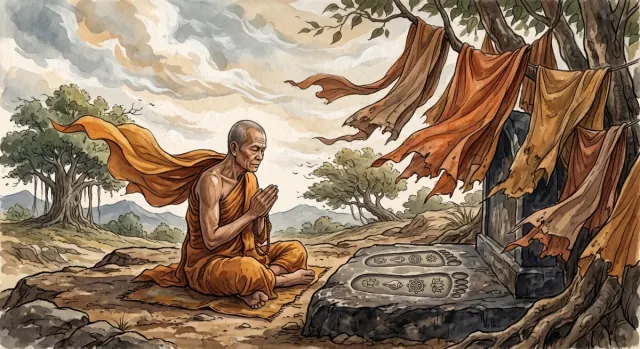
Apadānas of people who did not meet the Buddha face to face but saw only traces — a footprint in the earth, a …