

How to Handle Anger the Buddhist Way
Catch anger while it is still in the body, pause before you speak or act, cool the mind with patience and loving-kindness, repair things afterwards, and know when to ask for help.
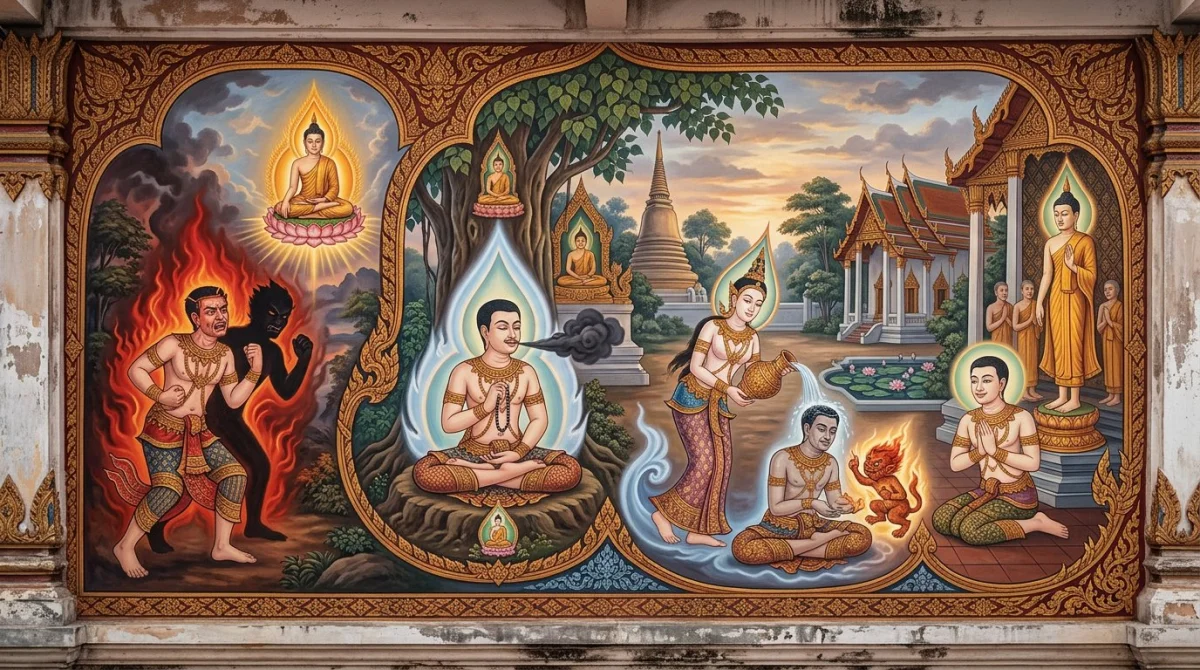
-
1
Notice the signs of anger in your body
Anger usually shows up in the body before we notice it: a hot face, a pounding heart, a clenched jaw or fists, fast breathing, a rising voice. When you see these signs, say silently to yourself, "anger is here." Knowing that you are angry is different from being carried away by anger. Anger (dosa) is a state of mind that arises in everyone, so there is no need to blame yourself; simply try to catch it a little earlier each time.
-
2
Pause and breathe slowly
As soon as you know you are angry, stop what you are doing. Breathe in long and breathe out long, feel your feet on the floor, and count about ten breaths. If you can, politely step away for a moment, for example: "Give me a minute, and then let's talk." Drink some water, wash your face, or walk slowly for a while. The body needs several minutes to settle down.
-
3
Don't speak, act or decide while angry
Words and actions in anger are often regretted later and cannot be taken back. While you are still angry, do not send messages, post on social media, make important decisions or drive. Make a rule for yourself: reply to whatever upset you only once you have calmed down, or wait until the next day. This protects both your precepts and your relationships.
-
4
See that anger harms you first
In the Kodhana Sutta (Aṅguttara Nikāya, Book of Sevens) the Buddha said that an angry person brings on himself what an enemy would wish for him: poor sleep, loss of benefit, loss of good name and loss of friends. The Akkosa Sutta gives a simile: when someone abuses us and we do not accept it, the abuse stays with the one who gave it, just as food a guest does not eat goes back to the host. Read more on the Dhamma principle page on the Ghatvā chapter ("having slain anger, one lives happily").
-
5
Practise patience without suppressing
Patience (khanti) is not bottling things up until they explode; it is letting the wave of emotion pass without acting on it. In the Kakacūpama Sutta, the Simile of the Saw (Majjhima Nikāya), the Buddha taught his disciples to keep the mind unshaken, speak no harsh words and abide with loving-kindness, free of inner hatred, even if bandits were to cut them limb from limb with a saw. This is the highest ideal; we train towards it through small things every day. As the Dhammapada says, "akkodhena jine kodhaṃ": conquer anger with non-anger.
-
6
Radiate loving-kindness to yourself and the other person
When the mind starts to cool, radiate loving-kindness (mettā) first to yourself and then to the person who made you angry, for example "sabbe sattā averā hontu": may all beings be free from enmity. The full text is on the chant page "Radiating loving-kindness". Remember that people who hurt others are often suffering themselves. Loving-kindness does not mean letting anyone harm you; you can still set boundaries calmly.
-
7
Repair things once you are calm
Once you are calm, if you said or did too much, apologise plainly without excuses. Talk about your own feelings ("I felt hurt when...") instead of blaming, and listen until the other person has finished. Forgiveness releases you too, but it can take time; there is no need to rush. Then look back at what set you off, such as tiredness, hunger or stress, and plan how you will handle it next time.
-
8
Seek help when anger becomes dangerous
If anger leads you to hurt someone, break things, have thoughts of harming yourself or others, or lose control often, asking for help is nothing to be ashamed of. Talk to someone you trust, see a doctor or psychologist, or call Thailand's mental-health hotline 1323 — if you are outside Thailand, contact a local helpline or emergency service. If anyone is in immediate danger, leave the situation and call emergency services straight away.