
Paritta (protective chants)
Jayamaṅgala Gāthā — the eight victories of the Buddha
JayamaṅgalagāthāEight verses recalling eight occasions when the Buddha overcame something formidable without violence, each cl…


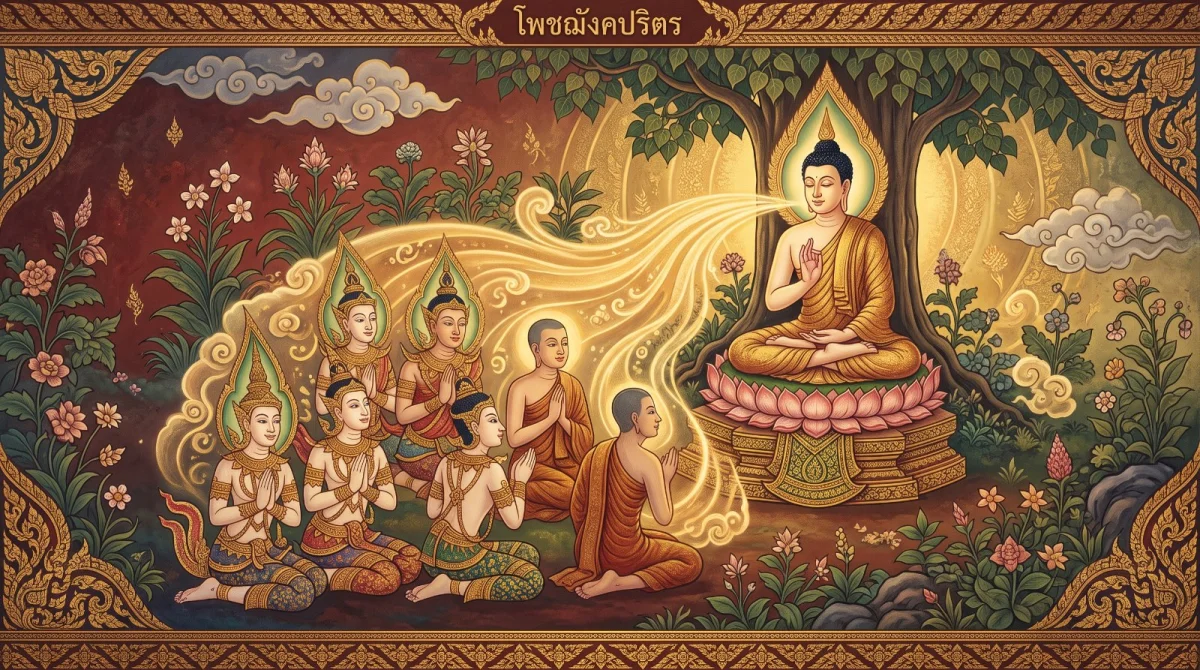
Bojjhaṅgaparittaṃ
A chant that recites the seven factors of awakening. It is chanted at the bedside of the sick, following the Gilāna Suttas in which disciples heard the factors and rose from their illness.
Commonly chanted at the bedside of someone who is ill, at home or in hospital, and also chanted for oneself when unwell or when the mind is too low to find its footing.
When chanting for a sick person, go slowly, keep your voice soft, and keep it short. Many patients tire quickly; if they want to rest, stop.
It helps to explain the meaning briefly afterwards rather than only chanting, because the content is seven qualities of mind that can still be trained while ill.
In the Bojjhaṅga Saṃyutta, volume 19, three Gilāna Suttas stand together. Venerable Mahākassapa was gravely ill; the Buddha visited him and spoke of the seven factors of awakening. He was gladdened, and he rose from that illness. The next sutta tells the same of Venerable Mahāmoggallāna, and a third tells of the Buddha himself being ill and asking Venerable Mahācunda to recite the factors for him.
The seven are mindfulness, investigation of states, energy, joy, tranquillity, concentration and equanimity. They are qualities of mind that can be developed. The suttas do not say that chanting cures disease; they describe what became possible once the listener's mind regained its strength. Illness is not anyone's fault and not something anyone deserves. Chanting this at a bedside is a way of keeping someone company and giving their mind somewhere to rest — it does not replace their doctor.
In ordinary chanting books, the Bojjhaṅga Paritta is a set of later Pali verses beginning bojjhaṅgo satisaṅkhāto, which are not in the Tipiṭaka. This page uses the words of the Gilāna Sutta itself instead, taken from the Pali Tipiṭaka in this site's database, volume 19, with the names of the seven factors written out where the printed text abbreviates them.
Click to read the actual page it refers to
Eight verses recalling eight occasions when the Buddha overcame something formidable without violence, each cl…

Homage to the seven Buddhas, an extract from the Āṭānāṭiya Sutta, commonly chanted to close the set of seven p…

The closing verses of a ceremony: goodwill to all beings, an invitation to the devas to rejoice in the merit, …
A short chant for after a bad dream or an unsettling sign, asking that the unease dissolve through the power o…