The Debate on 'Everything Exists': Do the Past and Future Still Exist?
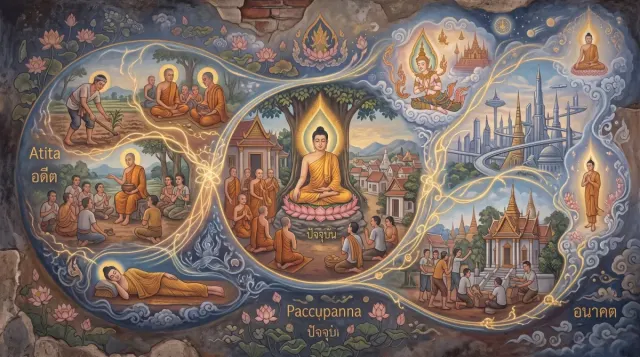
SabbamatthītikathāOne side holds that everything exists, including the past that has ceased and the future not yet arisen. The T…


Ākaṅkheyyasuttaṃ
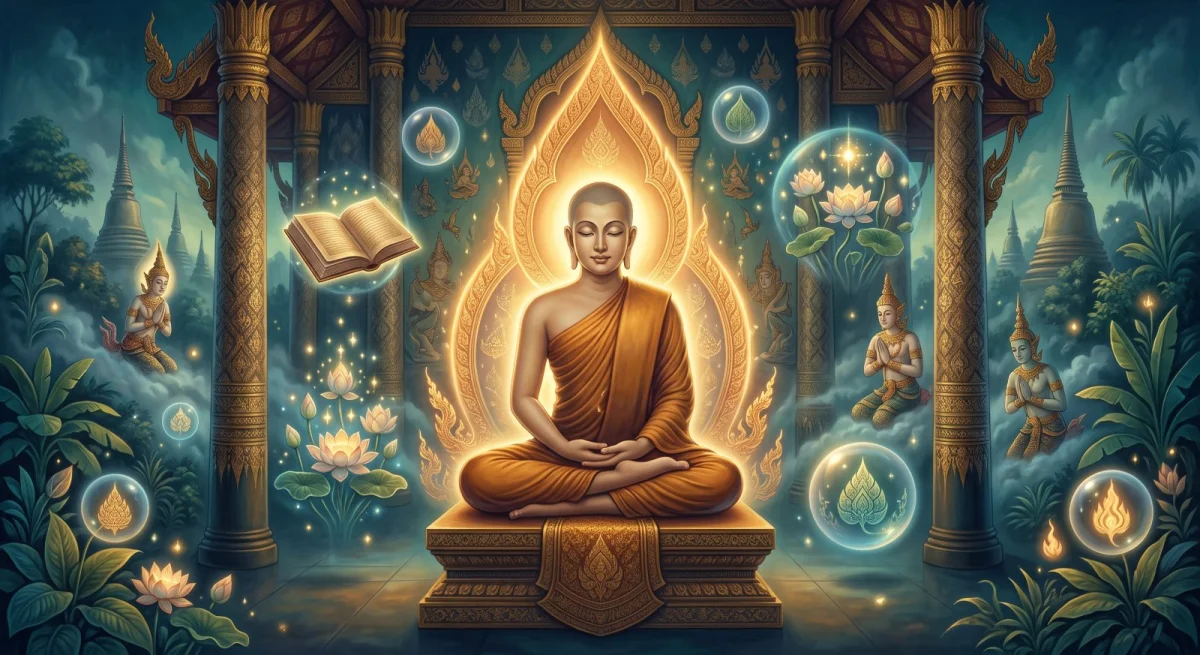
The Buddha sets out seventeen things a monk might wish for, from being dear to his companions, receiving requisites and overcoming fear, up to the destruction of the taints — and every one has the same answer: fulfil virtue, cultivate inner calm, don't neglect jhāna, possess insight, and frequent empty places.
In the Ākaṅkheyya Sutta of the Majjhima Nikāya, the Buddha tells the monks to dwell possessed of virtue, possessed of the Pātimokkha, restrained by the Pātimokkha restraint, perfect in conduct and resort, seeing fear in the slightest fault, and training in the training rules.
He then lists seventeen things a monk might wish for. Each begins, "If a monk should wish..." and ends with the same answer: let him fulfil the precepts, be devoted to internal serenity of mind, not neglect jhāna, be possessed of insight, and frequent empty places, that is, dwell in seclusion.
At the end he says that it was on account of all these benefits that he first taught the monks to be possessed of virtue.
The Buddha begins by having monks be complete in virtue, restrained by the Pātimokkha, perfect in conduct and resort, seeing fear in the slightest fault, and training earnestly in the training rules.
Watch out for the small wrongs you tend to let slide, such as lying for convenience. These small things are the first cracks in trust.
Every wish has the same five-part answer: fulfil the precepts, be devoted to internal serenity of mind, don't neglect jhāna, be possessed of insight, and frequent empty places.
When life feels stuck in several ways at once, look back at these five foundations before seeking quick fixes, and see which has slackened.
The first wish is to be dear and agreeable to one's companions in the holy life, respected and esteemed by them. The Buddha doesn't teach ways to please people, but points back to virtue and meditation.
If you want to be trusted by your team or family, invest in your own integrity and calm rather than trying to please everyone.
A monk might wish to obtain robes, almsfood, lodging and medicine; that the offerings of those who support him bear great fruit; and that when departed relatives remember him with a confident mind, this bears great fruit. All of these too depend on the monk's own virtue and meditation.
If you want the help you've received to be worthwhile for the giver, use it to keep doing good, such as making the most of a scholarship.
A monk might wish to overcome discontent and delight, so that discontent does not overcome him; and to overcome fear and dread, so that fear does not overcome him. Both rest on the same foundation.
Boredom and fear often lessen when life has a stable structure: waking at a regular time, short meditation, and doing nothing you need to hide.
A monk might wish to obtain at will, without trouble or difficulty, the four jhānas that are a pleasant abiding here and now, and to touch with the body the peaceful liberations that transcend form.
Concentration doesn't start on the cushion but in a life without unfinished business on the mind. If you sit and your mind races, look at whether you did something that day that left the mind unsettled.
A monk might wish to be a stream-enterer through the destruction of three fetters; a once-returner through the destruction of three fetters and the weakening of lust, hatred and delusion; or a non-returner through the destruction of the five lower fetters. All rest on the same foundation.
High spiritual goals aren't separate from daily life. The precepts you keep today are part of that same path.
The final wishes are to wield the various supernormal powers, hear with the divine ear, know the minds of others, recollect past lives, see beings passing away and reappearing according to their kamma, and finally to realise here and now the taintless liberation of mind and liberation by wisdom. Even the highest is answered with the same words.
Don't be taken in by promises of shortcuts to special experiences. This discourse insists there is no shortcut that bypasses virtue and meditation.
The structure of this discourse offers a lesson for everyone. Whatever we want — affection from those around us, security of livelihood, or an unshakeable mind — the answer doesn't lie in a technique for each issue, but in the same root: good conduct, a calm mind and seeing things as they are.
The discourse is addressed to monks, and some items, such as jhāna, the higher knowledges or recollecting past lives, belong to advanced practice. They should not become goals pursued for powers or special experiences. Lay people can apply the principle at the level of the five precepts, meditation, and finding time for quiet solitude.
It is worth noticing that the first wish is nothing lofty, but to be loved and respected by one's companions. Trust among people also begins with virtue.
Tap to read the actual passage on the page cited.
One side holds that everything exists, including the past that has ceased and the future not yet arisen. The T…

Departed relatives wait outside the walls and at crossroads. Weeping does not help them, but a gift given to t…

"Abandon one thing and I guarantee you non-return" — short discourses at the start of the Itivuttaka that poin…

The Buddha's answer for working people with families — work hard, protect what you earn, keep good friends, li…