
Bridges, Paths and Steps: Apadānas of Those Who Made a Way for Others
Setudānassidaṃ phalaṃApadānas of people who offered no ornament at all, but built a bridge, levelled a path, made steps up to a shr…


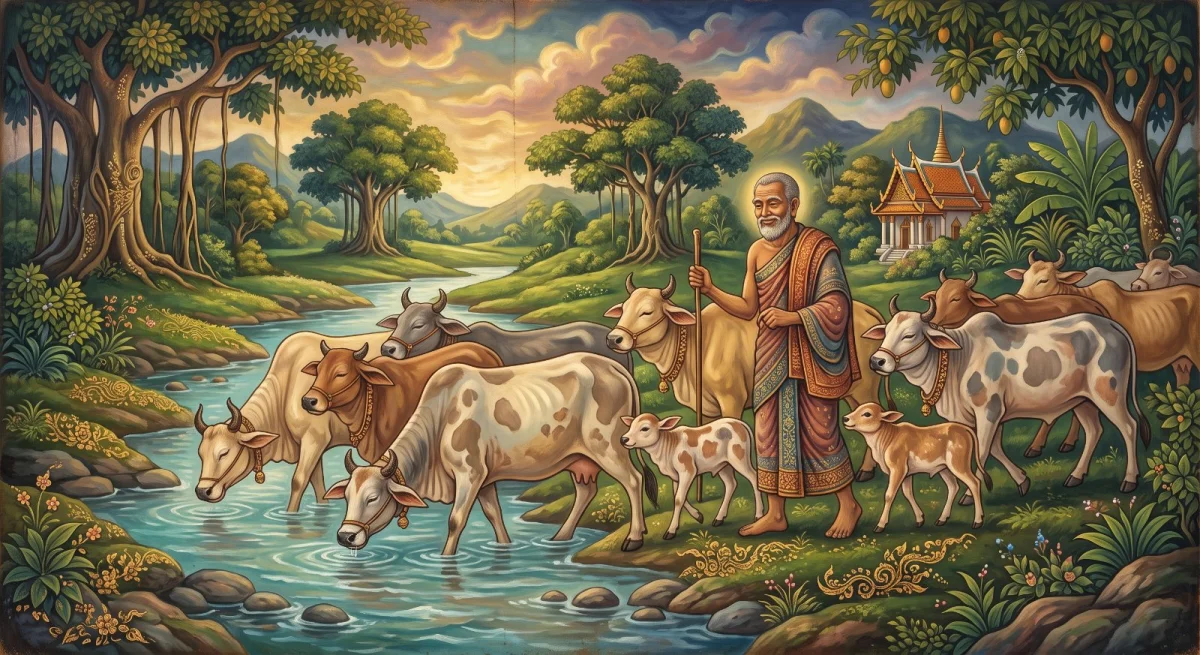
Gopālakasuttaṃ
A cowherd who doesn't know his cattle, doesn't pick out flies' eggs, doesn't dress wounds, doesn't know the ford and milks the cows dry can't make a herd thrive — nor can a monk. Eleven factors for growth in the teaching, from dispelling unwholesome thoughts and guarding the senses to consulting the learned and knowing moderation in accepting.
In the Gopālaka Sutta of the Aṅguttara Nikāya, Book of the Elevens, the Buddha says a cowherd with eleven factors can't maintain and expand a herd: he doesn't know form, is unskilled in characteristics, doesn't pick out flies' eggs, doesn't dress wounds, doesn't make smoke, doesn't know the ford, doesn't know whether the cattle have drunk, doesn't know the trail, is unskilled in pastures, milks them dry, and doesn't give special honour to the bulls who are fathers and leaders of the herd.
A monk with the eleven corresponding qualities can't achieve growth in this teaching and training. The Buddha then explains what each of the cowherd's factors means in practice, and states the opposite: one who has all the factors can grow.
The discourse is addressed to monks, so the points about accepting requisites and honouring senior monks belong to the monastic setting. The same content also appears in the Mahāgopālaka Sutta of the Majjhima Nikāya.
A cowherd must know his cattle. A monk knows form by understanding as it really is that all form is the four great elements and form derived from them.
Observe your body as it is — its hardness, warmth and movement — without adding liking or disliking.
A monk is skilled in characteristics when he understands as it really is that a fool is characterised by deeds, and an astute person is characterised by deeds.
Judge people by what they repeatedly do, not by their words, position or image.
A monk doesn't tolerate an arisen thought of sensual desire, ill will or cruelty, or any bad unwholesome quality; he gives it up, gets rid of it, eliminates it and obliterates it.
When you notice you are nursing a grudge or wishing someone harm, stop right there. Don't let the thought grow into a plan.
Seeing a sight with the eye, hearing a sound with the ear, and so on up to knowing a thought with the mind, a monk doesn't get caught up in the features and details. He practises restraint of the faculty which, if left unrestrained, would let covetousness and displeasure flow in.
Know your own weak spots — say, shopping apps or news that makes you angry — and close off that entrance.
A monk teaches others in detail the Dhamma he has heard and learned.
Share the good things you have learned in a simple way. Explaining to others also makes your own understanding clearer.
From time to time a monk goes to monks who are learned, versed in the scriptures, who remember the Dhamma, the Vinaya and the outlines, and asks them: what does this teaching mean? They reveal what was unclear and dispel his doubts.
Find someone who truly knows the subject you are studying and consult them regularly. Don't study alone until you lose your way.
When the teaching and training proclaimed by the Tathāgata is being taught, a monk finds inspiration in the meaning and in the Dhamma, and finds joy connected with the Dhamma.
After hearing or reading the Dhamma, ask yourself what one thing you actually took away, rather than letting it pass by.
A monk understands the noble eightfold path as it really is.
When life offers many options, use the eightfold path as a compass: does this choice fit right view, right speech and right livelihood?
A monk understands the four foundations of mindfulness as they really are, corresponding to the cowherd knowing where his cattle can graze.
Give the mind a good place to dwell, such as returning to the breath or to sensations in the body, instead of letting it graze on things that inflame it.
The one who milks dry is a monk who, when faithful householders invite him to take as much robe-cloth, almsfood, lodging and medicine as he likes, doesn't know moderation in accepting. The good monk knows moderation.
When someone offers help, accept only what you really need, so their goodwill still has something left and the relationship lasts.
The cowherd gives special honour to the bulls who father and lead the herd. A monk, both in public and in private, consistently treats senior monks — of long standing, long gone forth, fathers and leaders of the Saṅgha — with kindness by body, speech and mind.
Honour the elders who laid the foundations before you, in deed, word and thought, even when they can't see it.
The cowherd simile suits anyone who has to "tend something so that it grows", whether training the mind, studying or working. A good cowherd doesn't do anything grand; he attends to small details every day — dressing wounds, picking out flies' eggs, knowing whether the cattle have had water.
Several points translate straight into modern habits. A malicious thought left to linger is like flies' eggs in a wound, which can spread. Not knowing moderation in accepting help is like milking a cow until she has nothing left; the relationship won't last long.
The first point, knowing form as it really is, is a matter of deeper contemplation. Ordinary people might start by getting to know their own bodies as changing according to conditions.
Tap to read the actual passage on the page cited.
Apadānas of people who offered no ornament at all, but built a bridge, levelled a path, made steps up to a shr…
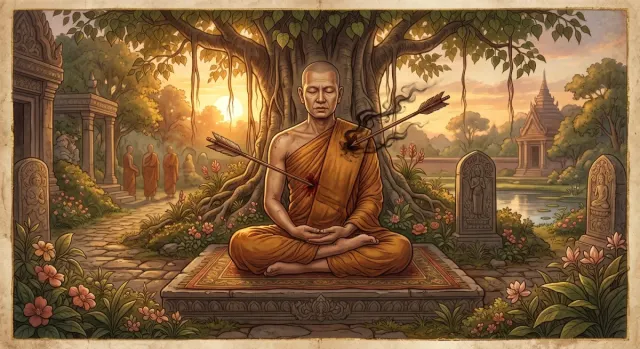
Physical pain cannot be avoided; the mental pain we add to it can. A simile that is usable every single day.

Dark kamma, bright kamma, kamma both dark and bright, and kamma neither dark nor bright that leads to the endi…

King Vessavaṇa tells the Buddha that many spirits dislike his teaching on the precepts, and offers a protectiv…