
Dhammasaṅgaṇī: The Mātikā, Matrix of the Abhidhamma
Kusalā dhammā akusalā dhammā abyākatā dhammāThe Dhammasaṅgaṇī opens with the mātikā, a list of 22 triads and 142 dyads for classifying phenomena — such as…


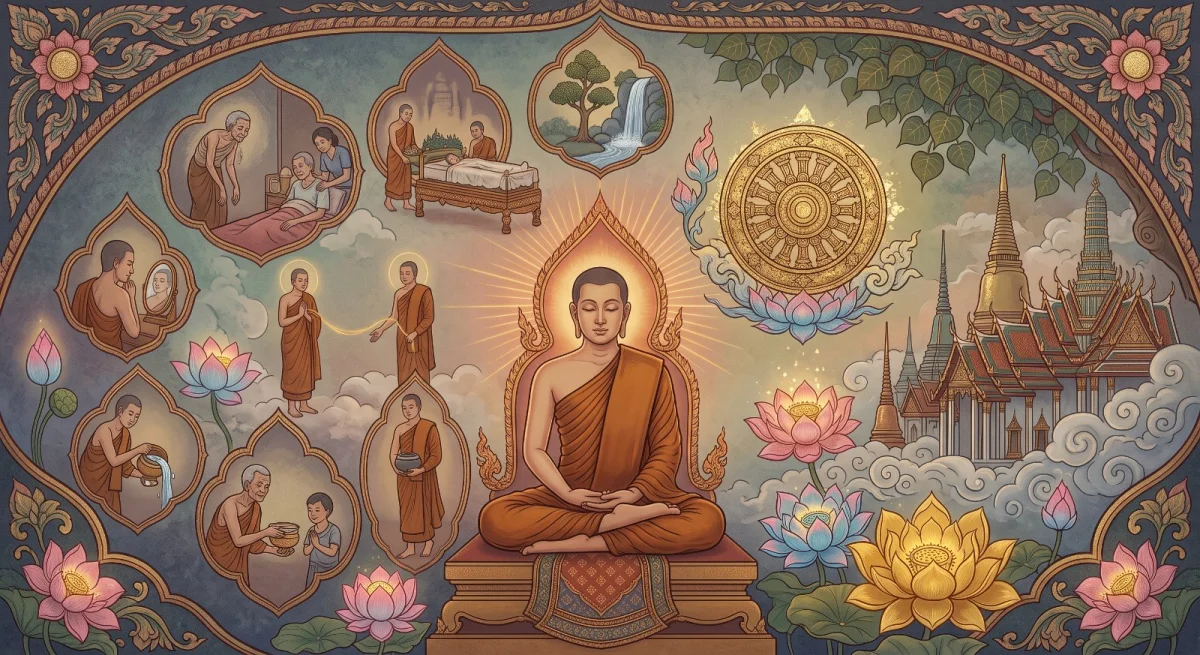
Dasayime bhikkhave dhammā pabbajitena abhiṇhaṃ paccavekkhitabbā
Ten things one who has gone forth should reflect on often: that I am no longer like a householder, that my life depends on others, whether my conduct is blameworthy, what I am doing as the days and nights pass, and whether I have attained something I won't be embarrassed about when asked later.
In this discourse of the Aṅguttara Nikāya, Book of the Tens, the Buddha says there are ten things one who has gone forth should reflect on often. They are short questions and reminders covering one's status, livelihood, deportment, virtue, separation, kamma, use of time, delight in solitude, and the fruit of practice.
Points six and seven match the subjects for frequent reflection taught to people in general elsewhere, but the other eight belong specifically to those who have gone forth.
The discourse is addressed to monastics, but many points can be applied to lay life by changing the question from "how should a renunciant be?" to "how should someone who means to live by principles be?"
One who has gone forth should often reflect that they have entered a state different from that of a householder.
When you take on a new role — parent, manager or teacher — remember that it calls for a manner different from before.
One who has gone forth should often reflect that their life is bound up with the others who supply their requisites.
Think of the people who make your income and your living possible, and work in a way that honours their trust.
One who has gone forth should often reflect that there is a different deportment they should adopt, not the old ways they were used to.
At work or in a role people look up to, review whether your manner, tone and dress suit the duty.
One who has gone forth should often ask: looking at my own conduct, is there anything I myself could fault?
Ask yourself in the evening whether you did anything today that still doesn't sit well when you look back on it.
One who has gone forth should often ask: would sensible companions in the spiritual life, after examining me, fault me on grounds of virtue?
The question isn't whether someone will gossip about you, but whether a reasonable person who knows all the facts would find that you acted rightly.
One who has gone forth should often reflect that they will be separated and parted from everything dear and pleasing.
Apply it to the people you love today: speak kindly while you are still together, rather than waiting until the chance is gone.
One who has gone forth should often reflect: I am the owner of my deeds and heir to my deeds, born of my deeds, related to my deeds, with my deeds as my refuge. Whatever I do, good or bad, I will receive its result.
When urged to do something wrong because "everyone does it", remember that the results fall on you, not on whoever urged you.
One who has gone forth should often ask: the days and nights pass by — what am I doing now? The Pali literally asks: what kind of person am I as my days and nights pass?
Make it a question to review before sleep: what did I spend today on, and is it taking me where I want to go?
One who has gone forth should often ask: do I delight in an empty dwelling, in seclusion?
Try sitting quietly without a screen for fifteen minutes and see whether it feels comfortable or unbearable.
One who has gone forth should often ask: have I attained a superhuman state, a distinction in knowledge and vision worthy of the noble ones, so that I won't be embarrassed when my companions in the spiritual life ask me later?
Ask yourself: if someone asked next year how you had grown inwardly, would you have a truthful answer?
The strength of this discourse is that it consists of questions to ask yourself, not rules for checking others. Each point invites you to pause now and then and see where you stand in life.
For working people, "my livelihood depends on others" applies directly. Your salary comes from customers, taxpayers or people who trust you, and recalling this helps you work responsibly. "The days and nights pass — what am I doing now?" makes a good question to review at the end of each day.
The last point, about superhuman attainment, belongs directly to those practising for liberation. Lay people might read it broadly: if someone asked how you had grown inwardly over the past few years, could you answer without embarrassment?
Tap to read the actual passage on the page cited.
The Dhammasaṅgaṇī opens with the mātikā, a list of 22 triads and 142 dyads for classifying phenomena — such as…
One side holds that all things are foundations of mindfulness, since mindfulness can be established on anythin…

A Rājagaha merchant hung a sandalwood bowl atop a tall bamboo pole and challenged any arahant with psychic pow…
Once the questions about the meaning of words are finished, the chapter asks whether, when one aggregate arise…