
The Divine Food Jātaka: The Miser Who Learned to Share
SudhābhojanajātakaṃThe miserly Kosiya claims his rice is too little to share. Sakka and other gods come asking and teach that a l…


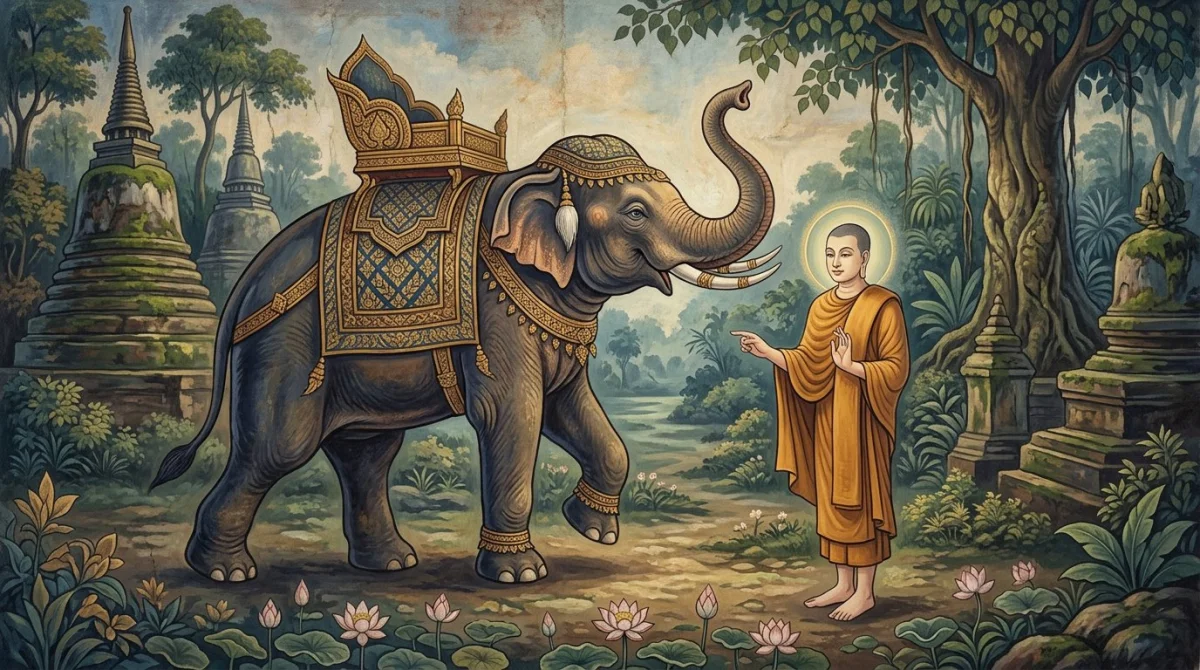
Sotā ca hoti hantā ca rakkhitā ca khantā ca gantā ca
A good royal elephant listens, destroys the enemy, guards itself, endures and goes swiftly. One in training likewise listens to the Dhamma, abandons bad thoughts, restrains the senses, endures, and heads for where they have never been.
In the Sotar Sutta of the Rāja Vagga of the Pañcaka Nipāta of the Aṅguttara Nikāya, the Buddha says that a king's elephant with five factors is fit to be a royal mount: it listens, it can kill, it can guard, it can endure and it can go. He compares this with a monk who has the same five qualities and is therefore worthy of offerings, an incomparable field of merit for the world.
In the same chapter is the Akkhama Sutta, which compares an elephant that cannot endure the sights, sounds, smells, hunger and arrows of the battlefield with a monk who cannot endure enticing sights, sounds, smells, tastes and touches, and so cannot compose his mind.
The war elephant was an image people of that time knew well. What the discourse really says to "kill" is unwholesome thought in the mind, not anyone.
A good elephant pays attention to whatever task the trainer sets, whether done before or not. A good monk likewise pays attention, applies his mind, gathers his whole heart and lends an ear when the Dhamma and discipline are being taught.
When someone is teaching or advising you, put your phone down, look at the speaker, and listen to the end before forming a rebuttal.
The war elephant destroys the enemy's elephants, horses, chariots and foot soldiers. The monk does not tolerate an arisen thought of sensual desire, ill will or harming; he gives it up, dispels it, eliminates it and makes it cease.
When you catch yourself replaying a grudge against someone, don't let it keep looping; switch to something else or come back to the breath.
The war elephant protects its forequarters, hindquarters, feet, head, ears, tusks, trunk, tail and rider. The monk guards the eye, ear, nose, tongue, body and mind, not grasping at what he sees in a way that lets desire and aversion overwhelm him.
Choose what you watch and listen to each day — for example, turn off notifications that push you to buy or to get angry — as a way of guarding your weak points.
The war elephant endures spears, arrows and the din of war drums. The monk endures cold, heat, hunger, thirst, flies and mosquitoes, wind and sun, creeping things, harsh words, and intense bodily pain.
Train patience with small things, such as waiting in a queue without irritation, or hearing criticism without firing back at once.
The war elephant goes quickly in whatever direction the trainer sends it, whether it has been there before or not. The monk goes quickly to the place never reached in all this long time: nibbāna, the stilling of all formations and the ending of craving.
Make your life's aim clear, and once you know what is right to do, act on it without putting it off until the chance has passed.
In the Akkhama Sutta, an elephant that stops and trembles on seeing enemy troops, hearing war drums, smelling larger elephants, going a few nights without food or being struck by a few arrows is useless in battle. So is a monk who is aroused by enticing sights or sounds and cannot compose his mind. One who is not aroused can compose it.
If your focus breaks every time something interesting passes by, arrange your surroundings before important work, then gradually train the mind to return more quickly.
This discourse reads like a list of the qualities of someone well trained, whether an athlete, a professional or a practitioner: they know how to listen, can manage their own thoughts, are careful about what they take in, endure discomfort and know where they are heading.
The point on endurance is very broad — heat and cold, hunger, mosquito bites, cutting words and bodily pain. People who practise patience with small things every day don't collapse easily when big things come.
Endurance here doesn't mean ignoring illness without treatment or staying where you are being harmed. It means a mind that isn't shaken by whatever strikes it.
Tap to read the actual passage on the page cited.
The miserly Kosiya claims his rice is too little to share. Sakka and other gods come asking and teach that a l…

A rich man who shut his door to eat so beggars wouldn't see him, ghosts who amassed wealth for others to enjoy…

The headman Pāṭaliya tells how four teachers with utterly opposed views stayed in his rest house, leaving him …

Departed relatives wait outside the walls and at crossroads. Weeping does not help them, but a gift given to t…