
Puṇṇikā Therī: Evil Can't Be Washed Away by Water
PuṇaṇikātherīgāthāA water-carrier asks a brahmin who bathes in cold water every day to wash away evil: if water could do that, f…


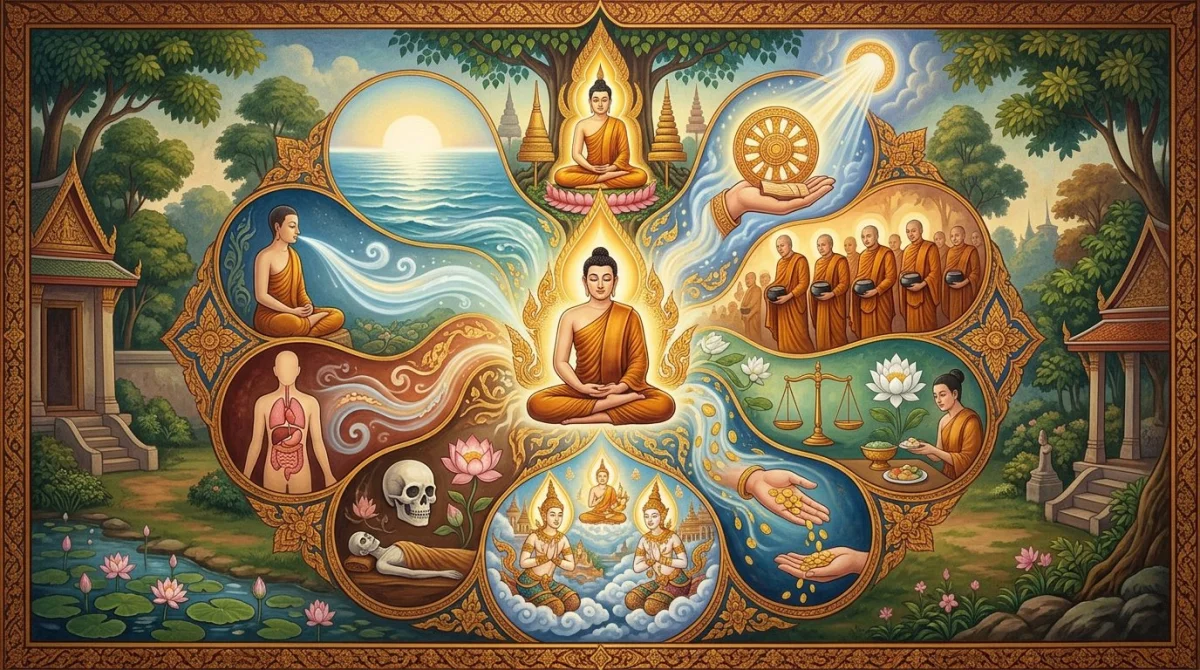
Dasa anussatiyo
Ten things to recollect when the mind needs something to hold — pick the one that matches the state you are in.
The recollections are ten things worth calling to mind often. The Buddha said that each of them, developed and made much of, leads to disenchantment, dispassion and Nibbāna.
Their immediate use is as a resting place for the mind. When the mind has nothing to hold and drifts into agitation or fear, having something you can recollect at once brings it back faster than trying to forbid thinking.
Calling to mind his qualities: his wisdom, his purity, and his great compassion.
Use it when afraid or discouraged. Recalling that someone completed this path gives the mind something to stand on.
Calling to mind that the teaching is visible here and now, timeless, inviting inspection, to be known by each for themselves.
Use it when confused about what to believe. Returning to what can be checked yourself cuts hesitation fastest.
Calling to mind that those who practise well genuinely exist, in the past and in the present.
Use it when doing the right thing feels lonely. Recalling that others walk the same road helps more than expected.
Calling to mind the precepts you have kept well — unbroken and unblemished — which both reassures and encourages.
Use it before sleep: review whether virtue held today. The ease you feel is the tangible reward of keeping it.
Calling to mind the giving and letting go you have done, training the mind to be familiar with release rather than accumulation.
Use it when feeling stingy or worthless. Recalling what you have given to others refills the mind quickly.
Recalling that devas came to be through faith, virtue, learning, generosity and wisdom — then checking whether those same qualities are present in you.
Use it as a five-point self-check, and top up whichever is lowest this month.
Recalling that death is certain and the time remaining is not. This is the recollection that cuts heedlessness most directly.
Use it in the morning to order the day: if little time were left, what should be done first?
Considering the body by way of its parts as they actually are, to loosen infatuation and clinging to form.
Use it when physical craving is strong. Consider the body as it is for a while and the intensity subsides on its own.
Using the breath as the place of mindfulness — the recollection available at any time and place, because the breath is always with us.
Use it immediately under stress: three slow, conscious breaths before saying or doing anything further.
Calling to mind the quality of the peace that is Nibbāna, which sets the destination clearly before the mind.
Use it when life feels directionless: recall a moment when the mind wanted nothing at all, and walk back towards that.
Match the remedy to the state — fear, recollect the Triple Gem; preoccupation with others, recollect your own virtue; stinginess, recollect your giving; heedlessness, recollect death; stress, return to the breath.
You don't need all ten. Keep two or three that suit you and use them until they come to mind instantly when they are actually needed.
Tap to read the actual passage on the page cited.
A water-carrier asks a brahmin who bathes in cold water every day to wash away evil: if water could do that, f…

An ordinary horse wants the place and food of a thoroughbred, but people see its crookedness. A mendicant who …
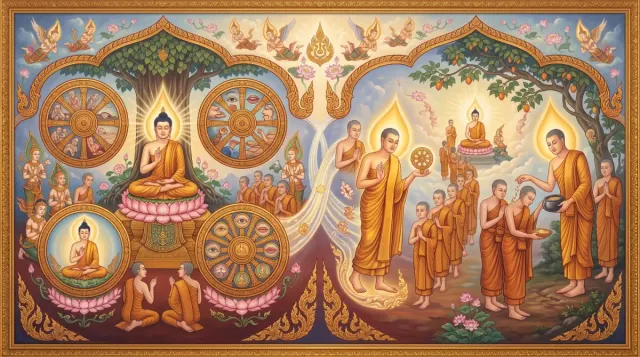
The Buddha advises the monks to associate with Sāriputta and Moggallāna — one like a mother who gives birth, t…

Visākhā asked to give the Saṅgha eight things for life: rains bathing cloths, food for arriving monks, departi…