
The Great Assembly: A Gathering in the Great Wood
MahāsamayasuttaṃDevas from the ten world-systems gather to see the Buddha and five hundred arahants in the Great Wood. Devas o…


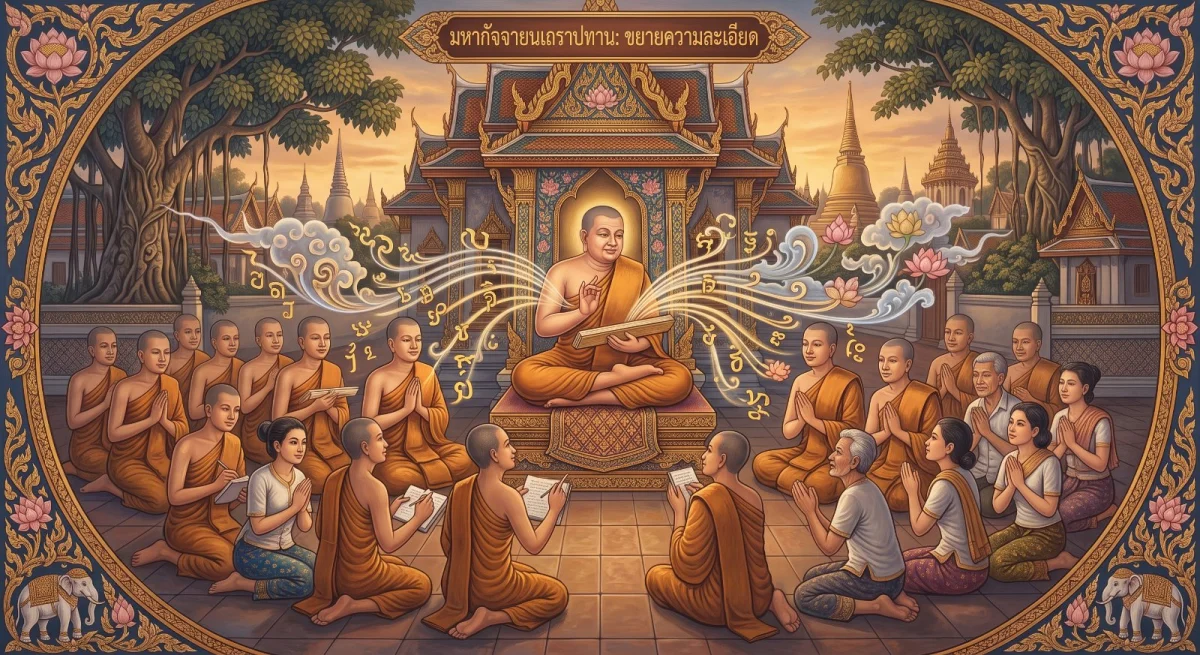
Mahākaccāyanattherāpadānaṃ
The past lives of Venerable Mahākaccāna in two Apadāna passages: a hermit who heard the Buddha praise a disciple who could explain a brief teaching in detail and resolved to become like him, until in his last life he was sent by a king to investigate the Buddha and instead realised the Dhamma.
The Apadāna is a text of the Khuddaka Nikāya in the Sutta Piṭaka, collecting verses in which elder monks and nuns recount merit made in past lives. It belongs to the later layers of the Tipiṭaka and is best read as inspirational teaching.
Mahākaccāna has two Apadānas. The first, in the Kuṇḍadhāna Vagga, tells how he had a stone slab made and coated the shrine of the Buddha Padumuttara with gold, raised a jewelled parasol and offered a fan. The second, in the Kaccāyana Vagga, is more detailed. He was a hermit living in the Himalaya who heard the Buddha Padumuttara praise a disciple who could explain in detail what the Buddha had taught in brief. He brought flowers in worship and aspired to that position.
In his last life he was the son of the royal chaplain of King Caṇḍa Pajjota of Ujjenī. The king sent him to investigate the Buddha. He heard the Dhamma and attained the deathless together with seven other men, and the Buddha later placed him among the foremost disciples. A canonical example of this skill is the Madhupiṇḍika Sutta of the Majjhima Nikāya, where the monks ask him to explain a brief teaching of the Buddha.
The hermit living in the Himalaya heard the Buddha Padumuttara praise a disciple. Instead of feeling inferior or envious, he was filled with wonder, brought flowers in worship, and resolved to have that same quality.
When a colleague is praised, ask yourself what they did well and which part you would like to practise.
The Buddha Padumuttara said that disciple proclaimed in detail what the Buddha had taught in brief, delighting both the assembly and the Buddha. In the Madhupiṇḍika Sutta Mahākaccāna does exactly this, and the Buddha says that had the monks asked him, he would have answered the same way.
When a manager gives a brief instruction or a teacher sums up a topic, write it out as practical steps, then check back whether you understood correctly.
The prediction describes him as very learned, of great knowledge, and one who understands intended meaning. Knowing a lot is not enough; one must also understand what the speaker means and where the listener is unsure.
Before answering someone's question, first ask why they want to know. Your answer will be far more to the point.
In the Kuṇḍadhāna Vagga Apadāna he says that even when asked a question in brief, he answered in detail, fulfilling the questioners' wishes and pleasing the Buddha, who therefore placed him among the foremost.
After explaining something, ask whether any point is still unclear, rather than assuming the other person understood.
In the first Apadāna he had a stone slab made and coated the shrine called Paduma of the Buddha Padumuttara with gold, raised a jewelled parasol and offered a yak-tail fan. It is reverence shown through careful, hands-on work.
Help look after spaces many people share, such as a temple hall, a library or a meeting room, as carefully as you would your own.
In his last life he was a chaplain's son who had mastered the three Vedas. King Caṇḍa Pajjota sent him to investigate the Buddha. When he met the Buddha and heard his stainless words, he realised the Dhamma instead of merely going back to report.
When you have to assess or inspect something, listen to the facts before concluding. Don't prepare your verdict in advance.
He says he attained the peaceful deathless together with seven other men. A mission that began with a king's order ended with many people benefiting together.
When you learn something good, invite the friends or team who were with you to learn it too. Shared understanding tends to last longer.
Today there is plenty of short-form information, but people who can explain things so they are truly understood remain rare. Mahākaccāna's skill was hearing a few words and expanding them to meet the questioner's actual doubt, not expanding them to show off.
His starting point is also telling: he heard someone else being praised and felt inspired rather than envious. That attitude is useful every day at work and in study.
The story of his last life also shows that someone sent to check up on or find fault with something, if they listen with an open mind, may find what changes their life.
Tap to read the actual passage on the page cited.
Devas from the ten world-systems gather to see the Buddha and five hundred arahants in the Great Wood. Devas o…

Some thoughts make us blind, others give us eyes. Greed, hatred and delusion are enemies born within, yet peop…

A skilled elephant tracker does not conclude from a big footprint until he sees the elephant itself. True conf…
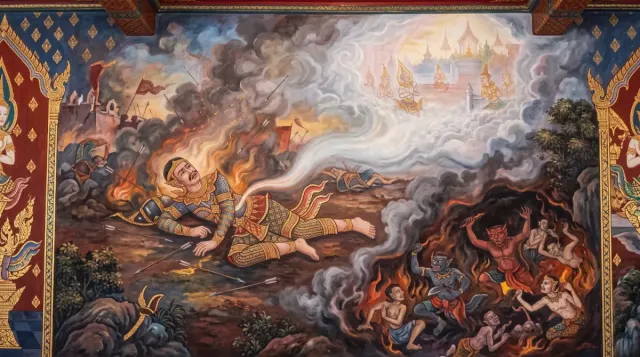
A headman who is a professional warrior asks about his teachers' claim that a warrior killed in battle is rebo…