
Ten Topics Worth Discussing
Dasa kathāvatthūniTen subjects the Buddha recommended talking about instead of the trivia that eats up the day — few wishes, con…


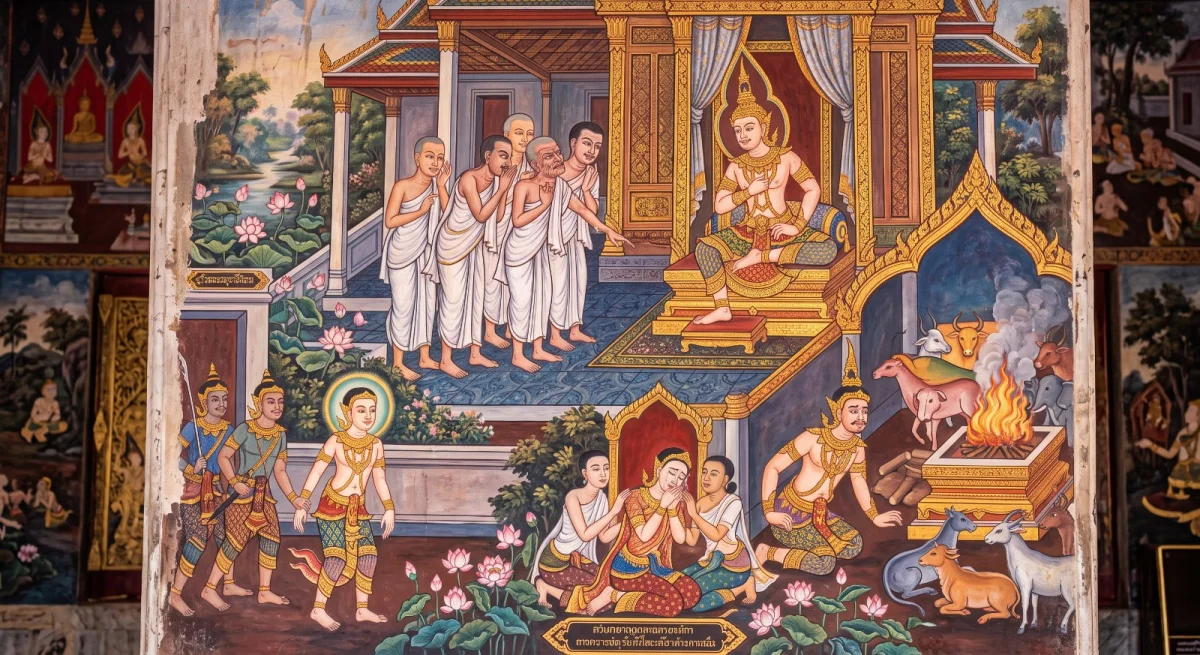
Candakumārajātakaṃ
The chaplain Khaṇḍahāla tells King Ekarāja that a sacrifice of his sons, queens and all kinds of beings will take him to heaven. The family objects one after another. Prince Canda points out the contradiction in the teaching without bearing ill will toward his father, until his wife makes an act of truth and Sakka comes to stop the king.
The Candakumāra Jātaka is the seventh story of the Mahānipāta Jātaka in the Khuddaka Nikāya. The Bodhisatta is Prince Canda, eldest son of King Ekarāja of Pupphavatī. The heading in the Thai translation and tradition associate it with the perfection of patience (khanti-pāramī). The canonical text consists of verses; the detailed background comes from the commentary.
In the verses, King Ekarāja asks his chaplain Khaṇḍahāla the way to heaven. The chaplain replies that he must sacrifice his sons, daughters, queens, householders and all kinds of beings, four of each. The king believes him. The king's own mother and father come to object that this is the road to hell; the road to a good destination is giving and not harming beings. The king relents and orders release several times, but the chaplain comes back to press him each time. Prince Canda says that if sacrificing sons led to heaven, the chaplain should first sacrifice his own. Canda's young son Vasula, his sister, his mother and his wife all plead.
When everything is prepared, Queen Candā, Canda's wife and daughter of the king of Pañcāla, walks among the assembly with joined palms and makes an act of truth. Sakka appears holding an iron hammer and stops the king. All the beings are set free, Khaṇḍahāla is punished by the assembly, and Prince Canda is consecrated king.
The commentary adds that Khaṇḍahāla held a grudge because Prince Canda had overturned a case in which the chaplain took bribes and judged it rightly, and that when the crowd was about to harm the king, Canda protected his father, so the king was banished instead.
Khaṇḍahāla says that one who gives a gift beyond ordinary giving and kills those who should not be killed goes to a good destination. This profound-sounding teaching is really telling the king to kill his own wives and children.
If any advice promises a big reward but requires harming others or cutting off people you love, treat it as a warning sign at once.
King Ekarāja's mother and father each come to tell their son that the claim that sacrificing sons leads to heaven is the road to hell. Give, and don't harm any being: that is the road to a good destination.
Use this simple test on any belief or ritual: does it make us more generous and less harmful?
Prince Canda says that if sacrificing sons led to the deva world, Khaṇḍahāla should first sacrifice his own sons. If he truly knows this, why not do it with his relatives and himself?
When someone urges you to invest, take a risk or make a sacrifice, ask whether they do the same with their own money and family.
Prince Canda and his brothers bear no ill will toward their father. They ask only to be spared, willing to be slaves tending elephants and horses or to be banished and live by begging, and even send people to ask Khaṇḍahāla's pardon if they had ever offended him. Tradition therefore holds this story up as an example of patience.
In a conflict with someone who has power over you, reasoning and calmly seeking a way out often opens more doors than confrontation. But if there is real danger, find safety first.
Those who object include the grandparents, Canda's young son Vasula pleading for his father's life, his sister, his mother and his wife. The verses even ask why the fathers and mothers of the city, who love their own children, don't join in urging the king to stop.
You don't need to be important to object. If you see someone you love making a seriously wrong decision, speak politely and clearly, and invite others who agree to speak too.
When the rite is ready, Queen Candā walks among the assembly with joined palms, declares the truth that Khaṇḍahāla has done evil, asks to be able to live with her husband, and appeals to the devas for protection. Sakka hears and comes to stop the king.
When other avenues are exhausted, calmly affirming the truth before those responsible, such as making an open complaint through proper channels, has more power than you might think.
Once Sakka intervenes, all the beings are freed, the one who led the king into wrongdoing no longer holds his position, and Prince Canda becomes king. The verses conclude that those who do evil do not reach a good destination as claimed.
When a family or organisation goes wrong by trusting the wrong person, fix the decision-makers and the process fairly, not through revenge.
This story is an extreme example of someone in power listening to the wrong adviser. In real life it may not come as a sacrifice but as advice to give up the people close to us or our principles in return for some grand promised reward, such as investment scams, belief groups that demand money or cutting off one's family, or advice to harm others in order to succeed.
What can stop the mistake is people nearby who dare to speak: parents, children, spouse and siblings. If someone close to you starts believing something dangerous, objecting with reasons, politely and persistently, matters. If safety is at risk, seek help from the relevant authorities.
The ending, where the assembly punishes the chaplain, belongs to an ancient tale; it is not a model for using violence in place of a fair process.
Tap to read the actual passage on the page cited.
Ten subjects the Buddha recommended talking about instead of the trivia that eats up the day — few wishes, con…

Sāma cares for his blind parents in the forest. King Piliyakkha shoots him with a poisoned arrow as he carries…

A gatekeeper in Haṃsavatī wanted to give what no one had given before. He did not choose the most expensive th…
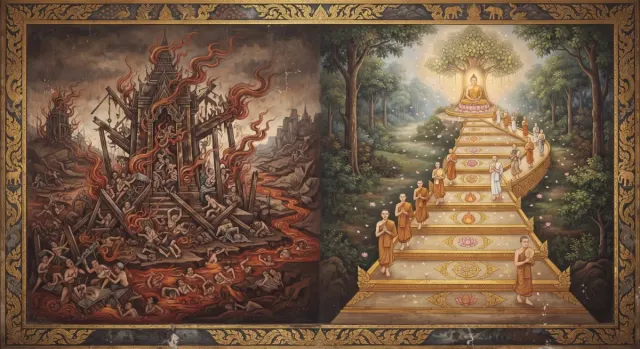
Key verses from Dhammapada chapters 18–20: remove impurities little by little like a smith with metal; rust bo…