
Be an Island unto Yourself
Attadīpā viharatha attasaraṇā anaññasaraṇā"Dwell with yourselves as an island, yourselves as refuge, with the Dhamma as an island, the Dhamma as refuge,…


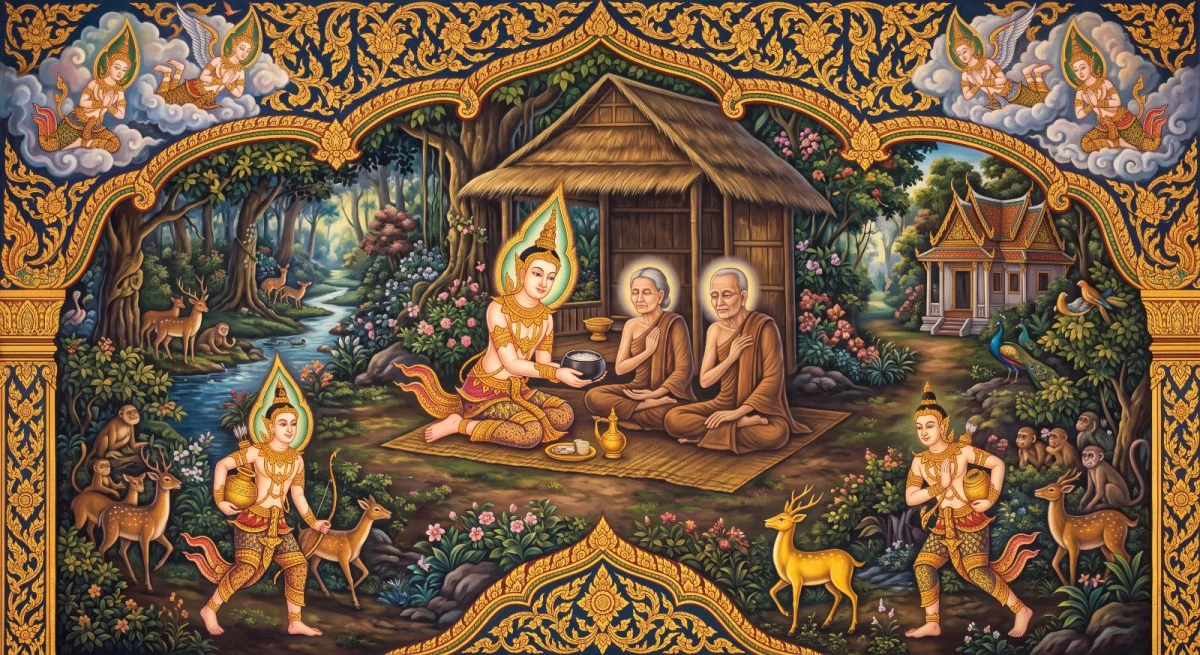
Suvaṇṇasāmajātakaṃ
Sāma cares for his blind parents in the forest. King Piliyakkha shoots him with a poisoned arrow as he carries a water pot, yet Sāma worries more about his parents than his own wound and does not curse the man who shot him. His parents and a goddess make an act of truth, the poison leaves him, and Sāma teaches the king to live by the Dhamma.
In the Suvaṇṇasāma Jātaka of the Mahānipāta, Khuddaka Nikāya, the canonical text consists of verses, while the full story comes from the Jātaka commentary (Jātakaṭṭhakathā). The Bodhisatta is born as Sāma, son of a couple who had become ascetics, called Dukūla the wise and Pārikā in the verses. The heading in the Thai translation says he fulfilled the perfection of loving-kindness (mettā-pāramī), following the traditional arrangement of the Ten Great Jātakas.
In the verses, Sāma is carrying a water pot from the Migasammatā river when King Piliyakkha of Kāsi shoots him. Sāma asks why he was shot. The king claims a deer saw Sāma and fled, but when Sāma says the forest deer have never feared him, the king admits he lied, overcome by anger and greed. Sāma says the pain of the arrow is less than the pain of never seeing his parents again. The king promises to care for them in his place; Sāma entrusts his parents to him and loses consciousness. The king goes to Sāma's parents, tells them the truth and offers to care for them. They ask to be led to their son's body and make an act of truth together with a goddess named Sundarī. The poison leaves him, Sāma revives, and he teaches the king to live by the Dhamma.
Why the parents became blind, how they came to live as ascetics in the forest, and the explanation that Sāma's loving-kindness kept wild animals from fearing him come from the commentary, although in the verses Sāma himself says the forest deer never feared him. The name "Suvaṇṇasāma" is the one used in Thailand; the verses call him Sāma or Sāma the wise.
Sāma tells the king that his mother and father are blind, that he looks after them in the forest, fetches water for them and always massages their hands and feet. At the end Sāma says that whoever supports mother and father righteously is praised by gods and humans in this world, and after passing from here rejoices in heaven.
If your parents are elderly, take on small daily tasks yourself, such as sorting their medicine, taking them to the doctor or massaging their hands before bed, rather than only giving money.
Sāma says that ever since he can remember, the forest deer, even fierce ones, have never been startled by him, nor have the timid kinnaras; they roam the hills and forests in mutual delight. The commentary explains this is because Sāma always radiated loving-kindness.
Notice whether those around you, such as children, juniors or staff, dare to come and talk to you. If they are afraid, soften your tone and domineering manner.
Sāma says the pain from the arrow is not his great suffering; greater is the suffering of not seeing his mother and father. They will weep all night and wither like a stream in the hot season. When the king promises to care for them, Sāma tells him the way to the hermitage, raises his joined palms asking him to support his parents, and sends his farewell to his mother.
If people depend on you, such as elderly parents or young children, arrange in advance who will care for them if you suddenly fall ill, and write down key information for that person.
King Piliyakkha admits to Sāma that he lied and shot him out of anger and greed. When Sāma loses consciousness, the king laments that only today has he understood ageing and death, and knows he has done evil even though no one in the forest saw it. He then goes himself to tell Sāma's parents the truth and offers to work to support them.
When you have wronged someone, go and tell them yourself what happened and ask how you can make amends or help, rather than waiting for them to hear it from others.
On learning that the king shot Sāma, Dukūla tells Pārikā that they should not wish evil on him. The verses raise the question of how one could not be angry at the killer of the only son who supported them, and answer that the wise praise one who is not angry at the killer of a beloved son. And when the king offers to work to support them, they still bow to him and call him their king.
When someone hurts you and you are very angry, you can still seek justice, but take care that resentment doesn't turn into wishing for their ruin, which burns your own heart for a long time.
The mother makes an act of truth: Sāma has lived by the Dhamma, lived purely, spoken the truth, supported his parents and been humble toward the elders of the family; by this truth may the poison vanish. The father and the goddess Sundarī of Mount Gandhamādana also make acts of truth. Sāma rises and explains to the king that when someone in severe pain lies still, the world thinks him dead though he is still alive.
Ask yourself: if one day your family had to speak truthfully about you, which goodness could they name with confidence? Then make that quality more steadfast.
The king asks to take Sāma as his refuge. Sāma tells him to practise the Dhamma toward his mother and father, his son and queen, friends and ministers, soldiers and mounts, villagers, townspeople and country folk, renunciants and brahmins, and even the herds of deer and flocks of birds, for Dhamma well practised brings happiness, and asks him never to be heedless of the Dhamma.
Go through your relationships circle by circle, from parents, partner and children to colleagues, customers and pets, and pick one circle you have neglected to care for better in one way.
This Jātaka is a picture of caring for parents when they can no longer help themselves, from fetching water and gathering fruit to massaging their hands and feet: ordinary tasks done every day, not a single heroic deed.
Another side is the attitude toward the one who does harm. Neither Sāma nor his parents deny that a wrong was done, but they don't choose cursing or revenge, and they leave room for the wrongdoer to make amends. In real life, not being angry doesn't mean not seeking justice.
The act of truth in the story is a marvel in Jātaka style. What we can use is living so that our goodness is a truth those close to us can vouch for.
Tap to read the actual passage on the page cited.
"Dwell with yourselves as an island, yourselves as refuge, with the Dhamma as an island, the Dhamma as refuge,…

A log carried down the Ganges will reach the sea if it doesn't catch on either bank, sink midstream, run agrou…

Mahāmoggallāna's past lives according to the Apadāna: a nāga king who invited the Buddha Anomadassī and the Sa…

Debates in chapters 11 and 14 answer the views that latent tendencies are indeterminate, rootless and dissocia…