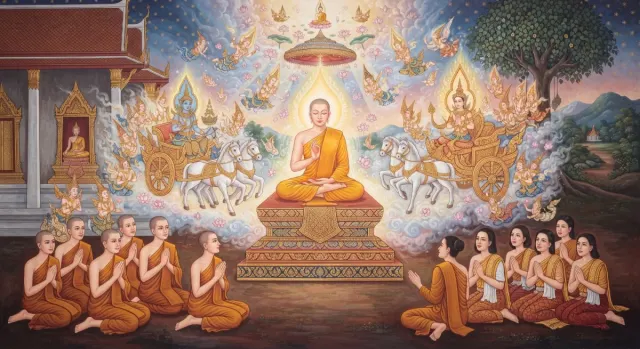
Uppalavaṇṇā's Apadāna: Psychic Power Used to Dispel Doubt
UppalavaṇṇātheriyāpadānaṃThe nun Uppalavaṇṇā asks forgiveness before the Buddha, displays psychic power to cut off the doubts of the fo…


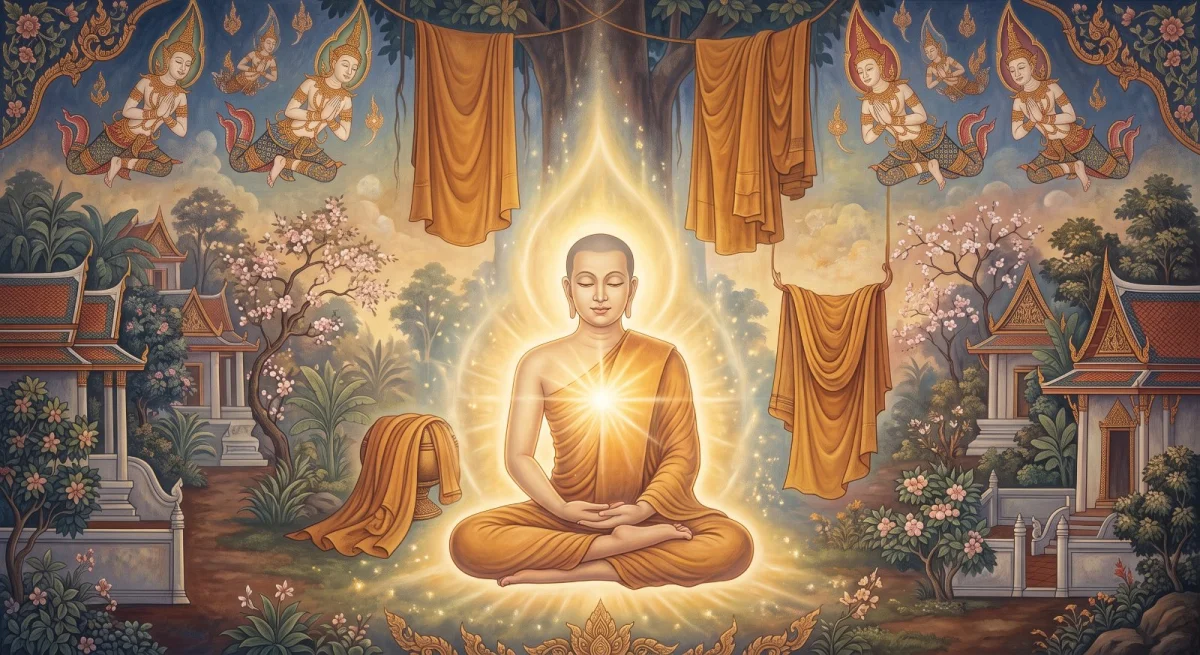
Samaṇasāmīcipaṭipadā
Wearing the outer robe, going naked or wearing matted hair does not make anyone a recluse. If dressing that way removed defilements, relatives would dress children that way from birth. One who practises in the way proper to a recluse abandons twelve defilements, and the mind becomes cool like a clear pond where anyone can quench their thirst.
In the Cūḷa-Assapura Sutta of the Majjhima Nikāya, the Buddha is staying at Assapura, a town of the Aṅgas. He tells the monks that people know them as recluses and they acknowledge being recluses, so they should train to practise the way proper to recluses. Then their designation and claim will be true, the requisites others give them will bear great fruit, and their going forth will not be barren.
He explains that a monk who has not abandoned covetousness, ill will, anger, resentment, contempt, domineering, envy, stinginess, fraud, deceit, evil wishes and wrong view is not practising the way proper to a recluse. He calls these the stains, faults and dregs of a recluse, and says that merely wearing the outer robe, going naked, wearing matted hair or keeping other outward observances does not make anyone a recluse.
One who abandons these defilements sees himself purified, and gladness, rapture, tranquillity, happiness and concentration arise. He pervades every direction with loving-kindness, compassion, altruistic joy and equanimity. Whatever clan such a person comes from, the Buddha calls him one who practises the way proper to a recluse, and one who realises liberation of mind and liberation by wisdom he calls a recluse through the destruction of the taints.
This discourse pairs with the Mahā-Assapura Sutta, which sets out step by step the qualities that make a recluse, beginning with shame and fear of wrongdoing. The Cūḷa-Assapura Sutta focuses on the defilements to be abandoned and on the difference between outward form and inner change.
When people call us recluses and we accept that we are, we must practise in a way that fits the name, so that the designation and the claim are true, the requisites others give bear great fruit, and our going forth is fruitful rather than barren.
Every role we accept, such as parent, teacher, doctor or Buddhist, carries the same question: have I made that title true yet?
Covetousness, ill will, anger, resentment, contempt, domineering, envy, stinginess, fraud, deceit, evil wishes and wrong view: the Buddha calls these the stains, faults and dregs of a recluse, which lead to rebirth in states of deprivation. One who has not abandoned them is not yet practising the way proper to a recluse.
Pick the one that arises in you most often, such as envy when a friend succeeds, and watch it with particular attention for a whole week.
The Buddha compares the going forth of someone who has not abandoned these defilements to a weapon called mataja, double-edged, tempered and sharpened, then wrapped and put away. The image shows that the outward form of a renunciant wrapped around it does not remove the sharp thing inside.
Outward politeness that hides resentment can still cut someone on a careless day. Deal with the cause in the mind, not just with wrapping it nicely.
The Buddha says he does not call anyone a recluse merely for wearing the outer robe, going naked, being covered in dust, bathing ritually, living at the foot of a tree, living in the open, eating at fixed intervals, reciting mantras or wearing matted hair. If wearing the outer robe removed these defilements, friends and relatives would have a child wear it from birth. But he sees people who wear the outer robe and still have these defilements, so he does not say this.
Before judging anyone, yourself included, by clothing, position or visible strictness, look at whether anger, stinginess and envy are actually decreasing.
One who has abandoned these defilements sees himself purified of these unwholesome states. Gladness arises; when glad, rapture arises; when the mind is rapturous, the body becomes tranquil; when tranquil, one feels happiness; and when happy, the mind becomes concentrated.
Calm doesn't come only from forcing the mind to be still. Notice how much easier meditation is on days when you have done nothing to feel guilty about.
With a concentrated mind, one pervades the first direction with a mind full of loving-kindness, likewise the second, third and fourth, above, below and across, the whole world, with a mind abundant, exalted, immeasurable, without hostility and without ill will. One does the same with compassion, altruistic joy and equanimity.
Before sleeping, bring to mind the people at home, the people at work, strangers and people you dislike, and wish each group in turn to be free from enmity and danger.
Like a lotus pond with clear, sweet, cool, clean water and good banks, where anyone overcome by heat and thirst, from whichever direction they come, can quench their thirst: someone who goes forth from a noble, brahmin, merchant or labourer clan, or any clan at all, and develops loving-kindness, compassion, altruistic joy and equanimity gains inner peace in the same way. One who realises the destruction of the taints the Buddha calls a recluse through the destruction of the taints.
The Dhamma doesn't choose by background. Whatever family you come from and however much schooling you have had, coolness of heart is within reach. Don't use your background as an excuse to say you can't practise.
Every era has its uniforms of goodness. In the Buddha's time it was the outer robe, going naked or matted hair. Today it might be white clothes, photos from a meditation retreat, or Dhamma vocabulary in conversation. None of these is wrong, but none of them does the work of abandoning anger or envy for us.
The discourse doesn't reject the outer robe or observances; Buddhist monks themselves wear the outer robe. The point is that outward signs cannot stand in for abandoning defilements. What decides the matter is what is inside.
The list of twelve defilements makes a good self-check. Each evening, go through it and see which arose today, without harsh self-blame. Simply seeing them clearly is the first step towards letting them go.
Tap to read the actual passage on the page cited.
The nun Uppalavaṇṇā asks forgiveness before the Buddha, displays psychic power to cut off the doubts of the fo…

The first three rules of the Chapter on Fellow Monastics forbid three responses to being corrected by a rule: …
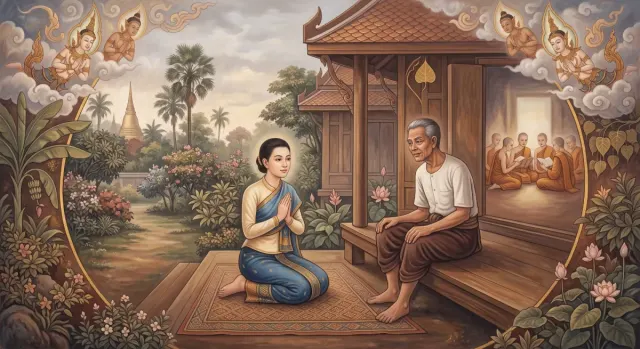
Her father asks Rohinī why she loves recluses who are lazy and live on others. Rohinī answers point by point: …
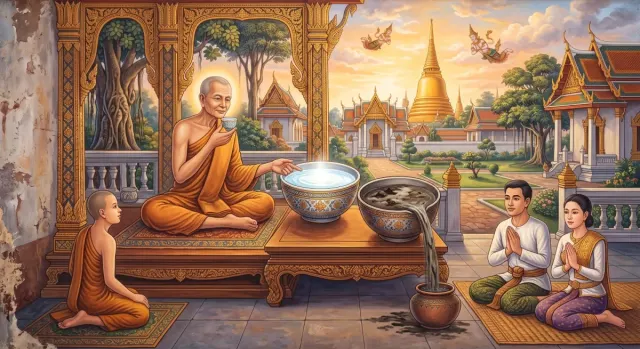
The Buddha said this holy life is to be drunk like the finest, clearest part. The Paṭisambhidāmagga expands th…