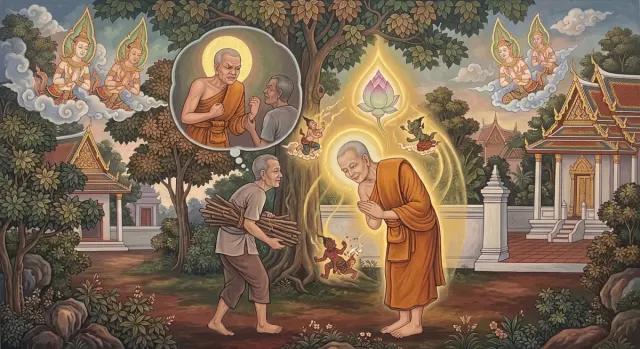
Theragāthā on Conceit and Anger: Lower Yourself and the Mind Stands Firm
Pahīnamānassa anāsavassaVerses of seven elders on conceit and anger: humbling yourself when others exalt themselves, conceit that keep…


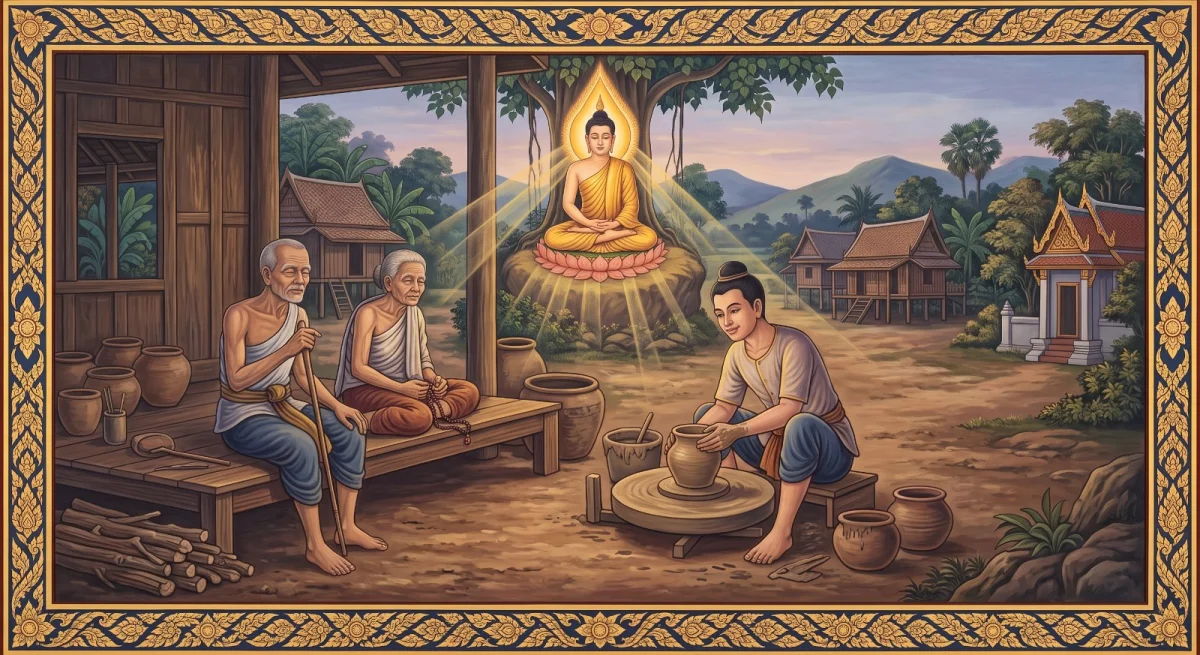
Ghaṭikārasuttaṃ
The potter Ghaṭīkāra did not go forth because he had to support his aged, blind parents, yet he kept pure virtue, earned an honest living and was a non-returner — trusted by a past Buddha more than a king.
In the Ghaṭīkāra Sutta of the Majjhima Nikāya, the Buddha tells a story from the time of the Buddha Kassapa. In the village of Vebhaliṅga lived the potter Ghaṭīkāra, a chief supporter. He repeatedly invited his friend, the young brahmin Jotipāla, to visit the Buddha Kassapa, but Jotipāla refused, until Ghaṭīkāra seized him by the waistband and then by the hair. Jotipāla thought this must be no ordinary matter, agreed to go, heard the Dhamma, and went forth.
The Buddha Kassapa told King Kikī that Ghaṭīkāra had gone for refuge, abstained from all evil, ate one meal a day, lived celibate, and did not dig the earth with tools or with his own hands, but used soil from collapsed riverbanks or dug up by mice. He made pots and left them for people to take, leaving rice or goods in exchange. He supported his aged, blind parents, and was a non-returner.
At the end, the Buddha says that the young man Jotipāla was himself.
Ghaṭīkāra supported his aged, blind parents, and because of that duty did not go forth. The Buddha Kassapa did not criticise him, but praised him as a chief supporter.
If caring for your parents leaves little time for practice, do that caring with mindfulness and kindness — it already is practice.
Ghaṭīkāra did not dig the earth with tools or his own hands, to avoid harming small creatures in the soil, but used earth from collapsed banks or mouse diggings — care for non-harming even in the details of his work.
Look for small points in your work where harm can be reduced: less waste, not taking advantage of customers, no exaggerated advertising.
He made pots and said that anyone who needed one could leave rice or goods and take a pot. His honesty drew honesty from the community in return.
Integrity in trade or work builds trust that is worth more than short-term profit.
Once the Buddha Kassapa came to his house while he was away and, at his parents' invitation, helped himself to food. Ghaṭīkāra returned full of joy, confident that the Buddha trusted him. Another time, when the Buddha's hut leaked, grass was taken from the roof of his house to thatch it; the discourse says that for three months no rain fell into his house.
Real trust in a relationship is when the other person uses your things without asking and you feel glad, not resentful.
Jotipāla refused many times, but Ghaṭīkāra kept inviting him until he went to hear the Dhamma — and that Jotipāla was the Bodhisatta in the life when he met the Buddha Kassapa.
You can patiently invite a friend toward the good many times, while respecting their decision, without pressure that damages the friendship.
Ghaṭīkāra's story encourages those who think they must abandon worldly duties to practise well. He did not go forth because he cared for his parents, yet attained a high stage of awakening as a householder.
His livelihood is also notable: he worked carefully to avoid harming living beings, and trusted people enough to let them take pots and leave payment themselves.
Ghaṭīkāra seizing Jotipāla by the hair is an episode between close friends recorded in the discourse, not a model for forcing anyone to go to a temple.
Tap to read the actual passage on the page cited.
Verses of seven elders on conceit and anger: humbling yourself when others exalt themselves, conceit that keep…
A man who lost his only son refused to believe love brings suffering, until Queen Mallikā questioned King Pase…
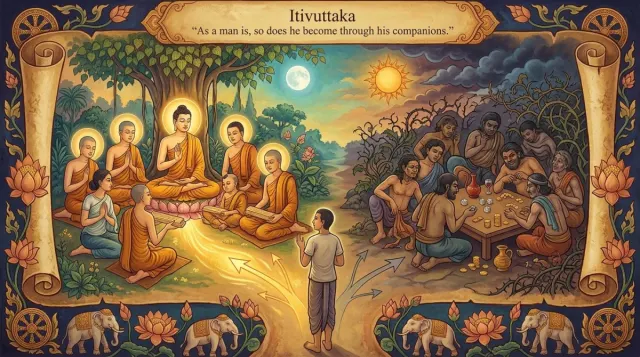
Wrap rotten fish in kusa grass and the grass stinks too; wrap aloeswood in leaves and the leaves smell sweet —…

Two debates on the relation between speech and the state of the mind. The first asks whether someone in an att…