
Udāyī Shoots Crows, and Water with Living Creatures: Origin Stories on the Lives of Small Beings
Sañcicca pāṇaṃ jīvitā voropeyyaUdāyī shot crows because he disliked them, some monks knowingly used water containing living creatures and pou…


Mayhaṃ mayhanti kandati
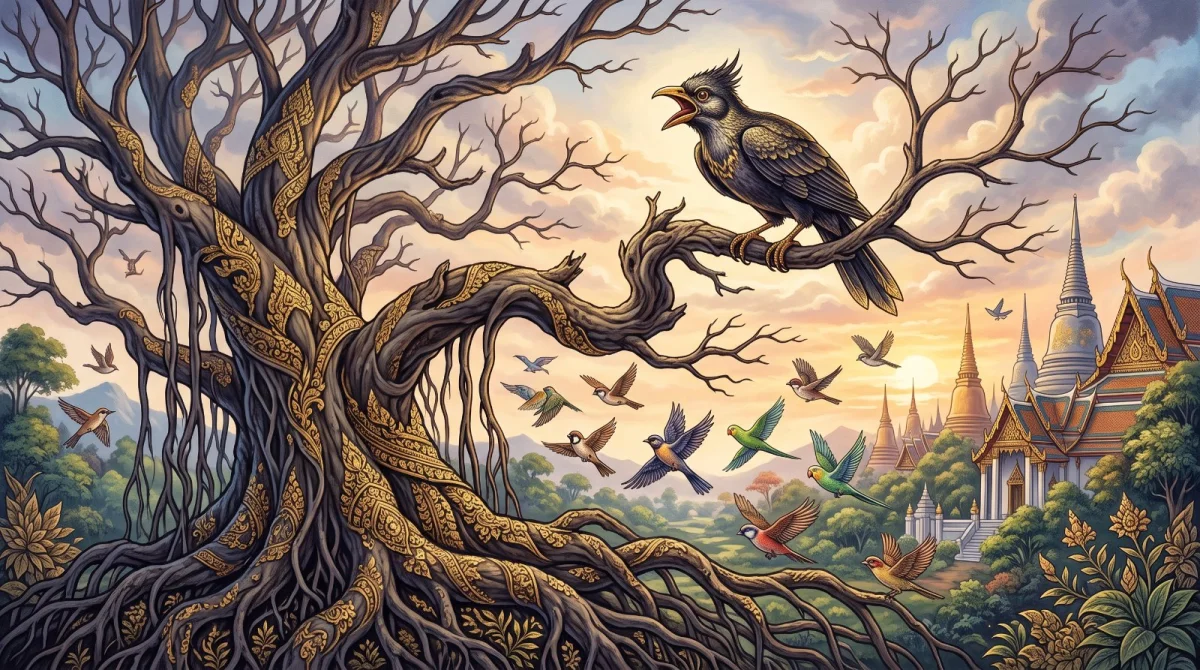
The mayhaka bird sits in a fig tree full of ripe fruit crying "Mine, mine!" while other birds eat and fly away. So too some people amass wealth, never use it themselves or share it with relatives, and in the end it passes to others. The wise use their wealth to support themselves and their kin.
In the Mayhaka Jātaka of the Book of Sixes, Jātaka, Khuddaka Nikāya, the verses tell of a bird called Mayhaka that roams mountain slopes and ravines. It perches in a fig tree full of ripe fruit and cries, "Mine, mine!" While it cries, flocks of birds gather, eat the figs and fly away, and it goes on crying.
The verses then compare this to some people who amass great wealth but do not treat themselves or their relatives as they should. They never once spend it on clothing, food, garlands or ointments, and do not support their relatives. While they guard it crying "Mine!", kings, thieves or unloved heirs take the wealth away. The wise, on gaining wealth, support their relatives, earn a good name by it, and after death rejoice in heaven.
The background comes from the commentary. The present-day story is of a rich man in Sāvatthī who ate broken rice, wore coarse cloth and gave nothing to anyone; when he died without heirs his wealth went to the crown, and it took seven days to carry it away. The past story tells how the Bodhisatta handed his estate to his younger brother, asking him to keep the almshouse going, and went forth. The brother closed the almshouse and even harmed his nephew so as not to share the estate. The Bodhisatta returned, spoke these verses, and had his brother reopen the almshouse.
The mayhaka bird perches in a fig tree full of ripe fruit crying "Mine, mine!" The commentary explains that it cries to drive away the other birds eating the fruit, and that its name comes from that very cry of "mine".
Notice what in your life you often call "mine" but hardly ever use or truly enjoy.
While the mayhaka cries, flocks of birds gather, eat the figs and fly off to other trees, and it just goes on crying. Guarding makes the fruit no more its own.
If you find you spend more time guarding or worrying about things than using them, try passing some on to people who will really use them.
Some people amass great wealth but do not treat themselves or their relatives as is fitting. The commentary explains this as not giving parents, siblings and children the share they should have.
Review your household budget: is there a fair share for your own health and your parents' care, before simply adding to savings?
Such a person never once spends on clothing, food, garlands or ointments, and does not support relatives. The wealth never does what wealth is for.
The good things you keep "for a special occasion" until they spoil — use some on an ordinary day. Today is part of your life too.
While he guards it crying "Mine, mine!", kings, thieves or unloved heirs come and take the wealth away, and he can only go on lamenting.
Set out your inheritance plans and key documents clearly now, and share with the people you love while you can still see them smile.
The wise, on gaining wealth, support their relatives, earn a good name by it, and after death rejoice in heaven. The commentary gives examples of support with food, clothing, seed and ploughs for relatives trying to make a living.
The best help for a relative may not be a lump sum but tools or opportunities that let them earn a living themselves.
This jātaka doesn't teach spending everything. It points out that wealth kept without ever being put to use, for ourselves or those around us, is like fruit on a tree we only cry is ours.
Today we may not hoard cash, but we hoard time, knowledge, or things bought and never used. A grip on "mine" that is too tight means neither we nor those close to us benefit at all.
Saving for times of need is prudence, not stinginess. The dividing line is whether that wealth still serves our life and the people we love, or has become something we serve.
Tap to read the actual passage on the page cited.
Udāyī shot crows because he disliked them, some monks knowingly used water containing living creatures and pou…

Sunakkhatta set out to disparage the Buddha but ended up praising him without realising it. The Buddha then ta…

King Pasenadi kisses the Buddha's feet, then describes what he has seen with his own eyes that gives him confi…

Mahāli asks why Sunakkhatta saw divine forms but never heard divine sounds. The Buddha explains that he develo…