
The Inspiring Discourse: How Sure Can You Be About What You Cannot Check?
Dhammanvayo viditoSāriputta roars his lion's roar that no one has ever known more than the Buddha in awakening. The Buddha asks …


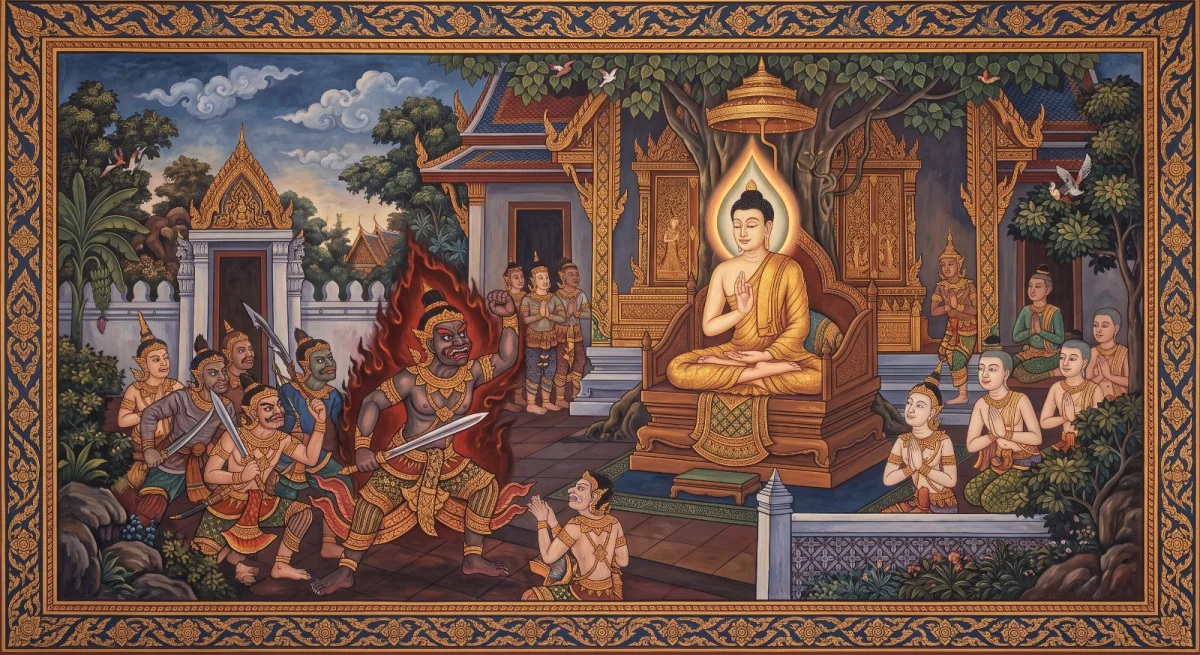
Rājovādajātakaṃ
Two kings meet on a narrow road. The verses compare two ways of winning over people: the first repays people in kind; the second conquers anger with non-anger, the bad with good, the miser with giving, and the liar with truth.
In the Rājovāda Jātaka of the Duka Nipāta, in the Jātaka of the Khuddaka Nikāya, there are two verses spoken by two charioteers, each praising his own king. The first says King Ballika (Mallika in some editions) is hard with the hard and soft with the soft, conquers the good with good and the bad with bad. The second says the King of Bārāṇasī conquers the angry with non-anger, the bad with good, the miser with giving, and the liar with truth. Both verses end: "Charioteer, make way for our king."
The Tipiṭaka contains only the verses; the story comes from the commentary (Jātaka-aṭṭhakathā). It relates that the King of Bārāṇasī was the Bodhisatta. Both kings had gone out in disguise to find out whether anyone spoke of their faults, and their chariots met on a narrow cart road. The charioteers tried to decide who should give way, but the kings were equal in age, wealth and fame, so they compared virtue. On hearing the second verse, King Ballika's side got down and made way.
The second verse matches a well-known saying of the Buddha in the Dhammapada.
The first verse says King Ballika is hard with the hard, conquers the soft with softness, the good with good and the bad with bad. He treats people as they treat him, which seems fair, yet still ties him to other people's actions.
Notice whom you answered today in the same tone they used with you, and ask how you would answer if you could choose freely.
The King of Bārāṇasī conquers the angry with non-anger. Anger answered with anger spreads; anger given no more fuel dies down by itself.
When someone speaks to you in anger, lower your voice and slow down by a beat instead of raising your voice to match.
The first verse says the bad are conquered with bad; the second, that the bad are conquered with good. This contrast is the heart of the jātaka, and those in the story accept that the second way is higher.
If a colleague who once took advantage of you asks for help you can give without harm, try helping without reminding them of the favour.
A miser tends to assume others are as grasping as he is. Giving without expecting a return undoes that assumption and may open his heart to giving.
In a team where everyone guards information or credit, be the first to share knowledge or openly credit someone else.
A liar is conquered with truth, not with lies in return. Truth spoken consistently becomes its own evidence over time.
When someone spreads false stories about you, state the facts once, briefly and clearly, without inventing a counter-story.
Both verses end by asking the other side to make way. The commentary says that when age, wealth and fame proved equal, the matter was settled by virtue, and King Ballika's side gave way. Acknowledging that someone is better in some respect is not defeat.
When deciding who should lead on something, look at suitability and conduct, not only seniority or title.
The commentary relates that both kings set out to learn whether anyone spoke of their faults. This detail comes from the commentary, not the verses, but it fits the story's point: a good leader begins by listening to criticism.
Ask someone close to you or on your team whether anything you do makes things hard for them, and listen without defending yourself.
This jātaka doesn't say the first way is entirely wrong. Being firm with the firm has its place in the world. But it points to a higher way: not letting the other person's behaviour dictate our own.
At work or at home, someone who answers a harsh email politely, or meets stinginess with generosity, tends to earn respect over time, while tit-for-tat keeps conflict going.
Non-anger doesn't mean giving in to everything. If someone oversteps or causes harm, you can still set boundaries and protect yourself — just do it without a burning mind.
Tap to read the actual passage on the page cited.
Sāriputta roars his lion's roar that no one has ever known more than the Buddha in awakening. The Buddha asks …

King Pasenadi of Kosala saw the group of seventeen playing in the Aciravatī River; King Bimbisāra waited for m…

The second debate of the Kathāvatthu. One side holds that an arahant can fall away; the other refutes it — wha…

One school taught that developing the faculties means not seeing and not hearing. The Buddha replied that then…