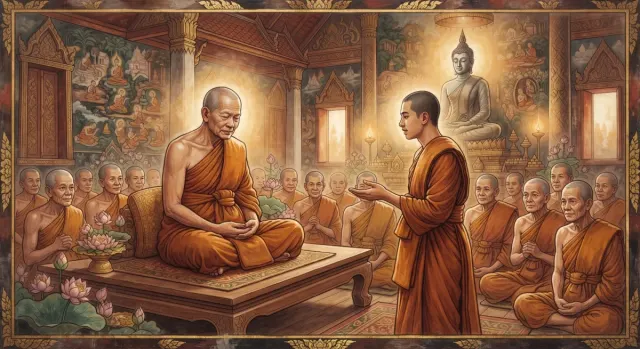
The Origin of Pavāraṇā: Inviting Others to Point Out Our Faults
Anujānāmi bhikkhave vassaṃ vutthānaṃ bhikkhūnaṃ tīhi ṭhānehi pavāretuṃA group of monks agreed not to speak to each other all through the rains so they would not quarrel. The Buddha…


Sādhu sambahulā ñātī
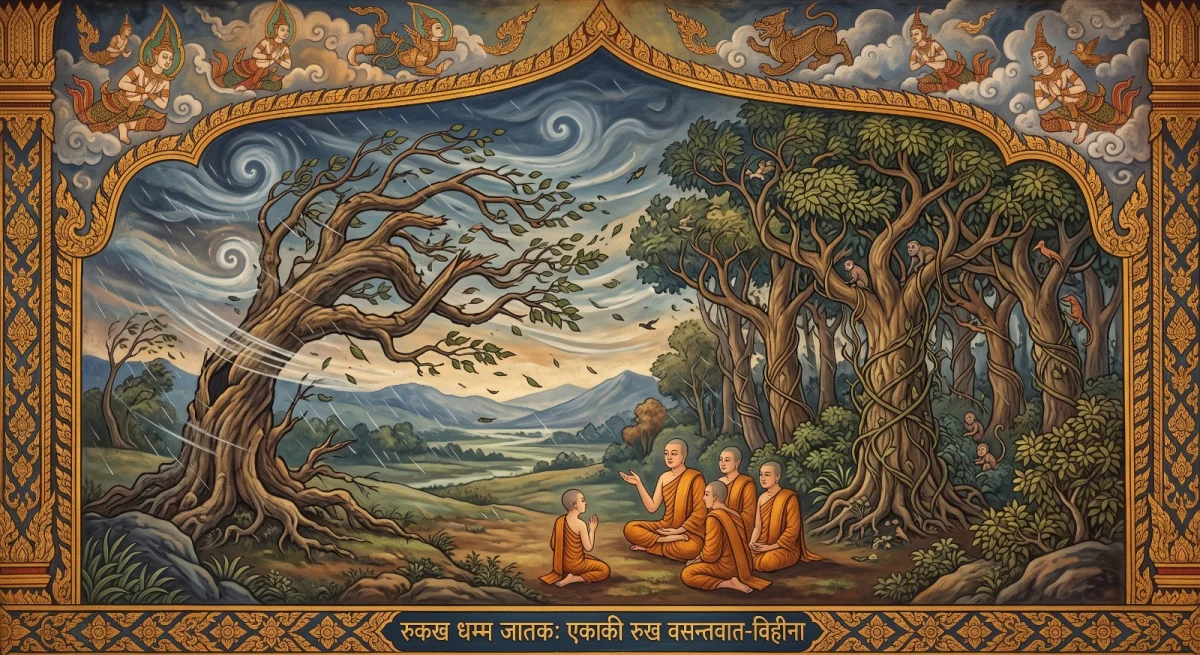
Many relatives who support one another are a good thing. Trees growing together in a forest withstand the wind, but a tree standing alone, however large, can be blown down.
In the Rukkhadhamma Jātaka of the Ekanipāta in the Jātaka, Khuddaka Nikāya, there is a single verse: many relatives are good; so too are many trees growing in the forest. A tree standing alone, however well grown and large, is blown down by the wind.
According to the commentary, the Buddha told this when his Sakyan and Koliyan relatives were about to fight over the water of the Rohiṇī river. He reminded them that relatives should live in harmony, because when relatives are united, enemies find no opening.
In the commentary's story of the past, the Bodhisatta was a tree deity in a sal forest. He advised his deity relatives to choose trees surrounding his own in the forest, not trees standing alone on high ground. The wise ones did so, while those who wanted gain and offerings from people chose large solitary trees near villages. One day a great storm came: the solitary trees were snapped and uprooted, but not a single tree fell in the close-growing sal forest.
The verse says many relatives are good. The commentary adds that when many relatives rely on one another, it is admirable, and enemies cannot destroy them.
Keep in touch with relatives even when you have no particular reason, such as calling to ask how they are. Relationships you have cared for become a refuge on hard days.
The verse compares this to many trees growing in a forest. The commentary says: not only people, but even trees, which have no intention, stand by supporting one another.
In a team, let people cover each other's weak points instead of competing until each has to carry everything alone.
The wind blows down a tree that stands alone. The commentary explains this as a tree rising alone on high ground, with no other trees interlinked with it.
Notice whether work or stress is cutting you off from people around you. If so, start reconnecting little by little.
Even a great lord of the forest, full of branches, is uprooted by a strong wind if it stands alone. Size by itself is not enough.
Don't assume money, position or ability means you need no one. Successful people still need friends and family they can trust.
In the commentary, some deities ignored the advice and chose solitary trees near villages, hoping for gain and honour from people. When the storm came they were left homeless and had to lead their children back to ask the forest deities for shelter.
When choosing a new job or place to live, look beyond the pay. Ask whether it will take you too far from the people who support you.
The commentary says the occasion for this Jātaka was the Buddha's relatives on both sides about to fight over water. He pointed out that division among relatives gives enemies an opening, and urged them to live together in affection and harmony.
When siblings clash over an inheritance or money, talk openly and ask whether what you gain is worth the relationship you lose.
The verse does not say you must have many relatives to be well off. Its point is living in mutual support. The commentary explains that forest trees stand by propping one another up, so strength comes from connection, not from the size of any one tree.
Today, someone very capable who has cut off family, friends and colleagues may seem secure in ordinary times, yet in a crisis such as illness, job loss or bereavement they can fall easily. Tending relationships while things are good matters.
Maintaining relationships does not mean putting up with people who harm you. The harmony this Jātaka speaks of is mutual support.
Tap to read the actual passage on the page cited.
A group of monks agreed not to speak to each other all through the rains so they would not quarrel. The Buddha…

Wearing the outer robe, going naked or wearing matted hair does not make anyone a recluse. If dressing that wa…

A monkey king speaks truly even to a crocodile; a baby quail and a fish king perform acts of truth; the sage K…

The Parivāra lists the reasons training rules were laid down, in pairs: for the comfort of the community, to r…