
The Admonisher Jātaka: Good Only at Teaching Others
AnusāsikajātakaṃA bird who kept warning others not to feed on the cart road secretly fed there herself out of greed, until a c…


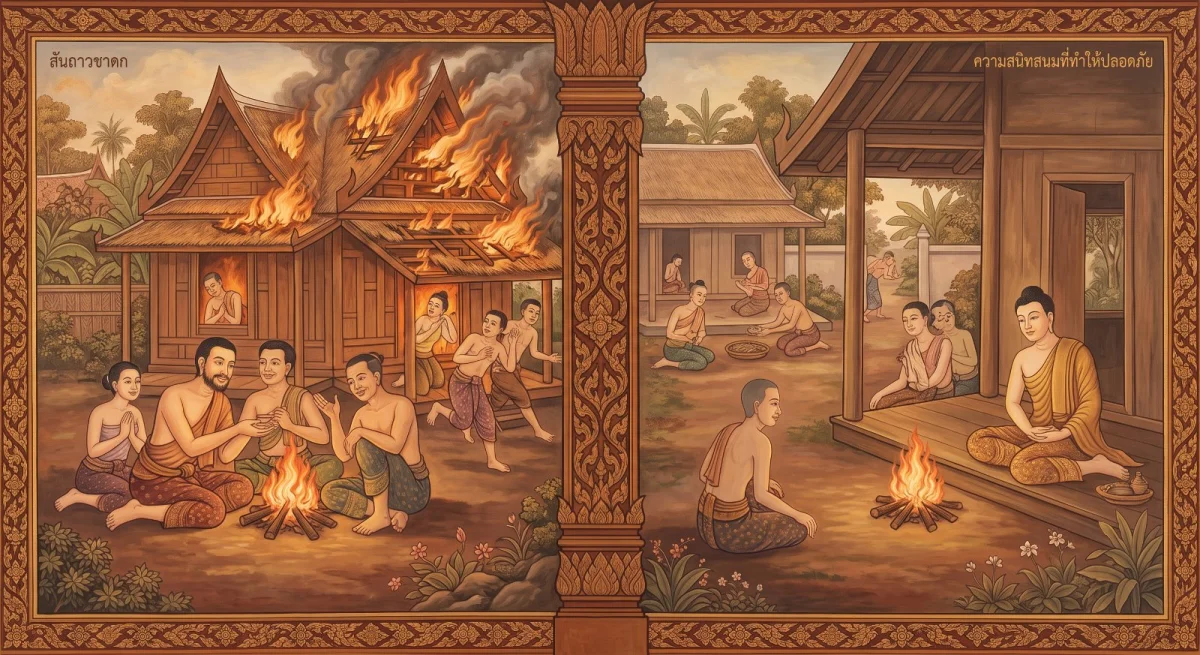
Santhavajātakaṃ
A fire fed with ghee and milk-rice still burns down a leaf hut that was hard to build, while the doe Sāmā can lick the mouths of a lion and tigers through familiarity. Intimacy with the base is the worst thing; intimacy with the good is the best.
In the Santhava Jātaka of the Duka Nipāta, in the Jātaka of the Khuddaka Nikāya, two verses are set side by side. The first says nothing is worse than intimacy with a base person, for the fire we satisfied with ghee and milk-rice still burned down the leaf hut made with difficulty. The second says nothing is better than intimacy with a good person: the doe named Sāmā licks the mouths of a lion, a tiger and a leopard through intimacy.
The images of the fire and the doe come from the verses themselves. The commentary adds that the speaker was the Bodhisatta, living in the forest as an ascetic who tended a sacred fire. One day he offered it milk-rice mixed with ghee, the fire flared up and burned his hut, and he spoke the first verse.
Santhava means familiarity or intimacy. So this jātaka is about choosing whom to be close to, not about despising people.
The fire was given ghee and milk-rice until satisfied, yet it didn't repay that with gentleness; it burned the one who fed it. The nature of something hot doesn't change because we are good to it.
If you have helped someone many times and they keep hurting you in the same way, accept that your kindness hasn't changed them, and reset the distance.
The verse stresses that the leaf hut was made with difficulty. Things that take long to build — reputation, family, livelihood — can be damaged in a moment by letting the wrong person get close.
Before giving anyone access to accounts or important documents, or taking them on as a partner, watch how they behave in small matters for a while.
The first verse says nothing is worse than intimacy with a base person, because closeness gives them more chance to do harm than a stranger has, and gradually draws us into their ways.
Consider whether the people you spend most time with make you better or worse, judging by what you do after being with them.
The second verse turns it around: nothing is better than intimacy with a good person. The same closeness, with a good person, becomes a refuge and helps one grow.
Deliberately arrange to talk with someone whose conduct you respect at least once a month, rather than waiting to run into them.
The doe Sāmā can lick the mouths of a lion, a tiger and a leopard because of their affection and familiarity. The image shows that good relationships let beings live together safely, even where danger seems near.
In a pressured environment such as a new workplace, gradually build trust with two or three honest people; you will protect one another.
The jātaka speaks about intimacy; it doesn't teach looking down on or harming anyone. We can be friendly with people in general, but deep trust should follow proven conduct. People can change, so look at their present behaviour.
Keep a clear line between being kind to everyone and trusting everyone. The first you can always do; the second should follow the evidence.
We live among many people, but those we are closest to affect our lives most — our habits, our decisions, and the safety of what we have built.
This jātaka doesn't tell us to cut anyone off. We can be courteous and kind to everyone, but deep trust — with money, family matters or the keys to the house — should go to people who have shown integrity over time.
If you are in a relationship where you are repeatedly harmed, stepping back and seeking help from someone you trust or from the relevant services is proper self-care, not unkindness.
Tap to read the actual passage on the page cited.
A bird who kept warning others not to feed on the cart road secretly fed there herself out of greed, until a c…
The twenty-six training rules on proper behaviour in the Sekhiya section teach monks to dress neatly, restrain…

A leper feels relief scorching his sores over a fire, but once cured, no one would want to go back to the fire…

The goddess of misfortune and the goddess of good fortune ask to stay at the house of a virtuous merchant, eac…