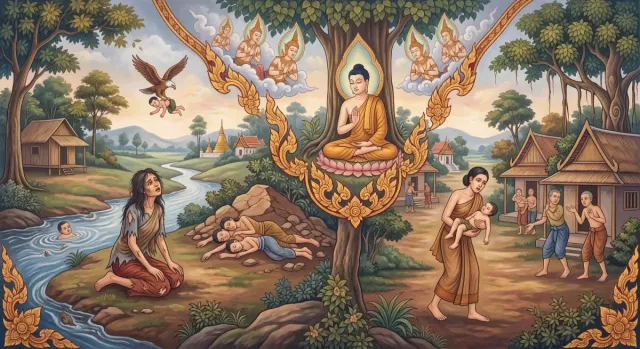
Paṭācārā and Kisāgotamī: When Loss Arrives
Paṭācārā kisāgotamīTwo nuns who went through devastating loss of loved ones. The Buddha did not tell them to stop grieving, but g…


Soṇakajātakaṃ
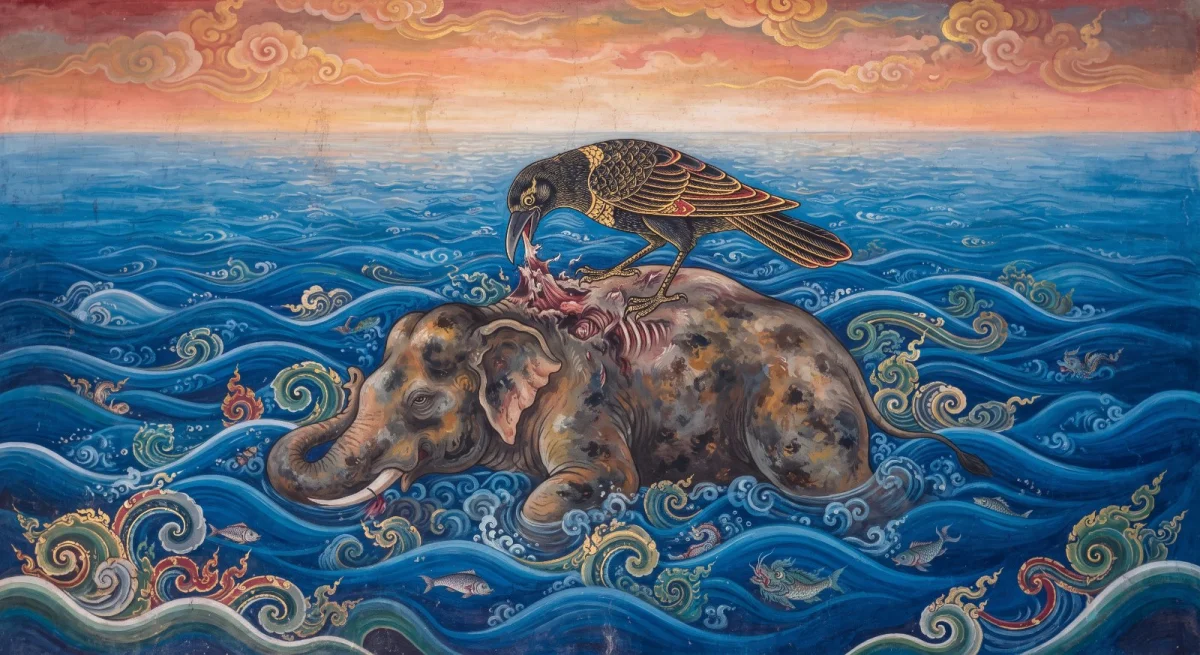
King Arindama searches for Sonaka, his childhood playmate. When he finds him, he sees his friend as a pitiful, penniless renunciant. Sonaka replies that the truly pitiful person is the one who abandons Dhamma, and tells the parable of a crow who feasted on a floating elephant carcass until the current carried it out to sea. The king realises no one knows whether death will come tomorrow, and refuses to be like the crow.
In the Sonaka Jātaka of the Book of Sixties (Saṭṭhi Nipāta) in the Jātaka, Khuddaka Nikāya, the verses begin with the king announcing a hundred pieces to anyone who hears news of Sonaka, and a thousand to anyone who has seen him — the friend he played with in the dust. A boy with five topknots says he has seen him: Sonaka sits meditating beneath the sal trees in the royal park. The king goes to meet him and says: this monk is pitiful, shaven-headed, without mother or father, sitting at the foot of a tree. Sonaka replies that one who has touched the Dhamma with the body is not pitiful; one who abandons Dhamma and follows what is not Dhamma is the pitiful one. He then speaks of eight blessings of a monk who has no wealth and no home.
The king admits that he is still attached to sensual pleasures and asks how he could gain both worlds. Sonaka tells of a crow who saw an elephant's carcass floating down the Ganges and thought it had found both a vehicle and plenty of food, so it stayed on it day and night until the current carried it out to sea. When the carcass was gone, the crow could find no shore, fell into the water and became food for fish. Sonaka says the wise know that those who cling to sensual pleasures and will not spit them out have the wisdom of a crow. He adds that one who wishes another well should speak a word or two, no more, and departs through the air. The king declares: I will hand over the kingdom and go forth today — who knows whether death will come tomorrow? — and hands the kingdom to his son Dīghāvu.
In the Tipiṭaka the Jātaka consists only of verses. The commentary tells that Prince Arindama and Sonaka were born on the same day, grew up and studied at Takkasilā together. When Arindama became king of Benares, Sonaka saw a yellow sal leaf fall, contemplated impermanence and became a paccekabuddha, while the king, absorbed in his glory, only remembered his friend after about forty years. It was Sonaka who taught the boy the reply verse to sing before the king, so that he could come and show the king the dangers of sensual pleasures. The commentary tells that the king went forth and attained jhāna, and that the Teacher told this story when monks were discussing the perfection of renunciation.
The king offers a reward to anyone who hears news of, or sees, Sonaka, the friend he played with in the dust. The commentary tells that once he became king he was so absorbed in his position that he didn't think of his friend, and only remembered him after about forty years.
Think of an old friend who stood by you back when you had nothing, and send a message or arrange to meet. Don't wait for decades to pass.
When the king sees Sonaka and calls him pitiful, shaven-headed and without parents, Sonaka replies that one who has touched the Dhamma with the body is not pitiful; whoever abandons Dhamma and follows what is not Dhamma, that one is pitiful, evil, and bound for a bad destination.
When you see someone who has chosen a simple life with a small but honest income, don't be quick to pity them. And when you see someone grow rich through cheating, don't be quick to envy them.
Sonaka describes eight blessings of a monk without wealth or home, such as not needing to store grain in granaries or jars; when the city burns, nothing of his burns; when the country is plundered, nothing of his is lost; and whichever direction he goes, he goes without longing. This point is about the renunciant life specifically.
Lay people needn't own nothing, but try reducing what you hold onto unnecessarily, such as things you never use or debts taken on for wants, and notice how much lighter your mind feels.
The king says: you praise the blessings of monks highly, but I am still attached to sensual pleasures; both human and divine pleasures are dear to me. How then can I gain both worlds? The king doesn't pretend to be ready; he tells the truth about his own heart and asks for a way.
When you want to break a habit you know is harmful, start by admitting to yourself or someone you trust, "right now I'm really still hooked", then ask what first step you can actually take.
Sonaka tells of a crow that saw an elephant's carcass floating in the Ganges and thought it had both a vehicle and food, so it stayed feeding day and night, not flying off even when it saw trees in the forest. The current carried the heedless crow, delighting in the carcass, out to sea. When the food ran out it could find no shore, fell into the water and was eaten by sea creatures. The wise know that those attached to sensual pleasures who will not spit them out have the wisdom of a crow.
Review from time to time what in your life you cling to because it's comfortable right now, such as a job that doesn't help you grow, or entertainment that eats up every evening, and ask where the tree on the shore is that you should fly towards.
After the parable, Sonaka says the simile has made the meaning clear; whether the king acts on it or not will become evident. He adds that one who wishes another well should speak a word or two, not more, and then departs.
When warning a friend or family member, say it clearly once or twice, then respect their decision. Repeating it endlessly usually makes people close off rather than change their minds.
The king says: I have no need of the kingdom; I will go forth today. Who knows whether death will come tomorrow? I will not be a fool in the power of sensual pleasures like the crow. He hands his elephants, horses, chariots and realm to his son Dīghāvu. A later verse says the king has crossed the mire onto dry land and set out on the great road without thorns.
Of the important things you've postponed for a long time, such as apologising to someone, visiting your parents or starting to look after your health, pick one and act on it this week. But decisions that greatly affect others, such as resigning or moving house, deserve careful planning first.
The parable of the crow on the elephant's carcass fits working life today well. We can stay with whatever gives us comfort and income right now, without noticing that the current is carrying us far from the shore we meant to reach. When that thing runs out, we have neither strength nor anything to hold on to.
This Jātaka praises the king's going forth, which doesn't mean everyone should abandon work or family. For lay people, the usable lesson is not to postpone what matters most in life, and not to make big decisions rashly without thinking of those who depend on us.
Another thing worth remembering is friendship. Sonaka didn't forget his friend, and when the time was right he came back to help him see the way, saying just enough and then leaving.
Tap to read the actual passage on the page cited.
Two nuns who went through devastating loss of loved ones. The Buddha did not tell them to stop grieving, but g…

The Parivāra sets out five ways a formal act of the Saṅgha fails: in its subject matter, its motion, its annou…

Sakka, disguised as a brahmin, appears with a jar of liquor before a king who is about to drink and calls on h…
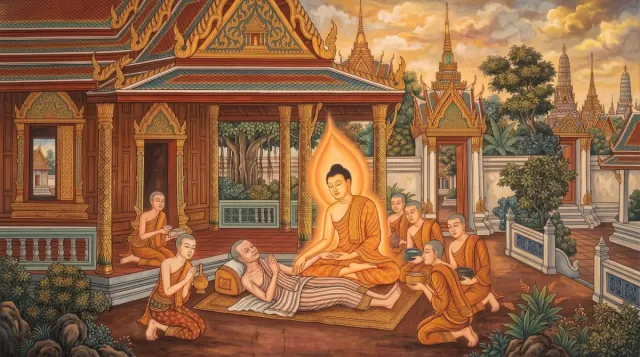
A monk sick with dysentery lay in his own urine and excrement with no one to care for him. The Buddha washed h…