
The Treatise on the Even and the Head: Counterparts That Keep Defilements From Appearing
SamasīsakathāThe Paṭisambhidāmagga pairs each defilement with what cuts it off: renunciation cuts sensual desire, non-ill w…


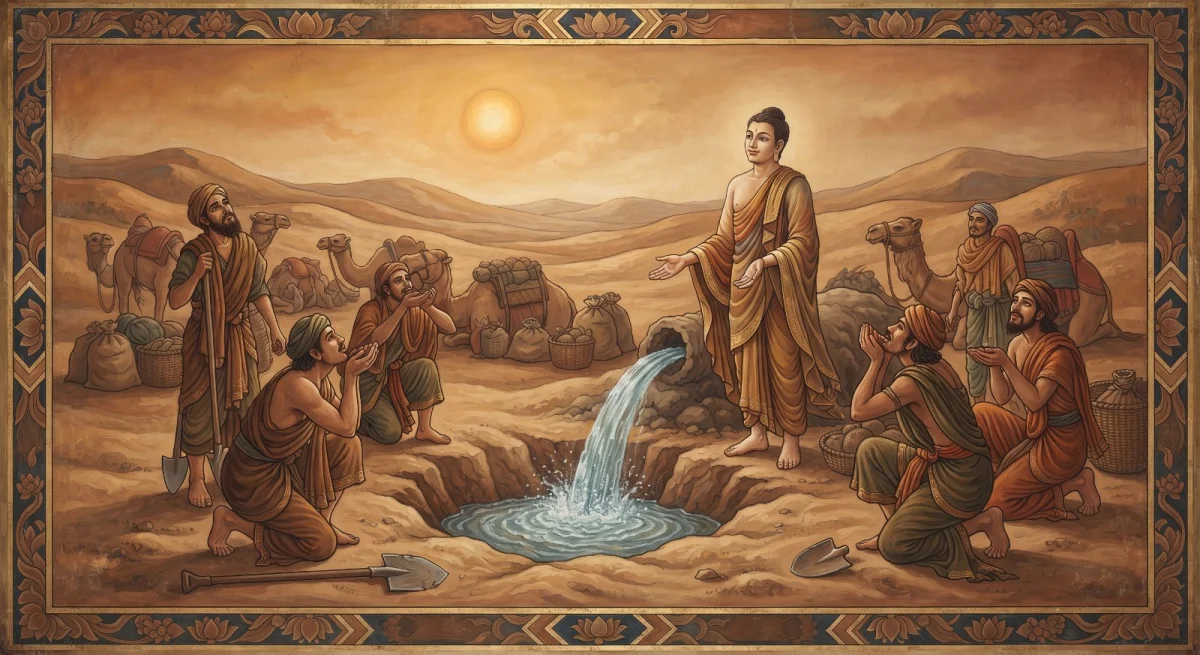
Vaṇṇupathajātakaṃ
People who were not lazy dug in the sandy track until they found water; so too a practitioner with energy and strength finds peace of heart. The commentary tells how the Bodhisatta heard water beneath a rock and had it broken when everyone else had given up.
In the Vaṇṇupatha Jātaka of the Book of Ones of the Jātaka, Khuddaka Nikāya, the Tipiṭaka text is a single verse: just as tireless people, digging in the sandy track, found water there in the open ground, so a sage endowed with energy and strength, tireless, may find peace of heart. The Thai translation's heading is "on one who is not lazy".
The story comes from the Jātaka commentary. Its frame story tells of a monk who took a meditation subject but, getting no results, became discouraged and gave up his effort. The Buddha reminded him that in the past he had been someone who did not give up, and so saved many lives.
In the past, the Bodhisatta led a caravan across a desert that had to be crossed by night. The guide who steered by the stars fell asleep, and the oxen turned back to where they had started. With water and firewood used up, people lay down in despair. The Bodhisatta walked around until he found a clump of grass and had them dig there. When they struck rock deep down and everyone lost heart, he went down, put his ear to the rock and heard water flowing beneath. He had a young servant who had not yet given up strike the rock until it broke, and water rose up for everyone to drink.
The verse opens with the image of people who were not lazy, digging into a sandy track and finding water. Water in the desert isn't on the surface; you only find it by digging.
Worthwhile goals, like a new skill or good health, are rarely on the surface. Commit to steady effort for a while before judging whether it works.
The verse compares the sage endowed with energy and strength (viriya and bala) to the diggers. Determination alone is not enough; you also need the stamina to keep going.
Look after your sleep, food and rest so you have enough strength for long-term work, instead of short bursts that leave you exhausted.
What the tireless sage gains, the verse says, is not gain or fame but peace of heart. The diggers found water to quench their thirst; the practitioner finds peace to quench the heart's burning.
When training in meditation or good habits, measure whether your mind is calmer rather than what you have gained.
The commentary tells how, when the caravan was lost and out of water, people lay hopeless under the carts. The Bodhisatta didn't lie still but walked around until he found a clump of grass, reasoned that grass could only grow if there was water beneath, and had them dig there.
When you are stuck and want to give up, get up and look for small clues to where a way out might be, such as asking someone who has been through it or reviewing what has worked before.
The commentary tells how, deep down, they struck hard rock and everyone lost heart. The Bodhisatta went down, put his ear to the rock and heard water flowing beneath, then had a young servant strike it. He did not give up until the rock broke and water rose up.
When a project hits a big obstacle near the end, check for signs that success is close. If there are, ask those who still have heart to help push a little further.
In the commentary's frame story, the Buddha reminded the discouraged monk that he had once been the tireless one who broke the rock. The Buddha did not scold him harshly but pointed out that perseverance was something he already had.
When you or someone close to you loses heart, recall a time you came through something hard and speak of it as encouragement, rather than criticising weakness.
This is a familiar story of perseverance, but its details are worth noticing. The Bodhisatta did not persevere blindly: he first looked for signs of where water might be, and when they hit rock he listened to confirm before having it broken.
In Dhamma practice, study or long-term work, hitting rock is the stage where you have worked a long time and still see no results. That is where most people quit. This Jātaka invites you to check whether you are on the right track, and if you are, to keep going.
Perseverance doesn't mean never resting. The verse says "not lazy", not "push until you fall ill". Resting with purpose so you can return to the work is part of perseverance too.
Tap to read the actual passage on the page cited.
The Paṭisambhidāmagga pairs each defilement with what cuts it off: renunciation cuts sensual desire, non-ill w…

A resident monk carefully looks after visiting monks. Once they are settled, he stops arranging their food, an…

Giving, offering, sharing, helping, welcoming, seeking, and even growth and treasures, all come in two kinds: …

Four things the Buddha called finer than a world-ruler's treasures — unshakeable confidence in the Triple Gem,…