
Bhikkhunī Vibhaṅga: Spreading What You Misheard, and Abusing the One Who Told the Truth
Duggahitena dūpadhāritenaBhaddā Kāpilānī praises a pupil for serving her well and plans to give her a robe, but the pupil grasps it wro…


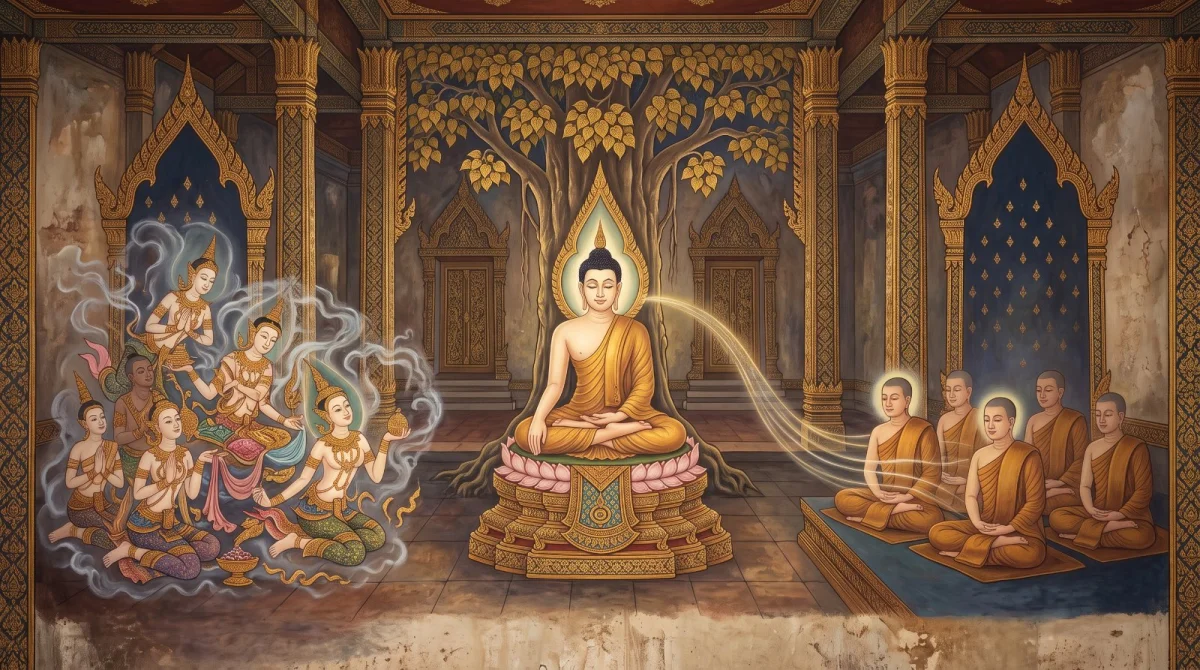
Anupādā cittassa vimokkho
Sensual pleasures in this life and the next are impermanent, hollow and deceptive, like an illusion. The Buddha shows practices that lead the mind step by step to imperturbability, then warns that even the most refined equanimity, if still relished, is something clung to. True liberation is liberation through not clinging.
In the Āneñjasappāya Sutta of the Majjhima Nikāya, the Buddha, staying at Kammāsadhamma in the Kuru country, says that sensual pleasures in this life and in lives to come, together with sensual perceptions, are impermanent, hollow and deceptive, Māra's snare and domain. Within them covetousness, ill will and rivalry arise, obstructing one in training.
He then shows the practice suited to the imperturbable, that is, an unshakable mind, followed by practices suited to the base of nothingness and the base of neither-perception-nor-non-perception. Each stage begins from a more refined reflection: seeing that all form is the four great elements, seeing that what is impermanent is not worth relishing, or seeing that this is empty of self and of what belongs to self.
Venerable Ānanda asks whether one who has attained equanimity will attain final nibbāna. The Buddha answers that it depends on whether one still relishes and clings to that equanimity. He concludes that all of this is still identity (sakkāya), while the deathless is the liberation of mind through not clinging. Much of the content concerns deep meditation for monastics.
Sensual pleasures are impermanent, hollow, false and deceptive by nature. They are a conjuring trick, the prattle of fools. This holds for sensual pleasures in this life and the next, and for sensual perceptions of both.
When you feel "If I get this, I'll be happy", recall something you badly wanted a year ago and ask how much of that excitement is left.
Sensual pleasures are Māra's domain, his bait and his feeding ground. In them, unwholesome mental states arise, covetousness, ill will and rivalry, and they obstruct one who is training.
Notice that when you want something intensely, irritation at whoever stands in the way and the wish to outdo others usually come along. See the three as one package.
The noble disciple reflects: if I dwell with an abundant, exalted mind, having surpassed the world, those unwholesome states will not arise, and my mind, no longer limited, will become limitless and well developed. Practising this often, the mind becomes clear and can attain the imperturbable or incline to wisdom.
When small things make your mind narrow, picture a wide sky or a whole city for a moment. Problems return to their real size.
Next, the noble disciple reflects that all form is the four great elements and form derived from them, and that sensual pleasures and forms, in this life and the next, and perceptions of them, are impermanent. Whatever is impermanent is not worth relishing, welcoming or holding on to.
Before getting too attached to something, ask briefly, "Is this permanent?" If not, you can use it and care for it, but don't stake all your happiness on it.
Gone to a forest, the root of a tree or an empty hut, the noble disciple reflects that this is empty of self or of what belongs to self. At another stage he reflects that he is nowhere anyone's anything, and nothing of his is anywhere in anything. The Buddha calls these the practice suited to the base of nothingness. This point is for overall understanding.
When "this is me, this is mine" hits you hard, pause briefly and note that this feeling is simply something arising. You don't have to take it on as your whole self.
A monk attains equanimity by reflecting: it might not be, and it might not be mine; it will not be, and it will not be mine; what exists, what has come to be, that I abandon. But if he relishes, welcomes and holds on to that equanimity, his consciousness depends on it and clings to it, and one who clings does not attain final nibbāna. The Buddha calls the base of neither-perception-nor-non-perception the best thing to cling to, yet it is still clinging.
If you once felt deep calm in practice and got irritated when the next session wasn't calm, that is attachment to calm. Recognise it and let go of wanting calm too.
A monk who does not relish or cling to that equanimity has consciousness that does not depend on it, and he attains final nibbāna. The Buddha concludes that sensual pleasures, forms and every level of perception described are identity, as far as identity extends, while the deathless is the liberation of mind through not clinging. This is the liberation of the noble ones.
Treat every stage of training as a stair, not a house to live in. Wherever you reach, ask what you are still clinging to at that stage.
The Buddha said: what a compassionate teacher should do for his disciples, I have done for you. There are the roots of trees, there are empty huts. Meditate, don't be negligent, don't regret it later. This is my instruction to you.
You have heard enough; what remains is doing it. Find a quiet spot for a few minutes each day and actually sit, before the day comes when you regret never starting.
Even if most people will never train to such attainments, the first point applies every day. Covetousness, resentment and the urge to win tend to gather around what we crave. Seeing those things as hollow, like an illusion, greatly weakens their pull.
Another point, deeper but useful, is that even calm can be clung to. Some people become attached to the peace they get from practice and grow irritable when it disappears. The sutta shows that peace you still need to hold on to is not yet freedom.
The closing instruction is the simplest of all: there are the roots of trees, there are empty huts; meditate, don't be negligent, don't regret it later.
Tap to read the actual passage on the page cited.
Bhaddā Kāpilānī praises a pupil for serving her well and plans to give her a robe, but the pupil grasps it wro…
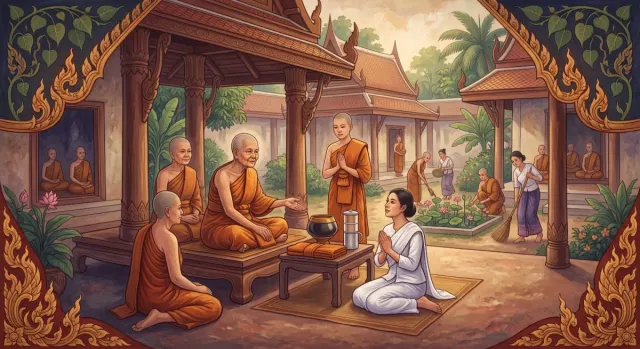
Preceptors too junior, so their pupils knew no more than they did; conditions set for ordination and then not …
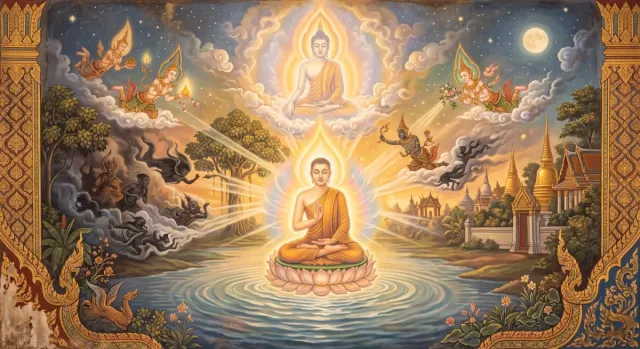
This mind is luminous, but defiled by incoming defilements. The uninstructed ordinary person does not understa…
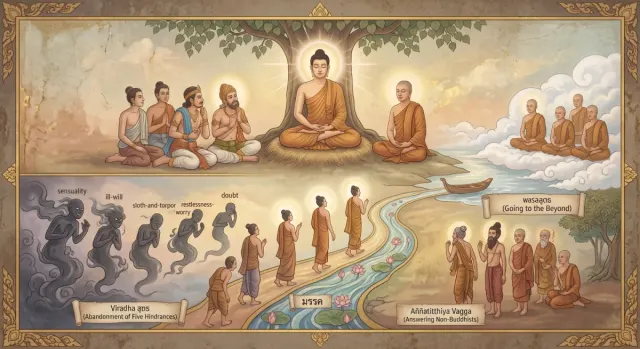
Whoever neglects the noble path neglects the way to the end of suffering; whoever takes it up has taken up tha…