
The Peaked House: A Badly Thatched Roof and an Unguarded Mind
Citte gahapati arakkhiteThe Buddha tells the householder Anāthapiṇḍika that when the mind is unguarded, bodily, verbal and mental acti…


Pañcattayasuttaṃ
The Buddha analyses views about a self after death and about the world, using the similes of a merchant hoping for profit, a dog tied to a post, and shade and sunlight. He shows that even someone who regards himself as "at peace, no longer clinging" is still clinging. The way out is to know the six bases of contact as they really are and be liberated through not clinging.
In the Pañcattaya Sutta of the Majjhima Nikāya, the Buddha tells the monks at Jeta's Grove that ascetics and brahmins who speculate about the future hold five views: a percipient self survives death, a non-percipient self survives death, a self neither percipient nor non-percipient survives death, a being is annihilated at death, and nibbāna here and now. These five become three and the three become five, which gives the sutta its name.
He analyses each view, including sixteen views about the self and the world speculated from the past. Each ends with the same conclusion: this is conditioned and coarse, but there is the cessation of formations. Knowing this, the Tathāgata sees the escape and goes beyond it.
Finally he describes someone who has let go of both views and the fetter of sensuality, passes in turn beyond rapture, pleasure and neutral feeling, and regards himself as at peace, quenched and without clinging. Even that way of seeing oneself, the Buddha says, is clinging. This sutta is a detailed, analytical teaching.
The five views about the future are: a percipient, a non-percipient, and a neither-percipient-nor-non-percipient self that survives death; annihilation; and nibbāna here and now. The first three group together as belief in a surviving self, leaving three groups. This point is for overall understanding.
When you meet many beliefs about life after death, try grouping them to see where they really differ. Many turn out to be one idea expressed in different ways.
After analysing each view, the Buddha repeats: this is conditioned and coarse, but there is the cessation of formations. Knowing that this exists, the Tathāgata sees the escape and goes beyond it. He neither affirms nor refutes by arguing.
When you meet a view that differs from yours, instead of rushing to argue, ask what conditions gave rise to this view, and to your own.
All the ascetics and brahmins who assert a self after death are straining toward the future, hoping, "After death we shall be like this." They are like a merchant setting out to trade, expecting to make such and such a profit.
Notice whether your good deeds carry a ledger, waiting for a return. Doing good because it is good in itself is lighter than waiting to collect a profit.
Those who hold that a being is annihilated at death fear and loathe identity, yet keep running around identity, like a dog tied by a leash to a firm post or stake that keeps running around that same post.
Hating yourself or wanting to escape yourself doesn't bring freedom; it keeps you circling the same issue. The way out is understanding, not loathing. If these feelings weigh on you heavily, talk with someone you trust or a professional.
Of those who assert "The self and the world are eternal; only this is true, anything else is false", or any of the sixteen such views, it is impossible that they have pure personal knowledge apart from faith, liking, oral tradition, reasoned reflection and acceptance of a view after pondering it. Even the fragment of knowledge they clarify is called clinging.
Before saying "Only this is true", ask how you know it: faith, preference, hearsay, or reasoning that sounds right? Then speak with a weight that matches the source of your knowledge.
One who has let go of sensuality and views attains the rapture of seclusion. When that rapture ceases, sadness arises; when sadness ceases, rapture arises again, just as sunlight spreads wherever shade leaves, and shade spreads wherever sunlight leaves. Spiritual pleasure and neutral feeling likewise alternate in this way.
If one day's meditation brings happiness and the next brings irritation, see it as shade and sunlight alternating. Don't chase the happiness or fear its absence.
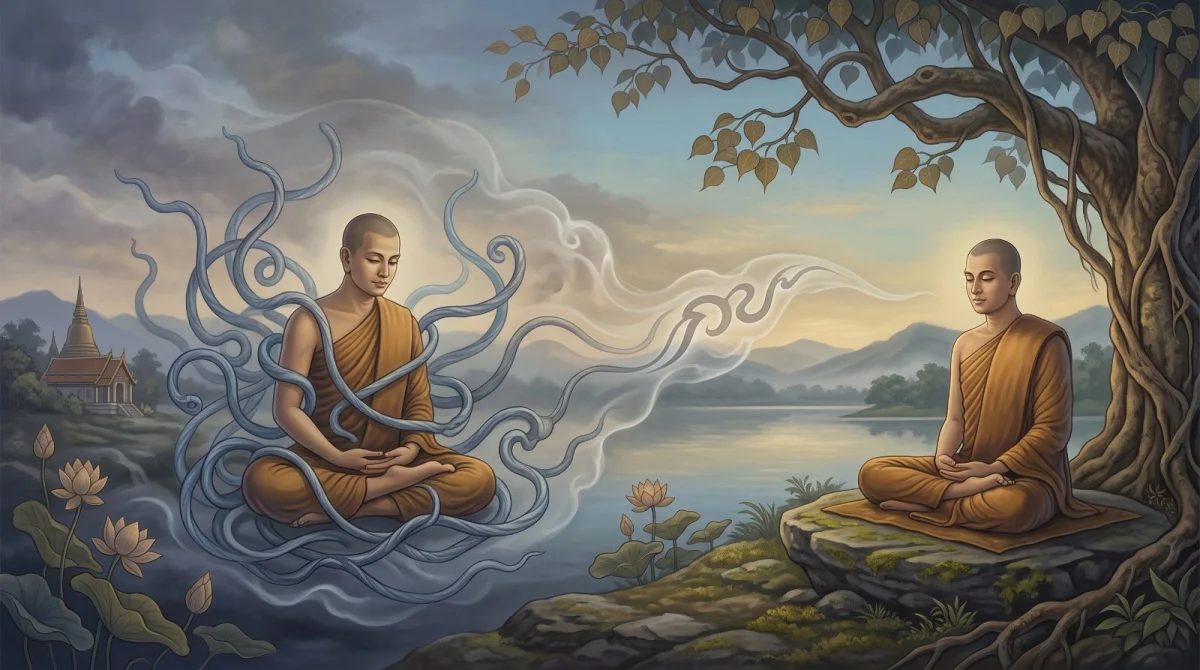
One who has gone beyond rapture, pleasure and neutral feeling and regards himself thus, "I am at peace, I am quenched, I am without clinging", claims this is the path to nibbāna. But the Buddha says that even regarding oneself this way is called clinging.
Beware pride in being good at letting go or calmer than others. When you hear yourself say that, recognise a new self taking shape.
The supreme, peaceful, excellent state awakened to by the Tathāgata is knowing, as they really are, the arising, passing away, gratification, danger and escape of the six bases of contact, and being liberated through not clinging.
Practise looking at what touches the eye, ear, nose, tongue, body and mind in five ways: what it arises from, how it passes, what satisfaction it gives, what harm it carries, and how you are free of it when you don't cling.
For ordinary people, this sutta helps us hold our own views more lightly. Many beliefs we grip tightly actually rest on faith, liking, what has been passed down, or reasoning that sounds plausible, not on seeing for ourselves. Knowing this lets us discuss without needing to win.
The simile of shade and sunlight reminds us that happiness from practice also rises and falls. When it fades and the mind sinks, that isn't failure; it is the nature of conditioned things.
The deepest point is that telling yourself "I've let go" may be a new, subtler kind of self. Real liberation doesn't need announcing, not even to yourself.
Tap to read the actual passage on the page cited.
The Buddha tells the householder Anāthapiṇḍika that when the mind is unguarded, bodily, verbal and mental acti…

Three roots of wrongdoing — greed, hatred, delusion — and three roots of good — non-greed, non-hatred, non-del…

The Mahāniddesa's explanation of the Sāriputta Sutta: how a monk living in seclusion should meet the five dang…

A piece of sugar cane, four fruits, a field watchman's portion of kummāsa, food for a weary monk — stories fro…