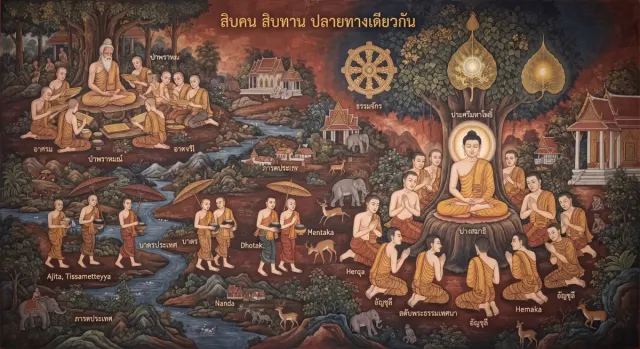
The Apadānas of Bāvarī's Pupils: Ten People, Ten Gifts, One Destination
MetteyyavaggoThe Metteyya vagga collects the apadānas of ten elders who had been pupils of the brahmin Bāvarī. Each recount…


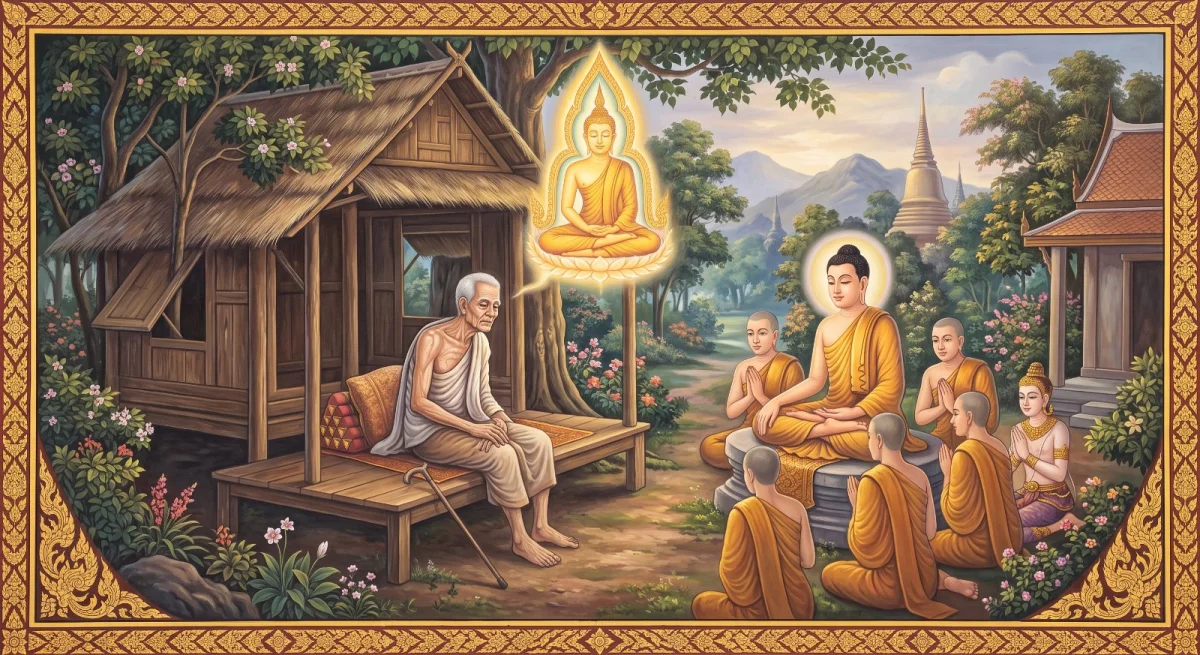
Nakulapitusuttaṃ
The Buddha's teaching to an aged, ailing householder — "Though my body is afflicted, my mind will not be afflicted" — and Sāriputta's explanation of how.
The Nakulapitā Sutta is the first discourse of the Khandha Saṁyutta. The householder Nakulapitā came to the Buddha and said: I am old, aged, advanced in years, my body is afflicted and often ill, so I rarely get to see the Blessed One. Please teach me what will lead to my welfare and happiness for a long time.
The Buddha replied: So it is. This body is afflicted, like an egg encased in its shell. Anyone carrying this body who claimed to be healthy even for a moment would be a fool. You should train yourself thus: "Though my body is afflicted, my mind will not be afflicted."
Nakulapitā then went to Sāriputta and asked how body can be afflicted while mind is not. Sāriputta explained: the uninstructed person regards the five aggregates as self, so when they change, sorrow and pain arise. The noble disciple doesn't regard them that way, so when the aggregates change, the mind is not afflicted along with them.
The noble disciple doesn't regard form as self, self as possessing form, form in self, or self in form. So when form changes, sorrow and pain don't arise.
When your body can no longer do what it used to, remember: the body changes, but your worth as a person doesn't depend on it.
Not grasping painful or uncomfortable feelings as "me", so when feelings change, the mind isn't dragged along.
When in pain, say inwardly "there is pain" instead of "I'm in pain". That small distance genuinely helps.
Not grasping memory and recognition as "me", so when memory fades or shifts, the mind doesn't suffer along with it.
Older people beginning to forget, and those caring for them, might use this to ease the heart: memory too naturally changes.
Not grasping thoughts and intentions as "me", so when thoughts change or scatter, the mind isn't troubled.
Anxious thoughts about illness that keep coming up are just thoughts, not predictions. Know them and let them pass.
Not grasping awareness as "me", so when awareness changes, sorrow and pain don't arise.
Our awareness was never constant to begin with. Accepting this makes it easier to cope with days when body and mind aren't what they were.
This page is especially for the elderly, the chronically ill, and those caring for them. The body can be ill, but the mental suffering layered on top — "Why me?", "I'm worthless now" — is another matter, and it can be trained to lighten.
Use it by going through the aggregates one by one as Sāriputta did: which part is changing, and which part is the mind grasping as "me"? Read alongside "The Two Arrows", the same principle from another angle.
Tap to read the actual passage on the page cited.
The Metteyya vagga collects the apadānas of ten elders who had been pupils of the brahmin Bāvarī. Each recount…
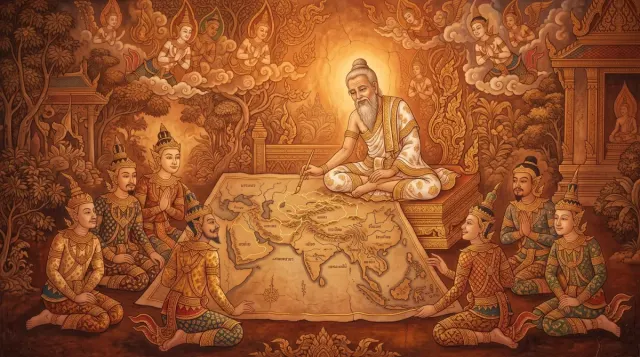
The brahmin Mahāgovinda helps King Reṇu keep his promise to share the kingdom with his friends and divides the…
Eight verses of Mahākaccāna: not taking on more work than needed, the subtle dart of honour, no one is a thief…
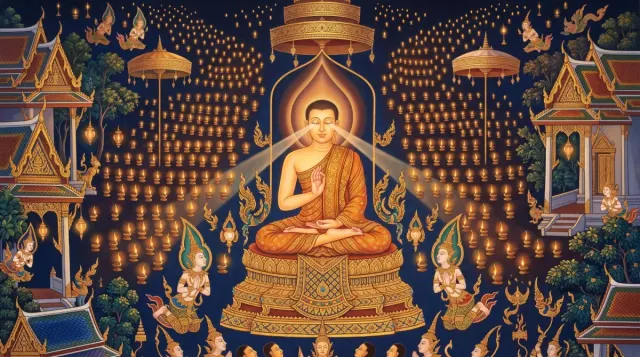
Anuruddha's past life according to the Apadāna: seeing the Buddha Sumedha meditating in seclusion at the foot …