
The Fragrance Discourse: The Scent That Travels Against the Wind
Satañca gandho paṭivātametiĀnanda asks whether there is a fragrance that travels against the wind. The Buddha says there is: the fragranc…


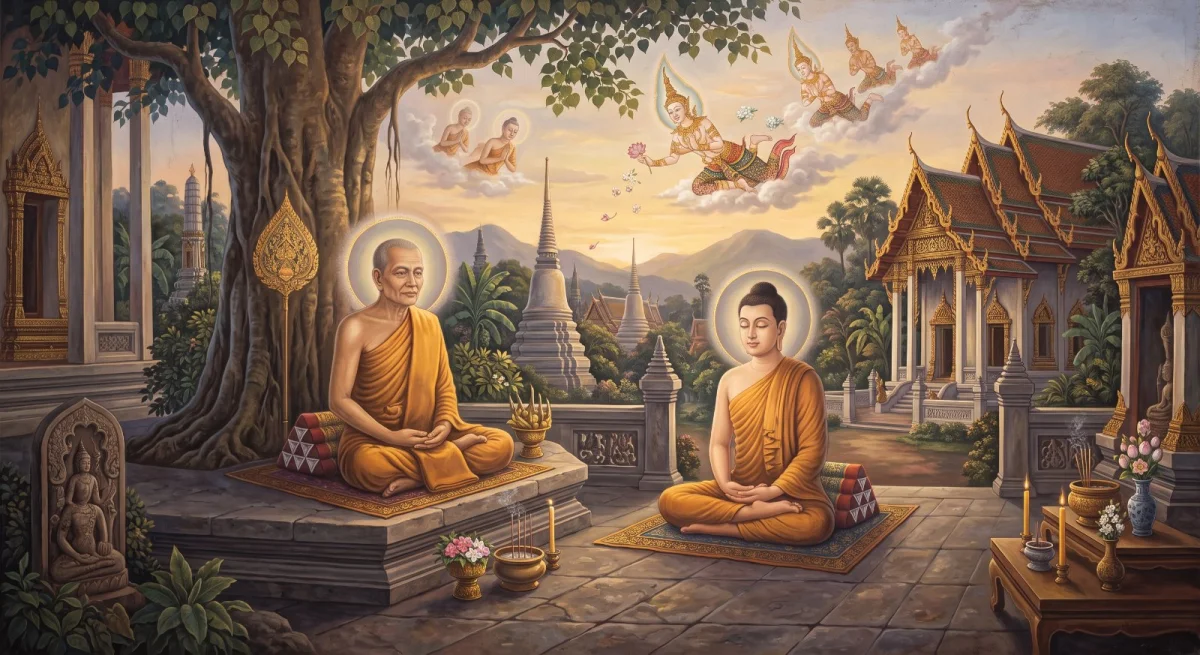
Vimokkho tassa nāparo
For one without sensual desire or craving, who has crossed over doubt, there is no further liberation to seek. And the teaching to Bhadrāvudha: remove all craving for grasping, above, below and across the middle, for whatever beings grasp, by that Māra follows them.
In the Pārāyana Vagga of the Sutta Nipāta, Khuddaka Nikāya, the young brahmins Todeyya and Bhadrāvudha are two of the brahmin Bāvarī's sixteen pupils who go to question the Buddha.
Todeyya asks: for one without sensual desire, without craving, who has crossed over doubt, what kind of liberation is there? The Buddha says there is no further liberation for such a one. He then explains that such a sage has no longing, has wisdom but does not construct anything from it, owns nothing, and is not attached to sensual pleasures or existence.
Bhadrāvudha asks the Buddha to teach the people from many regions who have come to listen. The Buddha says people should remove completely all craving for grasping, above, below and across the middle, because whatever beings grasp in the world, by that very thing Māra follows them.
Todeyya asks what liberation there is for one in whom sensual desires do not dwell, who has no craving and has crossed over doubt. The Buddha says there is no other liberation for such a one.
When you want some more special "spiritual experience", come back to what's real: is craving decreasing, is doubt lessening? That is the true measure.
Todeyya asks further whether such a one is without longing or still longing. The Buddha says such a one has no longing and is not longing for anything.
Notice times when you work or help others without hoping for praise or reward. How light is the mind then? Let such times come more often.
He says such a one has wisdom but is not one who constructs things from wisdom — not shaping knowledge into views or a self to cling to.
When you know a lot about something, beware of using that knowledge to build the image "I'm the one who knows". Use it to help the work and help people, without letting it become an identity.
He concludes: know the sage in this way — one who owns nothing and is not attached to sensual pleasures or existence — not by outward appearance.
When choosing a teacher or role model, look at whether their greed, possessiveness and desire to stand out have truly lessened, more than at their fame or manner.
Bhadrāvudha asks for a teaching for the people from many regions who have come to listen. The Buddha says people should remove completely all craving for grasping, above, below and across the middle.
Check your clinging in three directions: what you still regret, what you still worry about ahead, and what you're possessive of now. Loosen one at a time.
He gives the reason: whatever beings grasp in the world, by that very thing Māra follows them. Grasping is the channel through which suffering and death catch up with us.
Notice that what most easily makes you angry, afraid or shaken is usually what you cling to most — reputation, being right, or the people you love.
A monk who understands, seeing beings stuck in the round of existence, Māra's snare, because of grasping, should be mindful and not grasp at anything in the whole world.
When you see others suffering from attachment, use it as a mirror for yourself rather than judging them, and ask where you have the same kind of clinging.
Many people meditate or study the Dhamma and still feel they need some special experience. The answer to Todeyya makes it clear: when desire, craving and doubt are gone, there's no other kind of liberation hidden away to chase. Chasing special experiences may itself be another form of craving.
The teaching to Bhadrāvudha applies to everyone who comes to listen, wherever they come from. The principle is that wherever we cling is where suffering catches up with us — clinging to the past, the future or the present.
The two teachings fit well together: the first says what the destination is, the second says where to start loosening.
Tap to read the actual passage on the page cited.
Ānanda asks whether there is a fragrance that travels against the wind. The Buddha says there is: the fragranc…
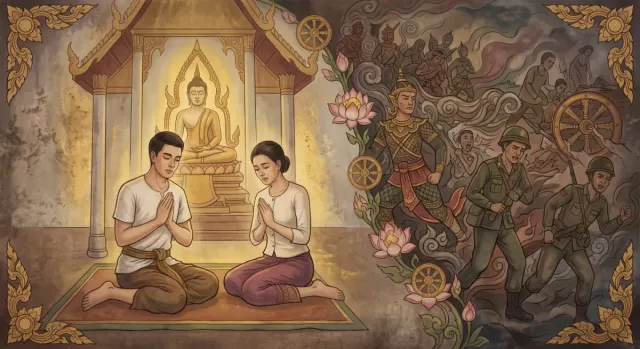
The group of six monks went to watch King Pasenadi's army on the march. The king asked what use it was to look…
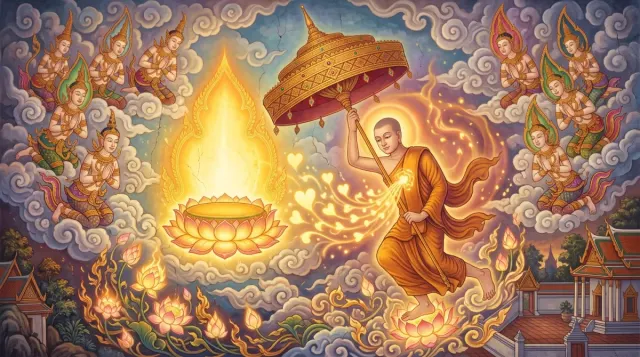
Ānanda's past life according to the Apadāna: he climbed down from an elephant to hold a parasol over the Buddh…

Apadānas of elders whose verses state plainly that they were poor — a hired labourer, a grass-cutter, a farmer…