
The Discourse at Cātumā: Four Dangers for One Who Has Gone Forth
CātumasuttaṃThe Buddha dismisses newly arrived monks for being noisy; the Sakyans and Brahmā plead for them with the simil…


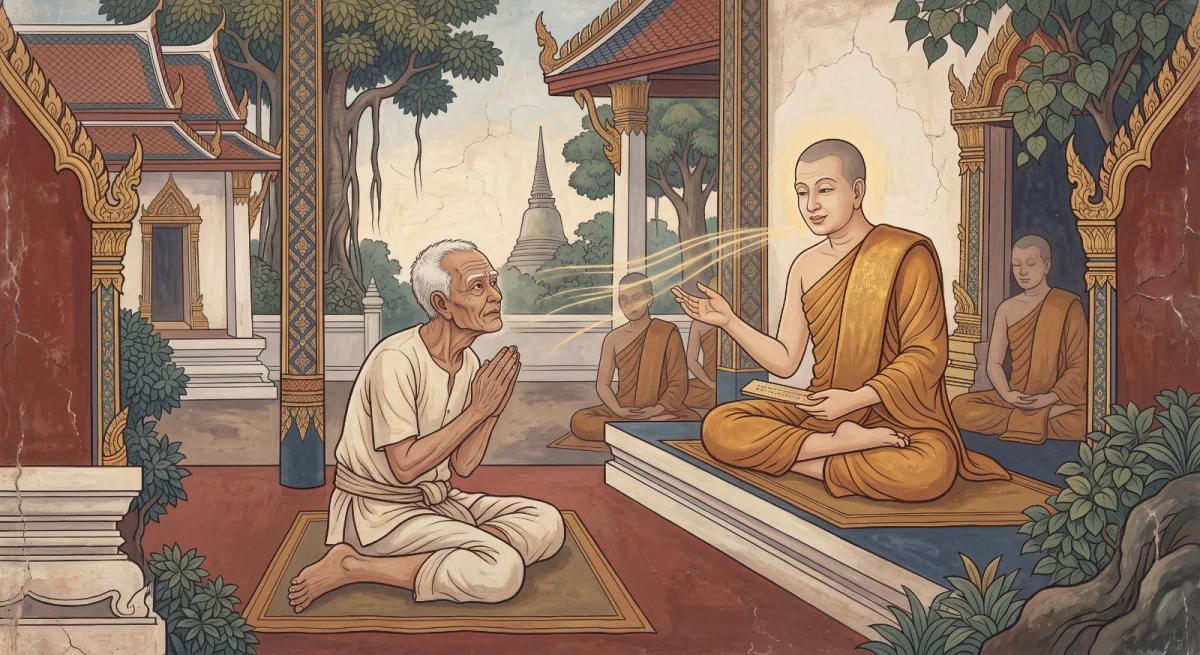
Piṅgiyamāṇavapucchā
An old man with dim eyes and poor hearing asks for a Dhamma he can understand before he dies. The Buddha answers briefly: be heedful, let go of form and craving. It is never too late to learn the Dhamma.
In the Pārāyana Vagga of the Sutta Nipāta, the young brahmin Piṅgiya is one of sixteen pupils of the brahmin Bāvarī who go to question the Buddha. He says: "I am old, weak, my complexion faded, my eyes unclear, my hearing poor. Let me not perish deluded along the way. Teach me the Dhamma I can understand, the abandoning here of birth and aging."
The Cūḷaniddesa explains that he was then 120 years old.
The Buddha answers twice. First: seeing heedless people afflicted because of form, be heedful, Piṅgiya, and abandon form so as not to come to be again. Second: seeing people overcome by craving, tormented and overwhelmed by aging, be heedful, Piṅgiya, and abandon craving so as not to come to be again.
In the epilogue to the Pārāyana Vagga, Piṅgiya returns to tell Bāvarī, saying his aged body cannot go to the Buddha, but his mind is always with him. The Buddha says: as Vakkali, Bhadrāvudha and Āḷavi Gotama were released through faith, so you too should release your faith; you will go beyond the realm of death.
Piṅgiya did not hide that he was old, weak, and poor of sight and hearing. Honestly accepting one's limits lets one ask for what truly suits oneself.
If your body doesn't allow long sitting meditation, choose something suitable, like a short chant or recollecting the Triple Gem while resting.
He did not ask for a deep, complex teaching, but for a Dhamma he could know. This is a wise request, since a Dhamma one can actually practise is worth more than one heard and forgotten.
Choose one sentence of Dhamma you understand and truly use it, rather than reading a lot and applying none.
The Buddha says heedless people are afflicted because of form — the body and what is seen. When the body declines they suffer, so he tells him to let go of clinging to form. This matches the questioner's situation exactly, suffering from an aging body.
When your body can't do what it used to, tell yourself: "This body is changing by nature; I don't have to suffer twice over it."
The second time, he points deeper: the root of being tormented and overwhelmed by aging is craving. Abandoning craving is therefore the way beyond birth and aging that Piṅgiya asked for.
Notice the wish for everything to stay as it was, like wanting to be as strong as when young, and gently set it down.
Piṅgiya says his aged body cannot go to the Buddha, but his mind always does. The Buddha tells him to release his faith as Vakkali did, and he will cross beyond death's snare. Faith is a path those with physical limits can still walk fully.
Those who can no longer get to the temple can recollect the Triple Gem at home every day. A mind that remembers constantly is already in attendance.
Piṅgiya's story encourages older people who feel it's getting too late — the body doesn't cooperate, concentration is weak, memory fades. The Buddha's answer is short enough to remember and direct enough to practise at once: be heedful, and loosen clinging.
For those caring for elderly relatives, it's a reminder that long Dhamma teaching isn't needed. A short teaching they can grasp, and room to use the faith they already have, are worth more.
If an elderly person's forgetfulness is worsening quickly, or they seem depressed, take them to a doctor as well.
Tap to read the actual passage on the page cited.
The Buddha dismisses newly arrived monks for being noisy; the Sakyans and Brahmā plead for them with the simil…

Seven inner treasures no thief can steal and no fire can burn — faith, virtue, moral shame, moral dread, learn…

One side holds that the Tathāgata's powers are shared by disciples. The Theravāda points out that disciples ar…
The Paṭisambhidāmagga explains that understanding which restrains itself after hearing the Dhamma is knowledge…