
The Paṭṭhāna: Kamma, Result, Nutriment, Faculty, Jhāna and Path as Conditions
KammapaccayoKamma condition comes in two kinds, one within the same moment and one across different moments. Result, nutri…


Satta vatapadāni
As a human, Sakka undertook seven lifelong practices: supporting his parents, respecting family elders, speaking gently, avoiding divisive speech, being free of stinginess, speaking the truth, and not being angry — and removing anger quickly if it arose.
In the Deva Suttas of the Sakka Saṁyutta in the Saṁyutta Nikāya, the Buddha tells the monks that Sakka, lord of the gods, when he was a human, fully undertook seven vows for life, and because of them attained the position of Sakka. He then adds a verse that the Tāvatiṁsa gods call one who lives this way a good person.
In the next discourse he explains the origins of Sakka's various names. In the third, the Licchavi Mahāli asks whether the Buddha has really seen Sakka. The Buddha replies that he knows Sakka and also knows the qualities that make one Sakka, and again sets out the names and the seven vows.
Notably, all seven practices are ordinary matters for a householder. There is no ritual or special power, only caring for family, good speech, a generous heart, and handling anger.
The first vow is the resolve: may I support my mother and father as long as I live.
Besides sending money, set a regular time for your parents, such as a call every Sunday or taking them to the doctor yourself.
May I show respect to the elders of my family as long as I live.
At family gatherings, greet the elders before picking up your phone, and hear their stories to the end even if you've heard them before.
May I speak gently as long as I live. The closing verse speaks of one who talks gently and speaks words that bring friends together.
When you have to say something unwelcome, change your tone before changing the content: say the same thing in gentler words.
May I not speak divisively as long as I live — not carrying words from one side to another to split people apart.
When someone tells you something bad about a colleague, let it stop with you rather than passing it on in the group chat.
May I live at home with a mind free from the stain of stinginess, freely generous, open-handed, delighting in giving, responsive to requests, and delighting in sharing, as long as I live.
Make sharing easy, for example by setting aside part of your money each month for helping others, so you don't hesitate when someone asks.
May I speak the truth as long as I live.
Drop habitual small lies, such as saying you're on your way when you haven't left yet. Give the real time instead.
May I be free from anger as long as I live, and if anger should arise in me, may I quickly remove it.
Make a rule for yourself: when angry with someone, don't send a message or decide anything about it until you've cooled down, and don't carry it overnight.
As a human he was a young man named Magha, so he is called Maghavā. He gave gifts before others, so he is Purindada. He gave gifts respectfully, so he is Sakka. He gave lodgings, so he is Vāsava. He can think of a thousand matters in a moment, so he is Sahassakkha. His wife is the asura maiden Sujā, so he is Sujampati. He rules the Tāvatiṁsa gods, so he is Devānaminda.
Most of Sakka's names come from giving. Ask yourself: if the people around you named you after what you do most often, what would that name be?
The seven vows are an everyday checklist for being a good person. There's no need to hope to become a god; simply living by them makes home and work life far more peaceful.
The vow on anger is realistic. It doesn't say anger will never arise, but that if it does, remove it quickly — recognise it and don't let it fester. It is not about suppressing feelings.
Supporting parents and respecting elders are done according to each person's ability and circumstances. Respect does not mean accepting behaviour that is harmful to oneself.
Tap to read the actual passage on the page cited.
Kamma condition comes in two kinds, one within the same moment and one across different moments. Result, nutri…

Seven inner treasures no thief can steal and no fire can burn — faith, virtue, moral shame, moral dread, learn…

Four places the Buddha said are worth seeing — birth, awakening, first teaching and final passing — to see tha…
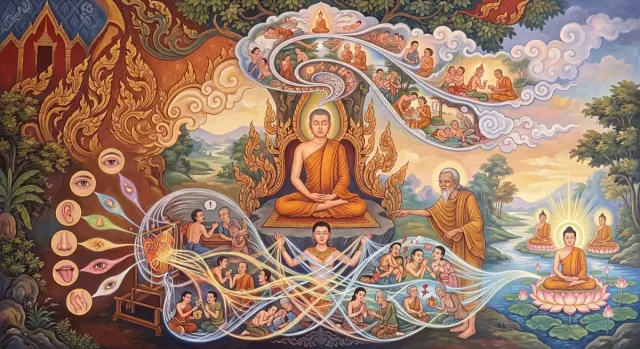
From a single moment of seeing to a big story in your head — the sequence Mahākaccāna explained, which the Bud…