Paṭṭhāna: Which Hindrances Come Together, and What Supports Them
NīvaraṇadukaṃThe hindrance pair divides states into those that are hindrances and those that are not. The text's examples s…


Tathāgate vā tathāgatasāsane vā paramanipaccakāraṃ
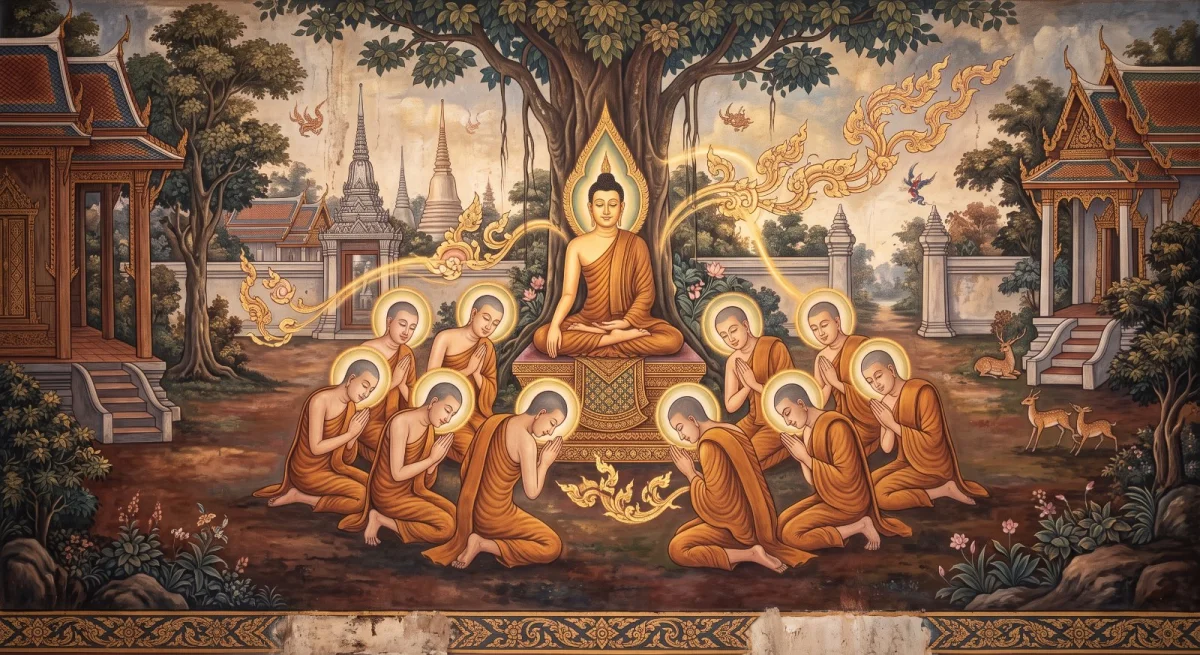
The Buddha asks Sāriputta what benefit a monk whose defilements are destroyed sees, that he still shows the utmost humility towards the Tathāgata and his teaching. Sāriputta answers that he sees the unsurpassed sanctuary from bondage, and that this humility is respect for the Teacher, the Dhamma, the Saṅgha, the training and concentration.
In the Sūkarakhata Vagga of the Indriya Saṃyutta, Saṃyutta Nikāya, the Buddha, staying at the Boar's Cave (Sūkarakhatā) on Vulture's Peak near Rājagaha, asks Sāriputta: what benefit does a monk whose defilements are destroyed see, that he continues to show the utmost humility towards the Tathāgata or the Tathāgata's teaching?
Sāriputta replies that he sees the unsurpassed sanctuary from bondage. Asked what that sanctuary is, he says it is that such a monk develops the faculties of faith, energy, mindfulness, concentration and wisdom, which lead to peace and to awakening.
Asked what the utmost humility is, he says it is dwelling with respect and deference towards the Teacher, the Dhamma, the Saṅgha, the training and concentration. To each answer the Buddha responds, "Good, good, Sāriputta."
The Buddha asks: a monk whose defilements are destroyed has nothing left to do for himself; what benefit does he see, that he still shows the utmost humility towards the Tathāgata or his teaching?
Ask yourself whether you respect certain people because you still hope for something from them, or because you see the good they have already given you. The answer shows the quality of that respect.
Sāriputta replies that such a monk sees the unsurpassed sanctuary from bondage, and so shows the utmost humility. Humility comes from seeing value, not from being forced.
When bowing or saying thanks feels like mere ritual, recall the real good you received from that person or teaching. Respect that comes from seeing their worth becomes natural.
Asked what the sanctuary is, Sāriputta says it is developing faith, energy, mindfulness, concentration and wisdom, which lead to peace and to awakening. The safe refuge lies in qualities trained within oneself.
On days when life feels unstable, check which of faith, energy, mindfulness, concentration or wisdom you have strengthened today. No one can take these from you.
The first part of the utmost humility is dwelling with respect and deference towards the Teacher. Even one who has attained the goal keeps this respect.
Honour the teacher, parent or first boss who taught you, even if today you may be better than them at some things.
Next is dwelling with respect and deference towards the Dhamma and the Saṅgha. Respect is not limited to the person who teaches; it includes the teaching and the community of practitioners.
Listen to teachings or advice attentively, not in order to find openings to argue, and honour fellow travellers who are training as you are.
The last two are respect and deference towards the training and towards concentration. One who has nothing left to train for himself still values training and the steadiness of the mind.
Don't look down on the basics, such as keeping small precepts or sitting quietly for a short while each day, even if you feel you already understand the Dhamma well.
This discourse turns around the idea that people respect a teacher because they still want something from them. The one who needs nothing more is the one who bows most deeply, because he sees most clearly what he has received.
Respect here is not ritual or blind veneration of a person. It includes respect for the training and for concentration, meaning continuing to value practice even when one is already skilled.
At work, many truly capable people still listen to others, still do the basics carefully, and still honour those who taught them. That is a small picture of what this discourse describes.
Tap to read the actual passage on the page cited.
The hindrance pair divides states into those that are hindrances and those that are not. The text's examples s…

The naked ascetic Kassapa asks whether the Buddha really condemns all austerity. The Buddha says he does not c…

King Ajātasattu put the same question to six rival teachers: what visible fruit does the ascetic life bear her…
Upananda gave a robe to a monk to persuade him to travel together, but when the monk chose to accompany the Bu…