
The Cetiya Jātaka: The Lie That Sinks Deeper With Every Telling
CetiyarājajātakaṃKing Cetiya knows the truth but deliberately answers otherwise. A sage warns him again and again that if he sp…


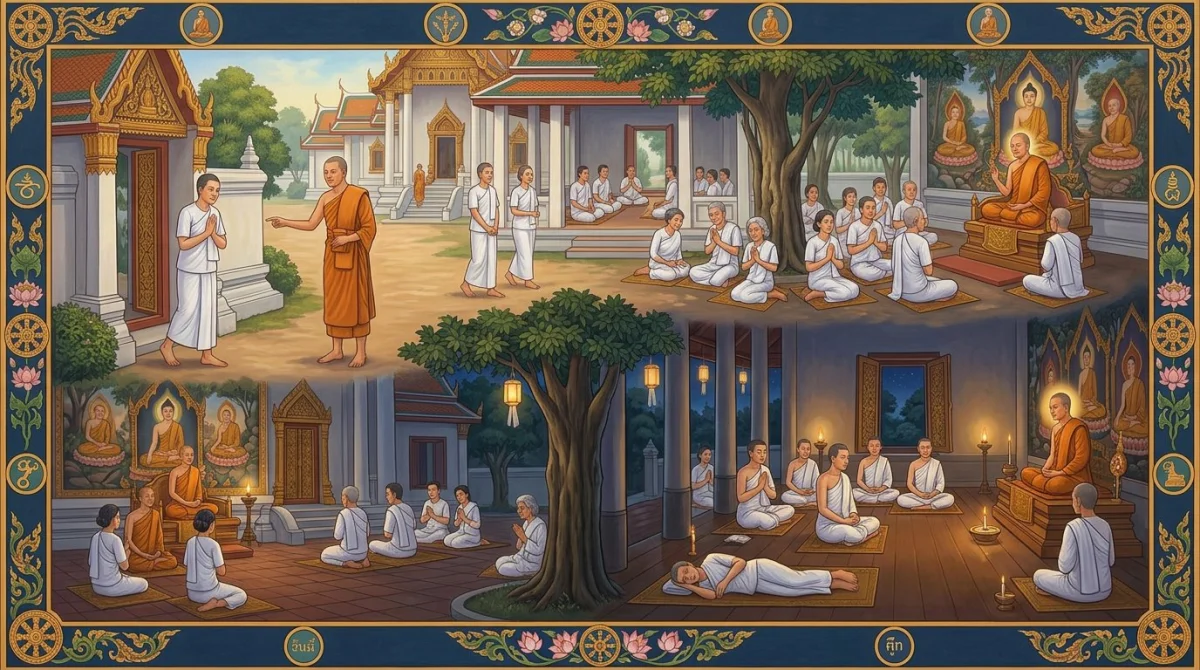
Aṭṭhaṅgasamannāgato uposatho
The eight-factored uposatha is not just a list of prohibitions but a resolve: "The arahants abstain like this for life; today I too will follow them for this night and day." The Buddha says it bears greater fruit than ruling the sixteen great countries.
In the Uposatha Chapter of the Book of Eights of the Aṅguttara Nikāya, the Buddha teaches the uposatha observance with eight factors several times, to the monks, to Visākhā Migāra's Mother, to the lay follower Vāseṭṭha and to the laywoman Bojjhā, with the same core message: an uposatha observed in this way is of great fruit and great benefit.
Its distinctive feature is the way of resolving. The noble disciple reflects: for as long as they live, the arahants abstain from killing, stealing, sexual activity, false speech, intoxicating drink, eating at the wrong time, entertainment and adornment, and high and luxurious seats and beds. Today, for this night and day, I too abstain in the same way; by this factor I follow the arahants.
The Buddha then says that kingship over the sixteen great countries is not worth a sixteenth part of this uposatha, and that anyone, woman or man, who keeps it may on death be reborn in the company of the devas of various realms.
Every factor of the uposatha is resolved on in the same way: the arahants abstain like this for as long as they live; today, for this night and day, I too abstain like this; by this factor I follow the arahants. The uposatha brings the highest example into a span of time an ordinary person can manage.
Before an observance day begins, think of the person you most respect in the Dhamma and resolve: "Today I'll try living as they do."
The first factor isn't only not killing. The discourse describes it as having laid down the rod and weapon, being conscientious and kindly, dwelling compassionate toward all living beings. The positive side of the precept is in the very same words.
On an observance day, besides harming no one, do some small kindness too, such as giving water to animals or helping with household chores without being asked.
The second factor is taking only what is given, expecting only what is given, living honestly with a mind free of theft. The third is abandoning sexual activity and living celibate for that night and day, which differs from the five precepts, where one abstains only from sexual misconduct.
Couples who wish to keep the uposatha should talk it over first and agree on the day together, so that the observance is something both are happy with.
The fourth factor is speaking only the truth, holding to the truth, being firm and trustworthy, not deceiving the world. The fifth is abstaining from liquor and intoxicants, which are a basis for heedlessness.
On an observance day, watch even small exaggerations, like saying "I'll do it in a moment" when you don't really intend to.
The sixth factor is eating once a day, refraining from eating at night and at the wrong time, following the arahants, who use food only to sustain life.
On a day without an evening meal, notice how much time and thought that usually circles around food is freed up.
The seventh factor is abstaining from dancing, singing, music and shows, and from wearing garlands, perfumes and cosmetics for adornment. The eighth is abstaining from high and luxurious seats and beds, using a low bed or a spread of grass.
An observance day is a chance to take a break from screens, music and dressing up. Sleep on a simple bed and notice a contentment that doesn't depend on stimulation.
A king ruling Aṅga, Magadha, Kāsī, Kosala, the Vajjis and the other great countries, sixteen in all, doesn't have a sixteenth part of the eight-factored uposatha, for human kingship is paltry compared with heavenly happiness. The Buddha describes the lifespans of the devas of each realm, far longer than human life. The verses add that the light of moon and sun and all gems and gold are not worth a sixteenth part of this uposatha.
When a day of keeping precepts feels like time "lost" from work or fun, recall this comparison: the worth of a calm mind can't be measured in money.
The lay follower Vāseṭṭha says that if his dear relatives, and all khattiyas, brahmins, vessas and suddas kept this uposatha, it would be for their welfare and happiness for a long time. The Buddha agrees, and says that if the whole world kept it, it would benefit the whole world; even these great sal trees, if they could intend it and kept it, would benefit, let alone a human being.
Invite someone at home or a friend to keep the uposatha on the same day. Doing it together makes it easier and brings calm to the household.
Many people know the eight precepts as extra prohibitions added to the five. This discourse changes the perspective: keeping the eight precepts is trying out, for one day, the life of those whose minds are free. Eat less, adorn less, entertain yourself less, and see how the mind feels.
Working people who can't get to a temple on observance days might choose a day off to keep the uposatha at home: switch off entertainment media, eat before noon, and spend time reading the Dhamma or meditating. Those with medical conditions such as diabetes should consult a doctor about skipping the evening meal and adapt it to their health.
The heavenly rewards are what the discourse describes, but the result you can see at once is a lighter, calmer mind after one day.
Tap to read the actual passage on the page cited.
King Cetiya knows the truth but deliberately answers otherwise. A sage warns him again and again that if he sp…
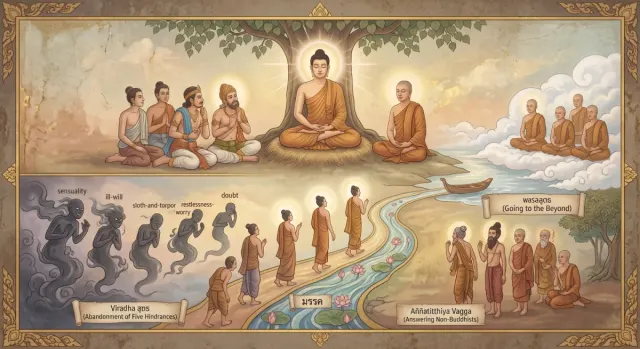
Whoever neglects the noble path neglects the way to the end of suffering; whoever takes it up has taken up tha…

The misapprehension pair divides states into clinging to views (parāmāsa) and states that are not. The text sh…
The four debates opening chapter eighteen answer the view that the Buddha did not really stand in the human wo…