
The Paṭṭhāna: Conditions That Work in the Same Moment and in Adjacent Moments
PaccayavibhaṅgavāroEight conditions about time and mutual support: proximity, contiguity, conascence, mutuality, support, prenasc…


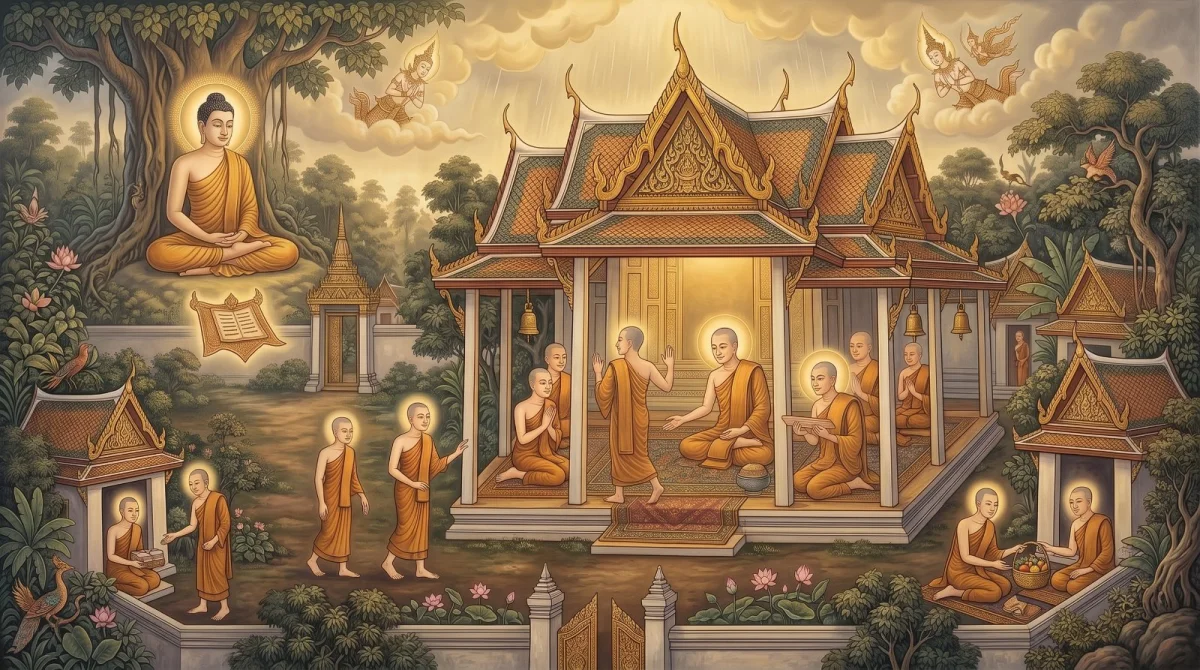
Dubbacajātiko
Channa claimed the Buddha and the Dhamma were his, so other monks had no right to admonish him. This is the origin of the rule on being difficult to correct, along with two more stories of him evading questions and ignoring warnings.
In the Vinaya Piṭaka, Mahāvibhaṅga, Saṅghādisesa section, is the origin story of the twelfth saṅghādisesa rule. While the Buddha was staying at Ghositārāma in Kosambī, Venerable Channa behaved improperly. When the monks warned him, he replied: do you think I am someone you should admonish? It is I who should admonish you, for the Buddha is ours, the Dhamma is ours, it was our young master who realised the Dhamma. You, of different names, clans, births and families, have gone forth together like grass, sticks and dry leaves swept into a heap by a strong wind.
The Buddha rebuked him and laid down that when a monk who is difficult to correct, admonished in accordance with the Dhamma, makes himself unadmonishable, the monks should say: make yourself admonishable, for the Blessed One's community grows through mutual admonition. If he does not give up, the Saṅgha should formally press him up to three times, and only if he still does not give up is it a saṅghādisesa. In the second part of the Mahāvibhaṅga there are two more stories of Channa: when questioned in the midst of the Saṅgha he evaded with other talk, and when warned he disregarded it and carried on.
The words "our young master" show Channa's personal bond with the Buddha (the commentary says he was Channa the charioteer who accompanied the Great Renunciation). His story shows that closeness to the teacher does not exempt anyone from correction. These are rules for monks, but the principle of letting others correct us applies to everyone.
Channa answered the warning: the Buddha is ours, the Dhamma is ours, our young master realised the Dhamma. He compared the other monks, of different names and families gone forth together, to grass, sticks and dry leaves swept into a heap by a strong wind, or to water plants gathered together by a mountain river.
If you notice you're about to answer a warning with "do you know who I am?" or "I was here first", stop and ask yourself whether the content of the warning is true.
The rule quotes the words of one difficult to correct: don't say anything to me, good or bad, and I won't say anything to you, good or bad; stop admonishing me. The analysis explains that such a person is impatient and does not take instruction respectfully.
Watch for unspoken deals like "you don't interfere with me and I won't interfere with you" in a team or family, since they can leave problems no one dares mention.
The words monks should use are: make yourself admonishable; admonish the monks in accordance with the Dhamma and they will admonish you in accordance with the Dhamma, for the Blessed One's community grows through admonishing one another and helping one another out of offences.
Agree with colleagues or your partner that you can correct each other both ways, and say thank you when corrected, even if it stings.
The analysis says monks who see or hear should admonish the difficult monk, a second and a third time, and monks who hear and do not speak up commit an offence of wrongdoing. If he still won't listen, he should be brought into the midst of the Saṅgha and admonished, and then the Saṅgha formally presses him. The saṅghādisesa arises only if he has not given up by the end of the third announcement.
When someone close to you is doing something harmful, don't stay silent for your own comfort. Speak to them directly first, give them several chances, and only then ask elders or a meeting to help.
On another occasion, questioned about an offence in the midst of the Saṅgha, Channa answered with questions: who has fallen into an offence? What offence? About what? How? Whom are you talking about? What are you saying? The Buddha had the Saṅgha impose a formal act for evasive talk on him and laid down a rule against evading like this.
When asked about your own mistake, answer the question asked. Don't respond with confusing counter-questions or shift to other people's faults.
In another story, monks told Channa not to do something, but he disregarded them and carried on, and the Buddha made it a pācittiya. The analysis distinguishes two kinds of disrespect: towards the person, such as refusing because the one warning has himself been censured, and towards the Dhamma, not wishing to train in it. But a monk who explains that this is how his teachers learned and questioned it commits no offence.
If you disagree with a warning, explain your reasons or where your view comes from, rather than ignoring it or attacking the person as no better than you.
People who refuse correction rarely say outright that they won't listen. They use excuses that sound reasonable: I've been here longer, I'm close to management, you have no right to criticise me. Channa used every version: claiming closeness, belittling those who warned him, changing the subject, and carrying on regardless.
The Vinaya sets out a step-by-step remedy: those who see should speak up, may repeat the warning up to three times, and only then bring it to the assembly, neither letting it slide nor punishing at once. The same works in families and workplaces: speak with the person first, then escalate openly and fairly.
Accepting correction doesn't mean agreeing with everything. In the rule on disrespect, a monk who explains that this is how his teachers taught him commits no offence. What is at fault is closing the door and not listening at all.
Tap to read the actual passage on the page cited.
Eight conditions about time and mutual support: proximity, contiguity, conascence, mutuality, support, prenasc…

Three consecutive debates in chapter 4 ask whether one is a Buddha because of awakening present at that moment…

A step-by-step manual for the breath from the Buddha himself — beginning with the body, passing through feelin…
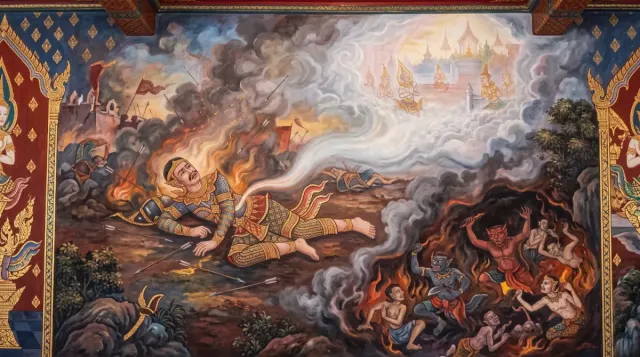
A headman who is a professional warrior asks about his teachers' claim that a warrior killed in battle is rebo…