
The Four Levels of Noble Persons
Cattāro ariyapuggalāFour stages of realisation, measured by which fetters have been abandoned — not by unusual experiences or anyo…


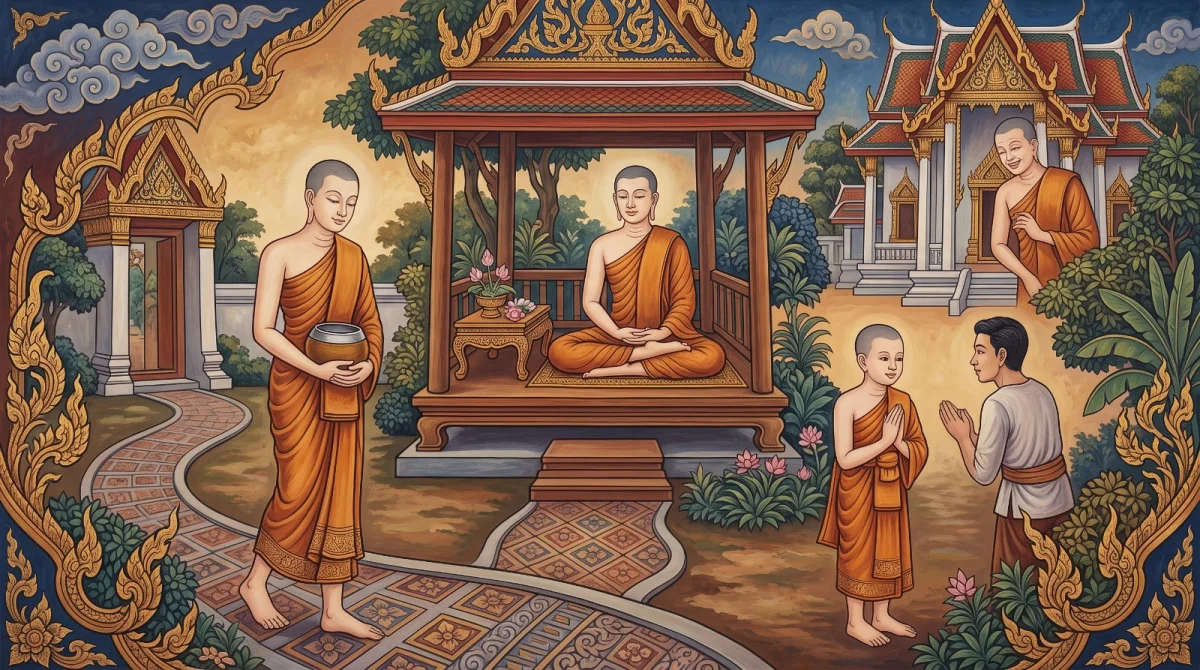
Susaṃvuto antaraghare gamissāmīti
The twenty-six training rules on proper behaviour in the Sekhiya section teach monks to dress neatly, restrain hands and feet, keep the eyes lowered, not laugh loudly, speak quietly, not sway the body, swing the arms or shake the head, and not put their hands on their hips, cover their heads or walk on tiptoe when walking or sitting in inhabited areas.
In the Vinaya Piṭaka, Mahāvibhaṅga, Sekhiya section, the first group is called the twenty-six training rules on proper behaviour, dealing with conduct befitting a renunciant when walking or sitting in inhabited areas. All of them arose from the group of six at Sāvatthī. For the first rule, the text relates that the group of six wore their lower robes hanging down in front and behind, and people criticised them for being like householders; for the following rules the text gives the story only in brief.
The rules usually come in pairs, one for walking and one for sitting. A monk who breaks one out of disrespect commits an offence of wrong doing; one who does so unintentionally, absent-mindedly, unknowingly, when ill, or in an emergency does not offend, and several of the sitting rules make an exception for being in one's lodging.
These rules are the etiquette of monks in ancient Indian society, and some details may differ from manners in other cultures. But the main principle, being aware of our posture, voice and gaze in public, applies to everyone.
The group of six wore their lower robes hanging down in front and behind, and people criticised them for being like householders. So the Buddha laid down that the lower robe should be worn evenly all round, covering the navel and knees, and the upper robe worn evenly with both corners level. Further rules say one should be properly covered when walking and sitting in inhabited areas, and not hitch up the robe.
Before leaving home or entering a meeting, take a few seconds to adjust your clothing to suit the place. It honours the people you're about to meet.
The group of six walked and sat in inhabited areas fidgeting with their hands and feet, so the Buddha laid down that one should be well restrained when walking and sitting in inhabited areas.
Notice your hands and feet while waiting or listening to someone, such as jiggling a leg, tapping the table or twirling a pen, and try keeping them still for a while. The mind often settles too.
The group of six walked and sat in inhabited areas looking here and there, so the Buddha laid down that one should keep the eyes lowered when walking and sitting in inhabited areas. The analysis explains looking about a plough's length ahead.
In public, don't stare at strangers or crane your neck to look into other people's homes. Their privacy begins with our eyes.
The group of six walked and sat in inhabited areas laughing loudly, so the Buddha forbade it. The exception in the text states that a monk who merely smiles when something is funny does not offend.
When watching a funny video or chatting with friends in public, go ahead and laugh, but keep the volume suited to the place.
The group of six walked and sat in inhabited areas making a loud noise and shouting, so the Buddha laid down that one should be quiet when walking and sitting in inhabited areas.
On public transport or in a restaurant, keep phone calls quiet, and if the call will be long, move somewhere you won't disturb others.
The group of six walked and sat swaying their bodies with a proud air, swinging their arms with affected gestures, and rolling their heads with drooping necks, so the Buddha forbade all of these, saying one should hold the body, arms and head steady.
A swaggering or showy walk often comes from wanting to be noticed. Try walking simply and naturally, and see whether your mind feels lighter.
The group of six walked and sat in inhabited areas with arms akimbo, walked and sat with their heads covered, walked on tiptoe, and sat clasping their knees, so the Buddha forbade these. The analysis says it is wrong whether with one arm or both; that this means hands on hips is the commentary's explanation.
When talking with elders, customers or people you've just met, watch out for standing with hands on hips or arms crossed, which can signal that you're closed off or confrontational.
We are in public far more than we think: on trains, in restaurants, in open-plan offices. Our laughter, phone calls and gestures always affect the people around us. These rules invite awareness of the small things we tend to do on autopilot.
Restraint doesn't mean being stiff or never smiling. The exception in the text itself says one may smile when something is funny. What is being trained is not letting body and voice follow our moods so far that we stop seeing other people.
These principles are for training ourselves, not for judging others. Manners vary by place and era, and someone laughing loudly at a celebration is not a bad person for it.
Tap to read the actual passage on the page cited.
Four stages of realisation, measured by which fetters have been abandoned — not by unusual experiences or anyo…

The Nikkhepa section defines the sutta-style pairs: what being difficult to admonish is, what bad friendship i…
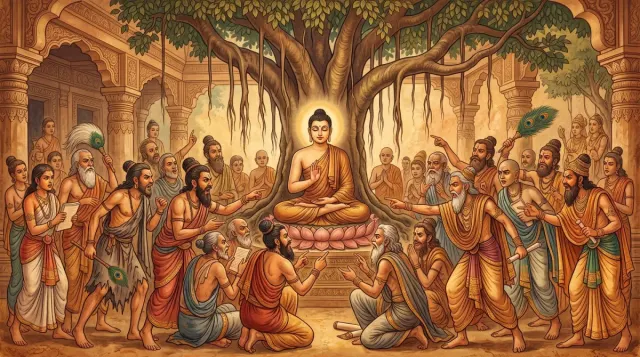
Every school calls its own teaching complete and the others inferior. The praise won by prevailing is trifling…

The Buddha sets out seventeen things a monk might wish for, from being dear to his companions, receiving requi…