

Anapanasati: Breath Meditation Step by Step
A simple way to be mindful of the breath: posture, knowing long and short breaths, counting, returning when the mind wanders, and ending gently.
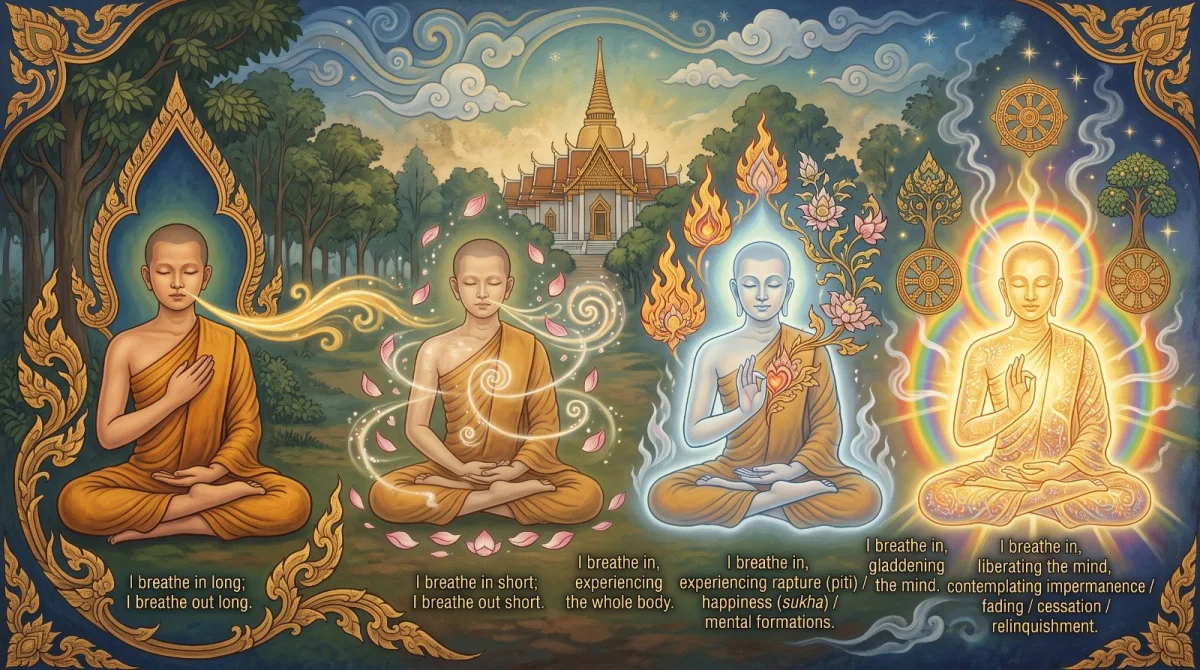
-
1
Find a stable, comfortable posture
Sit cross-legged on a cushion, or on a chair with your feet flat on the floor. Keep your back upright but not stiff, hands resting in your lap, shoulders relaxed. Close your eyes or let them rest looking downward. Set a timer for about ten minutes so you do not need to check the clock.
-
2
Notice the natural breath
Let the breath flow by itself; do not force it to be long or deep. Notice where you feel it most clearly: the tip of the nose, the upper lip, or the belly rising and falling. Choose one spot and rest your attention there. Breathing in, know you are breathing in; breathing out, know you are breathing out.
-
3
Know long and short breaths
After following the breath for a while, notice whether each breath is long or short. Breathing in long, know it is long; breathing out short, know it is short. There is no better or worse breath; just know it as it is. These are the first steps of anapanasati (mindfulness of breathing) as the Buddha taught it.
-
4
Count the breaths if the mind is busy
If the mind is restless, use counting as support. Count "one" at the end of the first full in-and-out breath, "two" at the next, up to ten, then start again at one. If you lose count or go past ten, simply begin again at one without blaming yourself. Once the mind is steadier, you can drop the counting and just know the breath.
-
5
When the mind wanders, notice and come back
Everyone's mind wanders; it is normal. When you notice you are thinking, note it briefly as "thinking" and gently bring your attention back to the breath. The moment you notice the wandering is itself a moment of mindfulness. Coming back again and again, patiently, is the practice, not a failure.
-
6
End gently
When the time is up, do not jump up. Take a few deeper breaths, feel your whole body, move your fingers and toes, then slowly open your eyes. You may radiate loving-kindness briefly before getting up. If your legs are numb, stretch them out for a moment before standing so you do not stumble.
-
7
Practise daily and learn more
Practise ten to twenty minutes a day at the same time, for example after waking or before bed; regularity matters more than length. The breath is always with you, so you can return to it anywhere during the day. Read all sixteen steps from the discourse on the Dhamma principle page "Mindfulness of Breathing in Sixteen Steps".