

How to Live with Loss and Grief
A gentle guide for when you lose someone or something you love: allow yourself to grieve, care for body and mind, dedicate merit out of love, and know when to ask for help.
-
1
Allow yourself to grieve
Sadness after a loss is natural; it is another side of love. It is fine to cry, you do not have to be strong right away, and there is no deadline for grief. Even in the Mahāparinibbāna Sutta, Ānanda, the Buddha's close attendant, wept when he learned the Buddha would soon pass away. Other feelings such as anger, guilt or numbness can come too.
-
2
Take simple care of your body
Grief tires the body more than we expect. Try to eat a little at regular times, drink water, rest when you can, and take short walks in daylight. Avoid using alcohol or pills to numb your feelings, and if possible postpone big decisions, such as selling a house or changing jobs, until your mind feels steadier.
-
3
Don't carry grief alone
Share your feelings, or good memories of the person, with someone you trust. Accept practical help with the funeral, meals or paperwork. If someone tells you to stop crying or to get over it quickly, you can gently say that you still need time. Visiting a temple to talk with a monk you know, or simply sitting quietly in the ordination hall, can also give the heart a place to rest.
-
4
Dedicate merit as an act of love
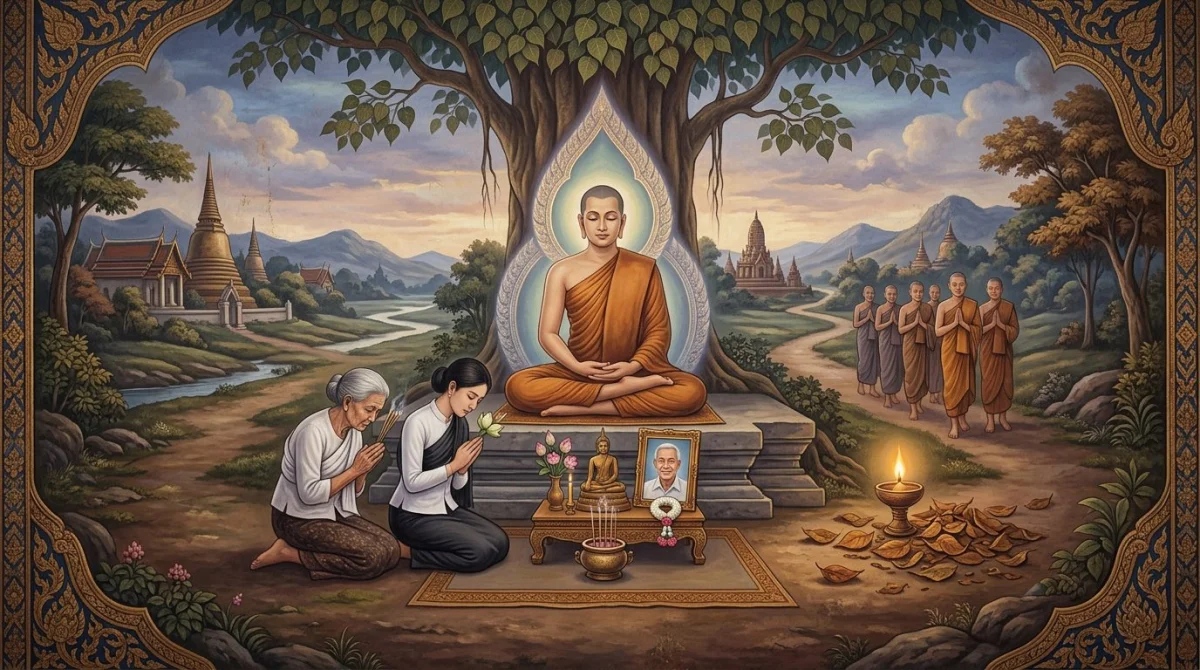
Dedicating merit is a way of expressing love and gratitude, not a duty you must complete or something that needs much money. You might offer food to monks, give to people in need, keep the precepts or chant, and then dedicate the merit:
"Idaṃ me ñātīnaṃ hotu, sukhitā hontu ñātayo."
May this merit be for my relatives; may my relatives be happy. The full text is on the chant page "Dedicating merit to those who have died". You can pour water as you recite, or simply make the dedication in your heart. -
5
Let the Dhamma hold you gently
When you are ready, the Dhamma can help you see that separation from what we love is something every life meets, so you are not alone in this sorrow. A loss is not a punishment, and it is not something anyone deserved. Try radiating loving-kindness to the one who has gone and to yourself, or slowly read the Dhamma principle page on the Salla Sutta, "removing the arrow of sorrow", without forcing yourself to stop feeling sad.
-
6
Give it time and remember meaningfully
Grief tends to come in waves: some days are better, others heavy again, especially on birthdays and anniversaries. Thai families often make merit at 7 days, 50 days and 100 days after a death, and every year after, though customs differ between families and regions. Doing good in the person's name, keeping photos or keepsakes, or carrying on something they loved are all beautiful ways to remember them.
-
7
Know when to get professional help
If for several weeks you cannot eat or sleep, cannot manage work or daily life, are drinking more, or have thoughts of not wanting to live, please see a doctor or psychologist, or call Thailand's mental-health hotline 1323 — if you are outside Thailand, contact a local helpline or emergency service. Asking for help does not mean you are weak or that you love the person any less.