

How to Offer Sanghadana (Gifts to the Sangha)
Step by step from choosing the offerings to reciting the offering words, handing them over, pouring water and receiving the blessing, with the Pāli words and their meaning.
-
1
Understand what sanghadana means
Sanghadana (a gift to the monastic community as a whole) is offered to the Sangha, not to a particular monk. The monk who receives it does so on behalf of the whole community, so offer it with that intention whichever monk comes. A glad mind before, during and after giving matters more than the price of the gifts. You can read more on the Dhamma principle page 'The Exposition of Offerings: Pure Giving'.
-
2
Choose things the monks can really use
Pick useful, good-quality items: rice, dry food, basic medicines, soap, toothpaste, robes, light bulbs and so on. Always check expiry dates on food and medicine. If you are not sure what the temple needs, ask a monk or the temple steward beforehand. If you include cooked food, it must be offered before noon.
-
3
Let the temple know and pay respect to the Triple Gem
When you arrive, tell the temple staff or a monk that you wish to offer sanghadana, and wait until the monk is seated. Set the offerings in front of him, light candles and incense at the shrine if there is one, and bow three times to the Buddha image. If there is time you may first request and take the five precepts; the words are on the chant page 'Requesting and undertaking the five precepts'.
-
4
Say Namo three times, then the offering words
Sit with your legs folded to one side or kneel, join your palms, say 'Namo tassa…' three times, then say the offering words phrase by phrase; in a group, one person leads and everyone repeats.
Imāni mayaṃ bhante bhattāni saparivārāni bhikkhusaṅghassa oṇojayāma.
Sādhu no bhante bhikkhusaṅgho imāni bhattāni saparivārāni paṭiggaṇhātu,
amhākaṃ dīgharattaṃ hitāya sukhāya.
The full text is on the chant page 'Offering to the Saṅgha'. -
5
Know what the words mean
Meaning: 'Venerable sirs, we offer these meals and the requisites that go with them to the community of monks. May the community of monks accept them, for our welfare and happiness for a long time.' If you offer in the afternoon with no food, some temples adjust the wording slightly; customs differ, so just ask the monk or whoever leads the words.
-
6
Hand over the offerings respectfully
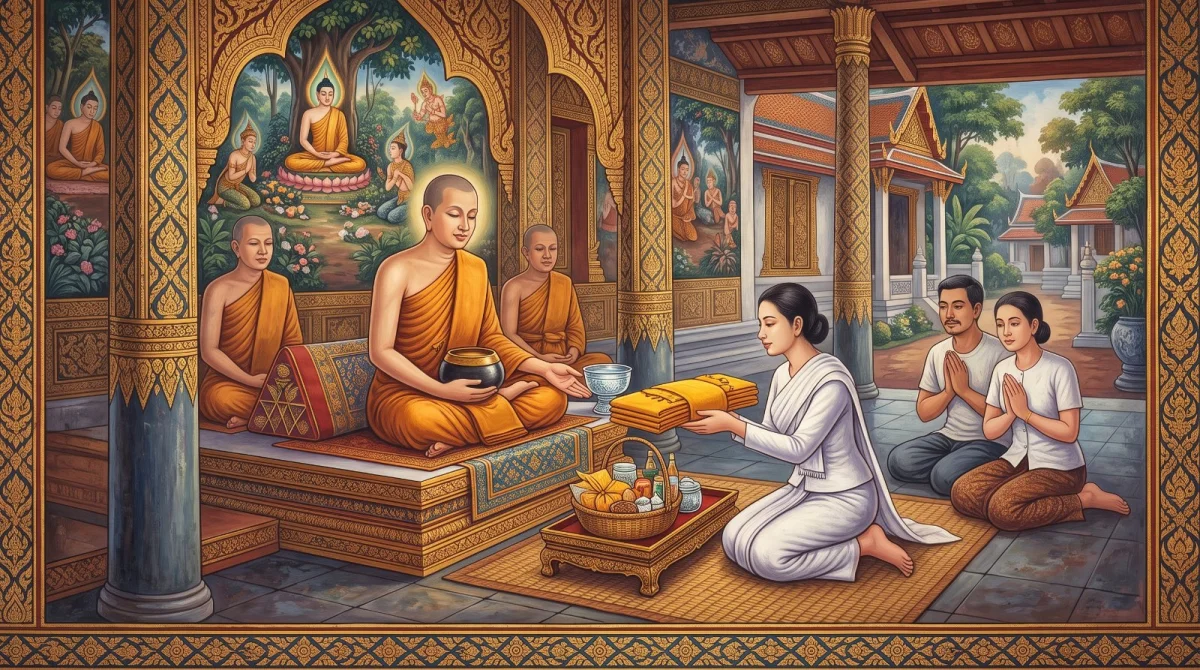
When the monk answers 'Sādhu', lift the offerings with both hands, about an arm's length away. Men may place them in the monk's hands; women set them on the receiving cloth the monk lays down. Heavy or many items may simply be touched or lifted slightly as a gesture. Money is not placed in a monk's hands: put it in an envelope with a pavāraṇā note (a note saying the funds are for proper requisites) with the offerings.
-
7
Pour water and receive the blessing
When the monks begin the anumodanā (blessing) with 'Yathā vārivahā pūrā…', start pouring the dedication water slowly while dedicating the merit in your mind. Finish pouring when all the monks begin 'Sabbītiyo…', then keep your palms joined until the blessing ends. If you have no water, a dedication in the mind is enough. See the guide on pouring dedication water for details.
-
8
Bow in farewell and pour the water under a tree
When the blessing ends, bow three times, then pour the dedication water at the foot of a tree or on clean ground, not into a drain or a dirty place. Go home recalling the good you have done with a glad heart. You can review the principles of giving on the Dhamma principle page 'The Three Grounds for Making Merit'.