
Morning chanting
Verses of homage to the Triple Gem
RatanattayappaṇāmagāthāFour verses bowing to the Buddha, the Dhamma and the Saṅgha in images, then dedicating the merit of that homag…



Buddhābhithuti
The morning chant in praise of the Buddha: who he was, what he came to know, and how he taught it.
Chanted in the morning service, after the preliminary homage. The leader gives a short introductory line and everyone joins in.
In a temple this chant runs straight into the praise of the Dhamma and the praise of the Saṅgha. Chanting alone at home, you can use just one of the three.
This is not vague praise. It moves in order: the Buddha awakened by himself and was complete in both knowledge and conduct; what he came to know was this whole world with its gods, its māras, its brahmās, its ascetics and its people; and what he knew he then made known to others.
The line saying the teaching is good in the beginning, good in the middle and good at the end means it holds up the whole way through — it is not only attractive at the start.
All of this wording is the stock description repeated throughout the suttas whenever people of the time spoke about the Buddha. The Thai liturgy simply strings it together and closes with "I worship him, I bow my head to him."
Click to read the actual page it refers to
Four verses bowing to the Buddha, the Dhamma and the Saṅgha in images, then dedicating the merit of that homag…

The short line of homage repeated three times before any other chant — the same sentence that opens every volu…

The morning chant in praise of the Saṅgha — the community of disciples who have practised well and seen the tr…
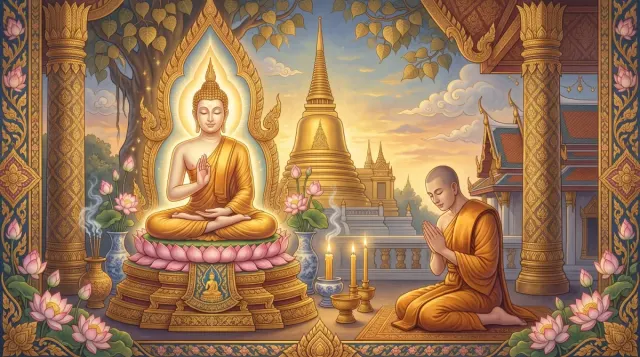
The chant that opens morning chanting: offering flowers, incense and candles to the Buddha, the Dhamma and the…