
The Greater Series of Questions: What Makes Right View Arise and Grow
MahāvedallasuttaṃMahākoṭṭhita questions Sāriputta point by point: what is wisdom, how does it differ from consciousness, what g…


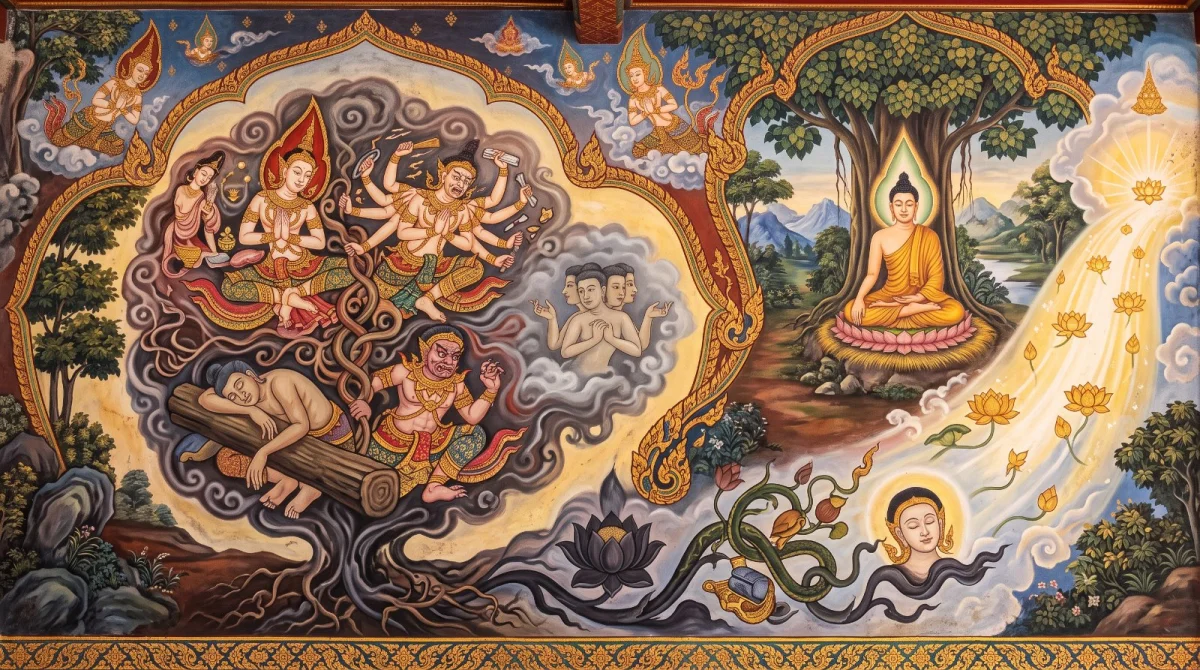
Nīvaraṇadukaṃ
The hindrance pair divides states into those that are hindrances and those that are not. The text's examples show that hindrances do not come alone: sensual desire comes with sloth-and-torpor, restlessness and ignorance; remorse comes with ill will; and even delight in your own good deeds can become the object from which hindrances arise.
In the Paṭṭhāna of the Abhidhamma Piṭaka, volume 42, there is a pair called the hindrance pair (nīvaraṇa-duka). It divides all states into two sides: states that are hindrances (nīvaraṇa, barriers that keep the mind from progressing in the good) and states that are not, and then runs both sides through the conditions one by one. The hindrances named in this pair are sensual desire, ill will, sloth-and-torpor, restlessness, remorse, doubt and ignorance. This differs from the familiar five hindrances of the suttas in that ignorance is added and restlessness and remorse are listed separately.
In the Dependent Chapter the text lists which hindrance arises in dependence on which: for example, the hindrances of sloth-and-torpor, restlessness and ignorance arise dependent on the hindrance of sensual desire. In the Investigation Chapter it gives the example of someone who gives, keeps the precepts or observes the Uposatha, reviews it, delights in and relishes that wholesome deed, and then view or grief arises.
This page selects only examples the text states clearly and does not go into the counting of cases.
The Dependent Chapter of this pair opens with the statement that a hindrance-state arises dependent on a hindrance-state by root condition, and continues with other cases: associated aggregates and mind-born matter arise dependent on hindrances, and hindrances arise dependent on aggregates that are not hindrances. So hindrances support one another, support other states in the same mind, and themselves depend on states that are not hindrances. This point is for overall understanding.
When your mind feels stuck, ask how many barriers are present at once, instead of looking for a single cause.
The text says that the hindrances of sloth-and-torpor, restlessness and ignorance arise dependent on the hindrance of sensual desire, and in another group, restlessness and ignorance arise dependent on sensual desire. Desire for sense pleasure does not come alone; dullness, restlessness and unclear knowing may arise with it.
Notice when you have been scrolling a shopping app or short videos for a long time that the mind is wanting, foggy and scattered all at once. Recognising this group makes it easier to put the phone down.
The groups dependent on the hindrance of ill will take several forms. Some include sloth-and-torpor, restlessness and ignorance; some add remorse. In this list of the Dependent Chapter, the hindrance of remorse appears only in groups dependent on ill will, never in those dependent on sensual desire.
When you keep feeling guilty or uneasy about something you have done, check whether resentment towards yourself or someone else is hidden in it. Seeing that resentment often eases the remorse.
The text says that the hindrance of restlessness arises dependent on the hindrance of doubt, and the hindrance of ignorance dependent on the hindrance of restlessness. In the section on arising not by root condition, it also says that the hindrance of ignorance arises dependent on the hindrances of doubt and restlessness. Wavering and restlessness therefore always have unclear knowing alongside them.
When you keep going back and forth, ask what you do not actually know yet, then go and find that information or ask someone who knows, instead of thinking on in the dark.
Under object condition, the text says that a person gives, keeps the precepts or observes the Uposatha, reviews that wholesome deed, delights in and relishes it, and because of that delight, view or grief arises. It also says that when one delights in the eye or other aggregates that are not hindrances, lust, view, doubt, restlessness or grief can arise.
After doing something good, recall it with brief gladness and leave it there. If you start thinking you are better than others, or resent others for not doing as you do, know that a hindrance has come in.
Under proximity condition, the text says that earlier hindrances condition later hindrances. Under decisive support condition of the natural kind, hindrances are also a support for hindrances. A hindrance left to continue opens the way for the hindrance of the next moment, and what accumulates becomes support on later days.
Break the cycle early. When you notice irritation starting, get up for a glass of water or change your posture instead of sitting on with the same thought.
The picture from this pair is that hindrances come in groups. When you want something badly, drowsiness, restlessness and unclear knowing can come along too. When you are irritated, remorse about what you have done often follows. Knowing which ones come together helps you see the starting point sooner.
Another point to remember is that good deeds already done do not protect the mind automatically. If recalling them leads to relish, then to wrong view or resentment, that good deed has become an object for hindrances. What helps is to recall your good deeds with moderate gladness, and then put them down.
Tap to read the actual passage on the page cited.
Mahākoṭṭhita questions Sāriputta point by point: what is wisdom, how does it differ from consciousness, what g…

A libertine blocks the nun Subhā's path in Jīvaka's mango grove and tries to win her with flattery and riches.…
One of the best-known sets of verses in the Sutta Nipāta — if you find a good companion, walk together; if not…

The end of the Mahāvibhaṅga and of Vinaya Piṭaka volume 2. After the seven ways of settling disputes are recit…