Hiri Jātaka: True Friends and Friends in Word Only
HirijātakaṃThe marks of someone who claims to be a friend but doesn't act as they speak, someone who watches for faults a…


Āgantukānaṃ bhikkhūnaṃ vattaṃ
The etiquette for monks visiting another monastery, residents receiving them and monks about to leave: entering respectfully, asking about local arrangements, caring for shared lodgings, using the toilet in order of arrival, and the closing verse that one who does not fulfil these duties does not fulfil virtue.
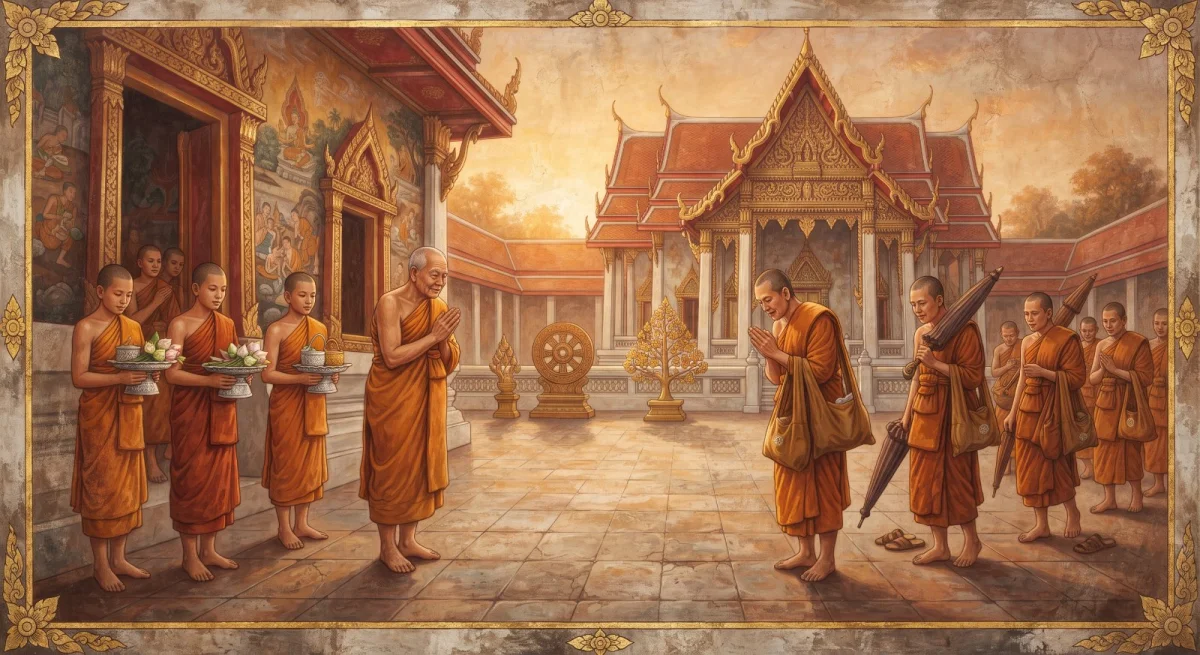
In the Vatta Khandhaka of the Cūḷavagga in the Vinaya Piṭaka, the Buddha lays down fourteen sets of duties, the manners and responsibilities of monks in various situations. The first arose at Jetavana, when some visiting monks entered the monastery wearing sandals, holding sunshades or with covered heads, washed their feet in drinking water, did not bow to senior resident monks and did not ask about lodging. One pushed open the door of an empty dwelling straight away, and a snake fell on his neck so that he cried out.
The Buddha then laid down the duties of visitors. When residents failed to receive visitors, he laid down the duties of residents; and when departing monks left without putting things away, left doors and windows open and did not hand over their lodging, he laid down the duties of those departing. The same chapter covers conduct in the refectory, on almsround, in the forest, in lodgings, in the sauna and in the toilet. A verse at the end says that one who does not fulfil these duties does not fulfil virtue.
Many details belong to monks of that time, such as knocking dust off sandals or airing bedding. But the thinking applies directly to being a guest, being a host and living in spaces shared with others.
Before entering the monastery, a visiting monk should take off his sandals, knock them clean and carry them low, lower his sunshade, uncover his head, move the robe from his head to his shoulder, and enter without hurrying. He should note where the resident monks gather, go there, set down bowl and robe, sit in a suitable place, and ask which water is for drinking and which for washing. If a resident monk is senior, he should bow.
When visiting someone's home or a new workplace, follow local custom, greet the host first and ask before using things.
The visitor should ask which lodging is his and whether it is occupied, which villages are and are not suitable for almsround, where the toilet and urinal are, where the drinking and washing water are, where the walking staff is, and what the Saṅgha's agreed times are for coming and going.
When moving into a dorm or condo or staying at a friend's place, ask about quiet hours, rubbish, the bathroom and house rules from day one, rather than learning after getting it wrong.
If a dwelling is unoccupied, he should knock, wait a moment, lift the latch, push the door open and look around thoroughly from outside first. This fits the incident of the visitor who pushed straight in and had a snake fall on his neck.
Always knock before entering someone else's room, and when opening a room that has been closed for a long time, such as a storeroom or rental house, switch on the light and look around before walking in.
If the dwelling is dirty, with beds and chairs stacked up and dust on everything, he should clean it if he is able: take things out first, carry beds and chairs low without scraping the door frame, sweep cobwebs from the ceiling down, wipe window frames and corners, sprinkle water before sweeping so dust does not rise, air the bedding in the sun and put everything back in place, and fetch drinking and washing water if there is none.
Clean from top to bottom, put things back where they were, and refill shared supplies that have run out, like drinking water or tissues, without waiting to be told.
On seeing a senior visiting monk, the resident should prepare a seat, set out water for washing the feet, go to receive his bowl and robe, offer drinking and washing water, bow, assign him lodging, and tell him what he needs to know: lodging, almsround villages, toilets, water and the agreed times. If the visitor is junior, the resident may tell him while seated: put your bowl here, your robe there, sit on this seat.
When a guest comes to stay or a new colleague arrives, don't wait for them to ask. Offer a seat and a drink, and tell them the essentials, such as where the bathroom is, the Wi-Fi password or when to keep quiet.
A departing monk should put away wooden and clay items, close doors and windows, and hand over the lodging to a monk, or failing that to a novice, a monastery attendant or a lay follower. If there is no one, he should raise the bed on stones, stack beds and chairs, and pile the bedding on top. If the roof leaks and he is able, he should repair it or arrange for it to be repaired; otherwise he should move things to where the rain does not reach.
Before leaving a room, meeting room or rental house, put things away, switch off lights, close windows, return keys and tell the owner about any problems you found.
At first monks used the toilet in order of seniority, and junior monks who arrived first had to wait until they fainted. The Buddha forbade this and had the toilet used in order of arrival. The toilet duties also say to clear one's throat before entering, not to hurry, to clean up if it is soiled and to refill the water when empty. The lodging duties forbid beating dust out of bedding near other monks or upwind; it should be done downwind.
Shared bathrooms, microwaves or washing machines go by order of arrival, not rank. Wipe them clean after use, and shake out cloths or dust things where nothing blows onto others.
The closing verse of the Vatta Khandhaka says that one who does not fulfil these duties does not fulfil virtue; one of impure virtue does not gain a unified mind; one with a scattered mind does not see the Dhamma rightly. But one who fulfils the duties fulfils virtue, gains a unified mind, sees the Dhamma and is freed from suffering.
Small courtesies practised until they become habit really do help the mind settle, because they reduce friction with the people around us and train attention on what we are doing.
Dormitories, condos, offices, relatives' homes and travel lodgings are all spaces we share with others. Most small conflicts come from not asking about the rules, not putting things away, or not thinking of the next person to use the space.
These duties invite thinking from both sides. As a guest, enter with restraint, ask, and look after what you use. As a host, don't wait for guests to ask; welcome them and tell them what they need. When leaving, leave the place ready for the next person to use straight away.
Tap to read the actual passage on the page cited.
The marks of someone who claims to be a friend but doesn't act as they speak, someone who watches for faults a…

The headman Pāṭaliya tells how four teachers with utterly opposed views stayed in his rest house, leaving him …

Saying you saw what you did not see, and saying you did not see what you saw, are not the speech of noble ones…

The Paṭisambhidāmagga defines supernormal power (iddhi) as "success" and divides it into ten kinds, from the m…