
Joined Palms, a Welcome and a Bow: Apadānas of Respect with Empty Hands
Añjaliṃ paggahetvānaApadānas of people who offered no object at all — only joined palms, a crouching bow, going out to meet someon…


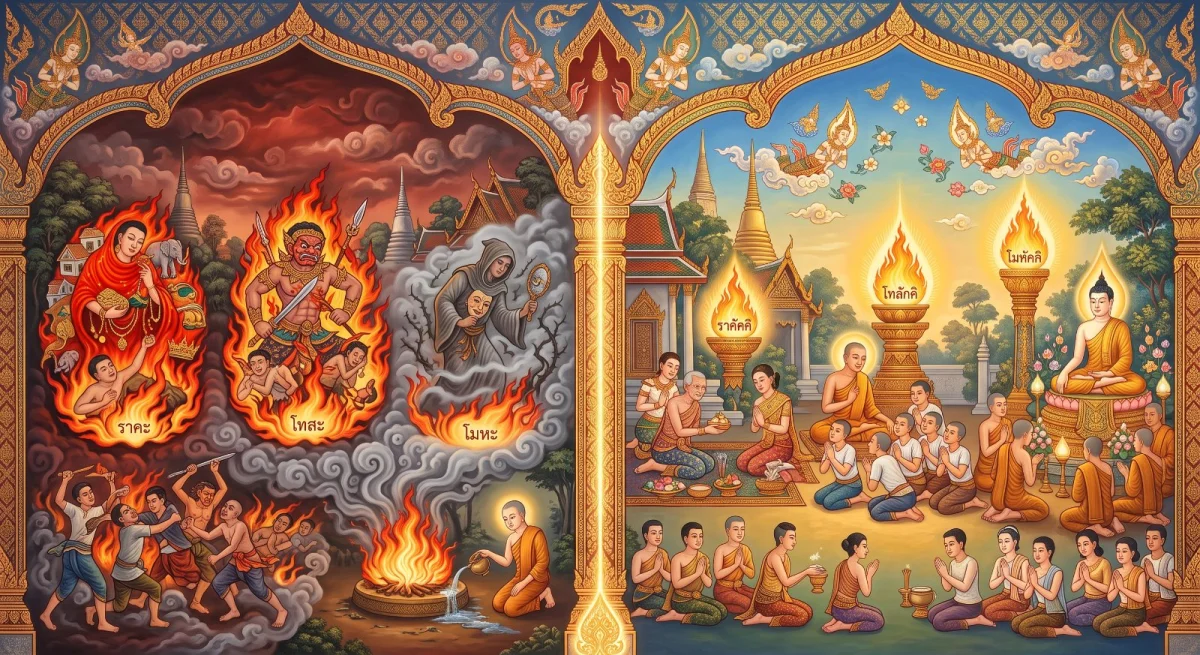
Tayo aggī pahātabbā · tayo aggī sakkatvā
Three destructive fires that burn the mind, and three "fires" to tend with care — parents, family and dependants, and the virtuous.
In the Mahāyañña Vagga of the Book of Sevens, the brahmin Uggatasarīra prepares a great sacrifice, with hundreds each of bulls, goats and rams tied up for slaughter, and comes to question the Buddha. The Buddha answers that one who kindles such a sacrificial fire, even before killing, has already raised three knives — of body, speech and mind.
He then teaches that there are three fires to abandon — lust, hatred and delusion — and three fires to honour and tend well: the fire worthy of offerings (mother and father), the householder's fire (children, wife, servants and workers), and the fire worthy of gifts (virtuous ascetics and brahmins). As for an ordinary wood fire, at times it must be kindled and at times put out.
After hearing this, Uggatasarīra goes for refuge and releases all the animals to eat green grass, drink cool water and feel the cool breeze.
One overcome by lust engages in misconduct of body, speech and mind and goes to a bad destination, so this fire is to be abandoned, not honoured.
Notice whether wanting leads you to do or say things you normally wouldn't. If so, this fire is burning.
One overcome by hatred engages in misconduct in all three ways, so this fire is to be abandoned.
This fire spreads fastest. Cut off its fuel by stepping away from the conversation before you say something you can't take back.
One overcome by delusion engages in misconduct in all three ways without realising it, so this fire is to be abandoned.
It is a fire without smoke — you can't see it burning. Periodically ask someone you trust how you've seemed lately.
Mother and father are the reason we are alive, so they should be honoured, respected and well cared for.
Call or visit your parents without needing a reason, and listen to the stories they repeat all the way through. That is honouring the first fire.
Children, spouse, servants and workers should be well cared for and honoured, because their lives are bound up with ours.
Pay wages on time and fairly, and speak respectfully to those who work for you. According to the discourse, this too is a form of worship.
Ascetics and brahmins who refrain from intoxication and heedlessness, are established in patience and gentleness, and tame themselves, deserve to be honoured and supported.
Support those who genuinely practise well. Look at their conduct, not their fame or amulets.
This discourse changes the question from "What ritual should I perform?" to "Whom should I care for?" The worship that truly bears fruit is caring for parents, for family and those who work for us, and for those established in Dhamma — not burning offerings or killing animals.
Try taking stock of your three fires this month: how much time have you given your parents? Are the people in your home and those who work for you treated fairly? Have you supported those who do good? Meanwhile, watch that the three destructive fires in the mind don't spread.
Tap to read the actual passage on the page cited.
Apadānas of people who offered no object at all — only joined palms, a crouching bow, going out to meet someon…

The Cūḷaniddesa's explanation of Tissa Metteyya's question: five kinds of agitation, two meanings of the holy …
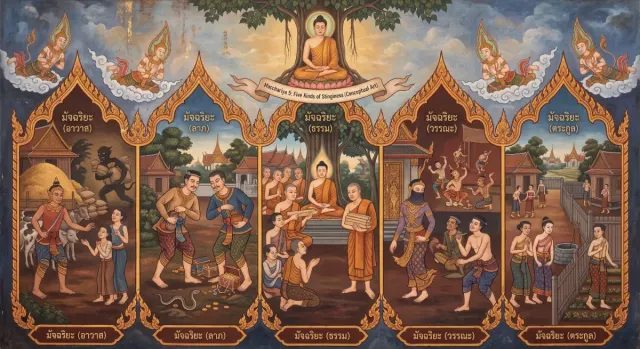
Stinginess isn't only about money. There is also stinginess with dwellings, with supporting families, with gai…

Waste tipped over the wall onto a passer-by's head, waste dumped into a neighbour's rice field, and relieving …