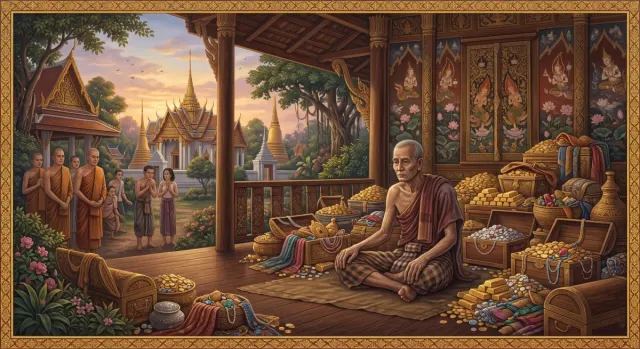
The Discourses on the Childless Man: A Rich Man Who Never Used His Wealth
AputtakasuttaṃA rich man of Sāvatthī dies, and his huge fortune, with no heir, is carried into the palace, though in life he…


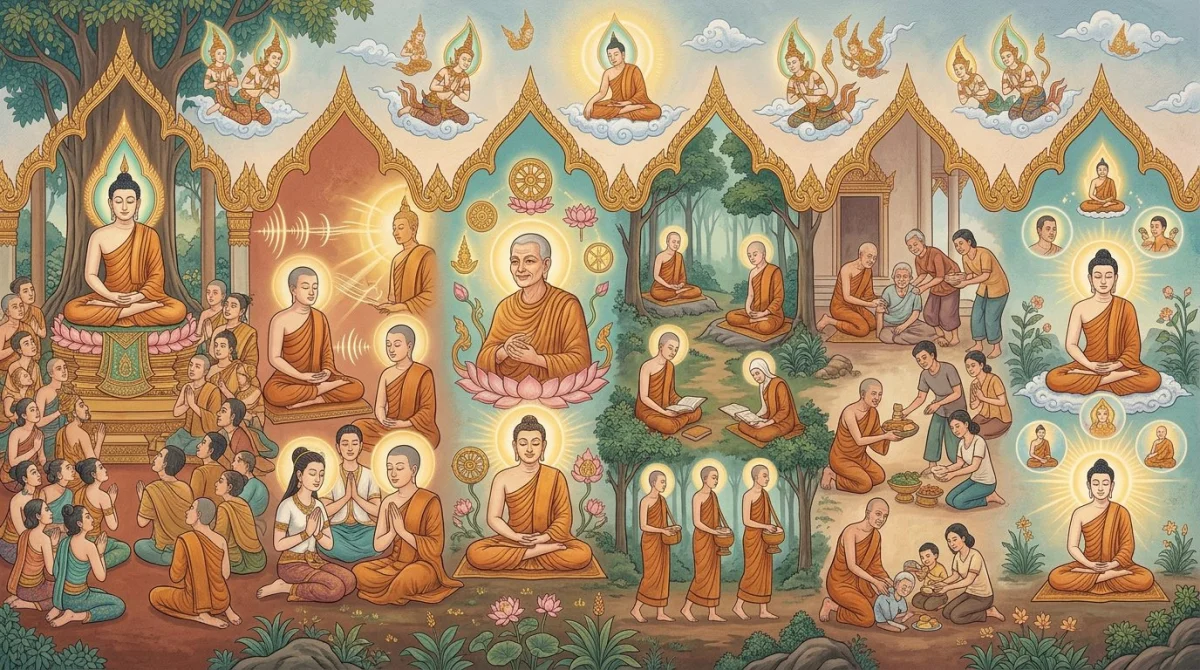
Anuttariyasuttaṃ
Seeing, hearing, gaining, training, serving and recollecting come at many levels. The Buddha doesn't deny the ordinary kinds, but points out which are unsurpassed because they lead to freedom from suffering.
In the Anuttariya Sutta of the Anuttariya Vagga of the Chakka Nipāta of the Aṅguttara Nikāya, the Buddha speaks of six unsurpassable things: the unsurpassable seeing, hearing, gain, training, service and recollection.
For each, he begins with what people ordinarily do — going to see the jewel elephant or jewel horse, listening to music, gaining children, a wife or wealth — and says, "That exists, I don't say it doesn't." But it is common and worldly and does not lead to dispassion or nibbāna. When someone with settled faith, settled love and deep confidence sees, hears, gains faith in, trains under, serves or recollects the Tathāgata or his disciples, that is unsurpassed: it leads to purification, to overcoming sorrow, to the ending of pain and to realising nibbāna.
In the Āhuneyya Vagga there is a short Anuttariya Sutta that just names the six, and at the end of the Chakka Nipāta the Buddha says the six unsurpassable things should be developed for the direct knowledge of lust.
Some people go to see the jewel elephant, the jewel horse, the jewel gem, all kinds of things great and small, or ascetics and brahmins of wrong view. One with settled faith goes to see the Tathāgata or his disciples; this seeing surpasses all other seeing.
Instead of chasing whatever everyone online is talking about, spend some of your day off meeting people who live the Dhamma and can be an example.
Some people go to hear drums, lutes, singing and all kinds of sounds, or the teaching of those of wrong view. One with settled faith goes to hear the Dhamma of the Tathāgata or his disciples; this hearing surpasses all other hearing.
While commuting or doing housework, swap music or entertainment for a Dhamma talk now and then.
Some people gain a child, a wife, wealth great or small, or faith in those of wrong view. Gaining faith in the Tathāgata or his disciples is the gain that surpasses all other gains.
Besides counting what you added to your account or home this year, count whether you gained more confidence in the good path.
Some people train in the arts of elephants, horses, chariots, archery and swordsmanship, in various higher and lower skills, or under those of wrong view. Training in higher virtue, higher mind and higher wisdom in the Tathāgata's Dhamma and discipline surpasses all other training.
Keep learning job skills, but set aside a little time each week for training in virtue, the mind, and seeing life as it is.
Some people serve aristocrats, brahmins, householders, people high and low, or those of wrong view. Serving the Tathāgata or his disciples surpasses all other service.
Put your time and energy into helping people or organisations that truly do good, rather than pleasing someone just because they have power or fame.
Some people recollect gaining a child, a wife or wealth, or recollect those of wrong view. Recollecting the Tathāgata or his disciples surpasses all other recollection and leads to overcoming sorrow and ending pain.
When your mind circles around what you've lost or want, switch to recollecting the qualities of the Buddha or the goodness of a teacher you respect.
This discourse doesn't forbid looking at beautiful things, listening to music or delighting in children and wealth. The Buddha says plainly that these exist, but invites us to ask where most of our time and attention go, and where that takes our life.
Today most of our "seeing and hearing" comes through screens. Try giving some of that time to listening to the Dhamma, meeting teachers or good friends, and training in virtue, concentration and wisdom — what the discourse calls unsurpassed.
"Disciples of the Tathāgata" in the discourse means those who practise well on the Buddha's path, so in choosing whom to see and listen to, look at their conduct and teaching, not just fame or robes.
Tap to read the actual passage on the page cited.
A rich man of Sāvatthī dies, and his huge fortune, with no heir, is carried into the palace, though in life he…

Three consecutive debates asking whether an arahant still has ignorance, doubt, or dependence on being instruc…
Preceptors too junior, so their pupils knew no more than they did; conditions set for ordination and then not …

A conflict drags on, turns harsh and leaves people living uneasily when neither the one who did wrong nor the …