
Puṇṇikā Therī: Evil Can't Be Washed Away by Water
PuṇaṇikātherīgāthāA water-carrier asks a brahmin who bathes in cold water every day to wash away evil: if water could do that, f…


Anuruddhattheragāthā
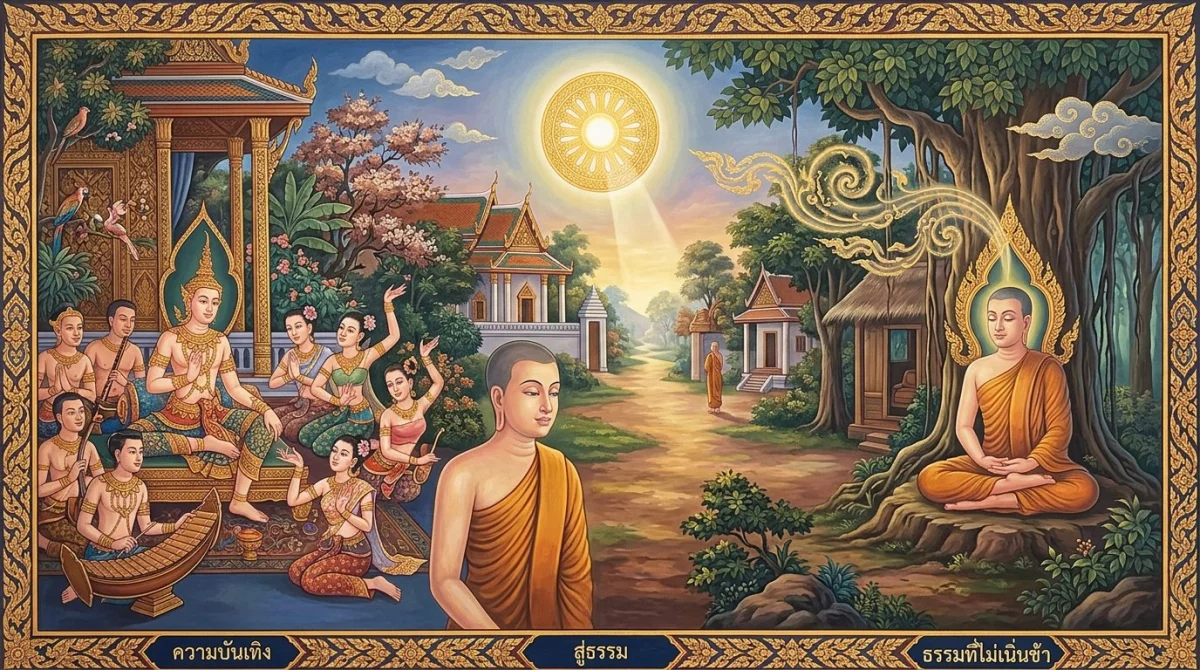
The verses of Anuruddha, a Sakyan who was once woken with dance and song every morning and evening but gave it up to meditate, sought out and dyed his own rag robes, was visited by the Buddha who taught non-proliferation (nippapañca), and kept the practice of not lying down for fifty-five years.
In the Theragāthā of the Khuddaka Nikāya, the Group of Twenty Verses (Vīsatinipāta) contains the verses of Anuruddha. He tells how he was born into the Sakyan clan and was roused to merriment every morning and evening with dance, song and music, but gave up his parents, relatives and sensual pleasures and went forth after seeing the Buddha. He also recalls a past life as a poor man named Annabhāra, working for hire, who gave food to a paccekabuddha.
He relates that the Buddha knew his thoughts and came to him with a mind-made body, then taught the Dhamma of non-proliferation. The Anuruddha Sutta of the Aṅguttara Nikāya, Book of Eights, gives the details: Anuruddha had reflected on seven thoughts of a great person, such as "this Dhamma is for one of few wishes, the content, the secluded", and the Buddha added the eighth: "this Dhamma is for one who delights in non-proliferation".
The verses also mention his attaining the three knowledges, the divine eye and recollection of past lives, the day of the Buddha's final passing when he told the monks the Buddha had not yet passed away, and, at the end, that he will attain final nibbāna in a bamboo thicket near the village of Veḷuva in the Vajji country.
Anuruddha gave up his parents, relatives and the five strands of sensual pleasure and meditates. One roused to merriment every morning and evening by dance, song and music doesn't attain purity through them, because he still delights in sensual pleasures, the domain of Māra.
Try one morning without music, clips or social media for the first hour, and notice how your mind is when nothing is stimulating it.
Anuruddha, without a companion, returns from his alms round and goes looking for rag robes. Having found them, he washes and dyes them himself and wears them.
Do some of your own small tasks with your own hands, such as mending, washing or cooking. Self-reliance in simple things lightens the mind and teaches the value of things.
Defiling evil states arise in a monk who has many wishes, is discontented, mixes with company and is restless. A monk who is mindful, of few wishes, content, delights in seclusion and is always energetic has the states that lead to awakening.
Before buying something or accepting another appointment, ask whether it adds calm or adds busyness, and choose the side that steadies your mind.
The Teacher knew his thoughts and came to him with a mind-made body, then taught beyond what he had thought. The Buddha, who delights in non-proliferation, taught non-proliferation; understanding it, delighting in the teaching, he attained the three knowledges. The Anuruddha Sutta explains that the mind of one who delights in non-proliferation leaps forward, settles and is established in the cessation of proliferation.
When you notice yourself spinning a story in your head, such as "they must think I'm…", stop and come back to the one fact you know for sure.
He says he has kept the practice of not lying down for fifty-five years and has uprooted sloth and drowsiness for twenty-five years. Not lying down (nesajjikaṅga) is one of the monks' ascetic practices.
Don't go without sleep, but make your waking hours truly awake. When you start to feel drowsy in meditation or important work, stand up and walk, wash your face or change posture instead of letting your mind sink.
He tells that he was once a poor man named Annabhāra who earned his living by hired work and gave food to the paccekabuddha Upariṭṭha. Because of that merit he was reborn in the Sakyan clan.
Don't wait until you have plenty before sharing. A small kindness given wholeheartedly on a day when you have little is valuable in itself.
When the Blessed One was about to attain final nibbāna, the monks asked whether he had passed away. Anuruddha answered that there was no more in-and-out breathing for the one of steady mind, but he had not yet passed away. The Buddha endured the pain with a bright heart and then attained final nibbāna.
In a crisis or at a time of loss, one person calm enough to say what is actually happening helps everyone around. Train to be that person by noticing your own emotions in small matters.
Anuruddha is an example of someone surrounded by entertainment morning and evening who found it did not purify the mind. The question he invites is: why do we fill our lives with sound and images all day long?
The non-proliferating Dhamma means not letting the mind branch out into long stories. In daily life proliferation shows up as circling over the same matter, inventing stories about what others think of us, or stacking plans upon plans without ever acting.
Not lying down for fifty-five years is an ascetic practice for dedicated monks, not advice for lay people to go without sleep. Adequate sleep matters for physical and mental health. What we can take from it is real commitment and not giving in to sluggishness when we should be alert.
Tap to read the actual passage on the page cited.
A water-carrier asks a brahmin who bathes in cold water every day to wash away evil: if water could do that, f…

The conduct expected of one appointed by the Saṅgha to settle a dispute: not asking the parties' names or fami…

A drove of boars is frightened by a lion's reflection in the crystal at their cave mouth, so they set about ru…
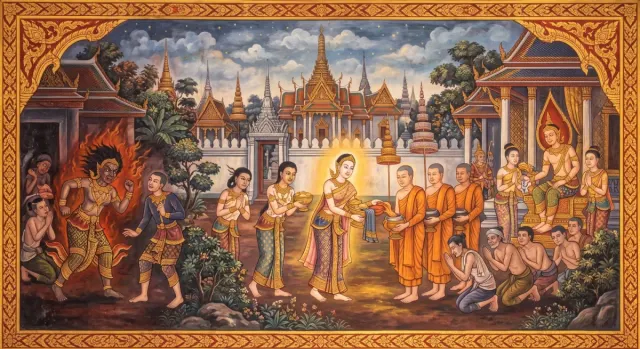
Queen Mallikā asks why some people are beautiful or plain, wealthy or poor, influential or not. The Buddha nam…