
The Dhānañjāni Discourse: No Wrongdoing for Family's Sake
DhanañjānisuttaṃCan someone who cheats to support their family plead that excuse before the wardens of hell? Sāriputta goes th…


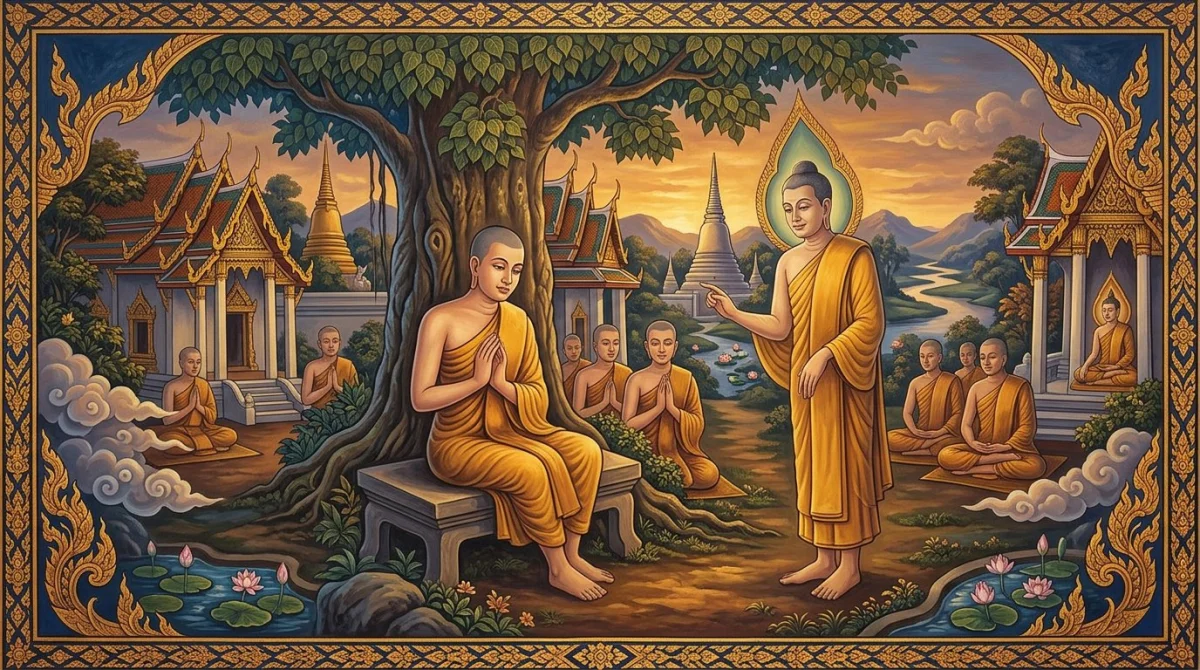
Bhaddālisuttaṃ
Bhaddāli refused a training practice and avoided the Buddha for the whole rains retreat before finally admitting his fault — a lesson in receiving admonition and training oneself like a thoroughbred.
In the Bhaddāli Sutta of the Majjhima Nikāya, the Buddha says he eats once a day and finds himself free of illness, light, strong and at ease, and encourages the monks to do the same. Bhaddāli says he cannot, fearing worry and remorse. Even when the Buddha offers a concession — eat one part there and take the rest to eat later — he still refuses, and avoids the Buddha for the entire three months.
As the rains retreat ends, the monks urge him to confess before the Buddha sets out wandering. Bhaddāli goes and asks forgiveness. The Buddha accepts, and points out that he never considered that the Buddha, monks, nuns, lay followers and devas all knew about it.
The Buddha then teaches that a monk who, when admonished, answers evasively and shows anger will find his case not quickly settled, while one who receives admonition well has it settled quickly. He explains that training rules multiply because, as the Saṅgha grows large and gains wealth, fame and learning, conditions for the taints appear more. He also gives the simile of training a thoroughbred colt step by step.
The Buddha didn't demand immediate compliance but offered an easier way. Bhaddāli still refused, so the problem wasn't that the training was too hard, but that his mind wasn't willing even to try.
When you feel "I just can't", ask whether there's an easier version you could manage, and start there.
Bhaddāli avoided the Buddha for three months, yet everyone knew. Avoidance added to his burden rather than relieving his discomfort.
If you're avoiding someone because you know you were wrong, arrange to talk it through this week.
When Bhaddāli said he had erred out of foolishness, the Buddha accepted his apology and said that seeing a transgression as a transgression and making amends according to the Dhamma is growth in the noble discipline.
A good apology says plainly what you did wrong and how you'll take care in future, without long excuses.
A monk who, when admonished, deflects to other topics, shows anger and doesn't correct himself will find his case not easily settled. One who listens and adjusts has it settled quickly.
When challenged at work, try replying "Thanks, I'll fix it" before explaining your reasons, and notice how much faster it's resolved.
A horse trainer starts by getting the colt used to the bit. At first it struggles and resists, but with repeated practice it settles, and then the next stage begins. Self-training likewise passes through a phase of inner resistance, on the way to becoming worthy of offerings.
Discomfort in the early days of a new habit is normal. Give it two or three weeks before deciding you can't do it.
Many of us have been Bhaddāli: knowing the advice is good but not wanting to follow it, then avoiding the person who gave it instead of talking openly. The discourse shows that avoidance doesn't make the issue go away; people around already know, and the longer it drags on the harder it gets.
Note that the Buddha didn't force him but first offered a concession, and when Bhaddāli came back to apologise, accepted at once. It is a model for both the one admonishing and the one admonished.
Eating one meal a day is a monastic practice, not nutritional advice for everyone. Anyone with a medical condition should consult a doctor before changing how they eat.
Tap to read the actual passage on the page cited.
Can someone who cheats to support their family plead that excuse before the wardens of hell? Sāriputta goes th…

General Sīha of Vesālī asks whether there are fruits of giving that can be seen in this life. The Buddha says …

Seeing the impermanent as permanent, suffering as happiness, not-self as self, and the unattractive as attract…

When drought struck Kaliṅga, envoys asked the king of Kuru for his auspicious elephant, but the rain still did…