
The Sīvaka Discourse: Not Everything Is Due to Past Kamma
SīvakasuttaṃIllness and feelings can arise from eight causes, and past kamma is only one of them — the Buddha rejected the…


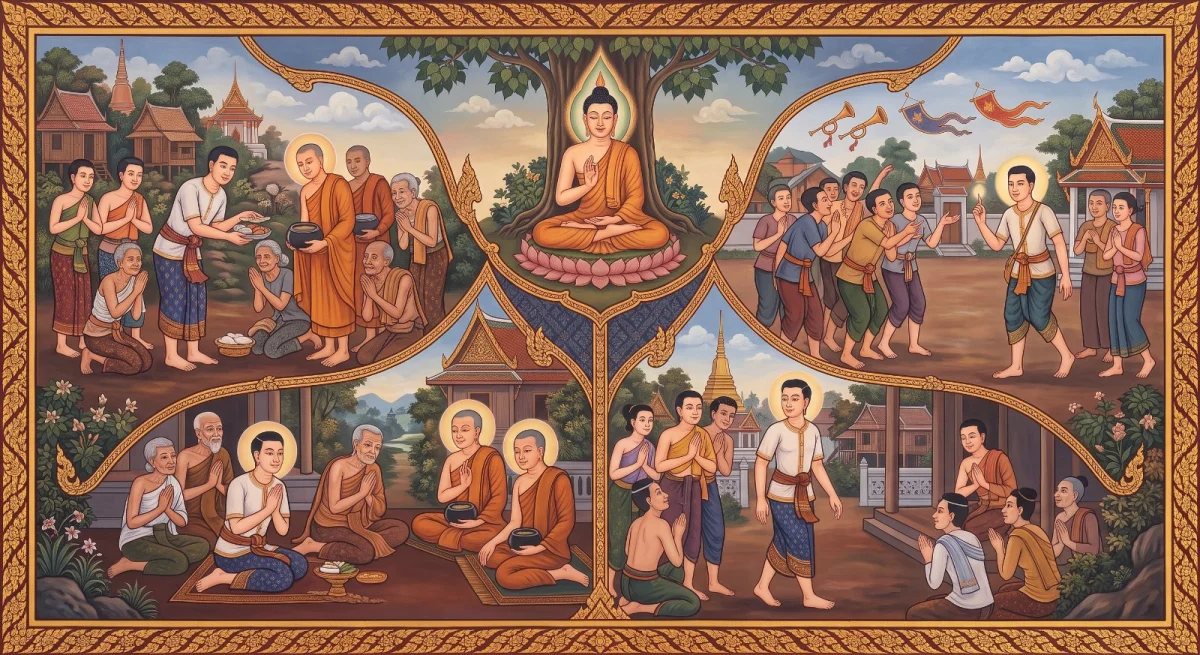
Sandiṭṭhikaṃ dānaphalaṃ
General Sīha of Vesālī asks whether there are fruits of giving that can be seen in this life. The Buddha says there are: the giver is dear to many, good people associate with them, their good reputation spreads, they enter any assembly with confidence, and after death they go to a good destination. Another sutta tells how, when Sīha asked to become a lay follower, the Buddha told him to reflect first and to keep giving to the Nigaṇṭhas.
In the Sīha Sutta of the Sumana Vagga, Book of Fives, Aṅguttara Nikāya, General Sīha visits the Buddha at the Gabled Hall in the Great Wood near Vesālī and asks whether he can point out a fruit of giving visible in this life. The Buddha says he can, and describes five fruits of giving: the first four are seen in this life, while the fifth, going to a good destination, is a fruit in the next life. Sīha replies that he knows the first four himself without relying on faith; the last he does not know, but he trusts the Blessed One.
The Sīha Sutta of the Mahā Vagga, Book of Eights, tells an earlier story. Sīha was a follower of the Nigaṇṭhas. Hearing the Licchavis praise the Triple Gem again and again, he wanted to visit the Buddha, but Nigaṇṭha Nātaputta stopped him twice. The third time he went without asking leave. After hearing the Buddha explain in what sense each accusation made against him was true, he asked to become a lay follower. The Buddha told him to reflect first, and said that his family had long been like a well for the Nigaṇṭhas, so he should keep giving almsfood to those who came. Sīha's confidence only grew; he heard the graduated talk and gained the eye of Dhamma right there in his seat.
This page brings together the two suttas named after General Sīha. Points 1–5 come from the Book of Fives, points 6–8 from the Book of Eights.
The first fruit visible for oneself: a giver, a master of giving, is dear and agreeable to many people.
Notice the people around you who like to share, whether food, time or knowledge, and see how others feel about them.
Peaceful, good people associate with the giver. Generous people end up close to good people.
If you want good friends, start by being the one who gives first. Generous people tend to attract generous people.
The giver's good reputation spreads. Sīha said he himself was known as a giver and a supporter of the Saṅgha.
The most lasting reputation doesn't come from self-promotion but from what others actually receive from us.
Whatever assembly the giver enters, whether of aristocrats, brahmins, householders or ascetics, they enter confidently, without embarrassment.
Someone who has never taken advantage of anyone can walk into a party or a meeting at ease, because there is no one they need to avoid.
The fifth: after death the giver is reborn in a good destination, a heavenly world. Sīha said he knew the first four himself without relying on faith; this one he did not know, but he trusted the Blessed One. The Buddha confirmed that it is so.
Be clear about what you know from your own experience and what you believe on the word of someone you trust. Both have their place, but don't mix them up.
When Sīha asked to become a lay follower, the Buddha said: reflect first, then act; reflecting first is good for a well-known person like you. Sīha's confidence grew, because if another sect had won him as a follower, they would have paraded banners all over Vesālī.
When someone important wants to join your team or group, don't rush to announce it. Give them time to think it through. Relationships that begin with care last longer.
The Buddha said Sīha's family had long been like a well for the Nigaṇṭhas, and he should give almsfood to Nigaṇṭhas who came. Sīha said he had heard that the ascetic Gotama taught that gifts should be given only to him and his disciples, yet the Buddha encouraged him to give even to the Nigaṇṭhas.
When you move to a new teacher, shop or group, you don't have to withdraw your goodwill from those who used to rely on you.
On the day Sīha offered a meal, for which he had someone fetch meat already on sale, many Nigaṇṭhas went about the streets crying that he had killed an animal for the Buddha. When a man whispered this to him, Sīha replied that those people had long wanted to disparage the Triple Gem, and that he himself would not intentionally take a life even for the sake of his own life.
When there are rumours about you or someone you respect, check them against the facts you know yourself rather than getting agitated by the loudest voice.
Many people make merit thinking only of results in a future life. This discourse invites us to see the results available now as well. People who share regularly tend to be loved, have good friends, and can walk into any circle without embarrassment. Sīha confirmed this from his own life, not from belief.
The other side of the story is generosity of heart. The Buddha did not ask a new follower to cut off his old teachers, but to keep caring for the ascetics who had relied on his family. In real life, when we change beliefs, jobs or groups, we don't need to drop the goodwill we had for the people we knew before.
And "reflect first, then act" applies to every big decision. The more people are watching you, the more carefully you should decide.
Tap to read the actual passage on the page cited.
Illness and feelings can arise from eight causes, and past kamma is only one of them — the Buddha rejected the…

The Mahāniddesa's explanation of the Cūḷaviyūha Sutta: people dwell in their views as in a house; the one trut…

Ānanda asks what virtue is for. The Buddha answers step by step: virtue brings freedom from remorse, which lea…

The past lives of the nun Dhammadinnā: a hired worker, wise and restrained in virtue, who gave a cake to a chi…