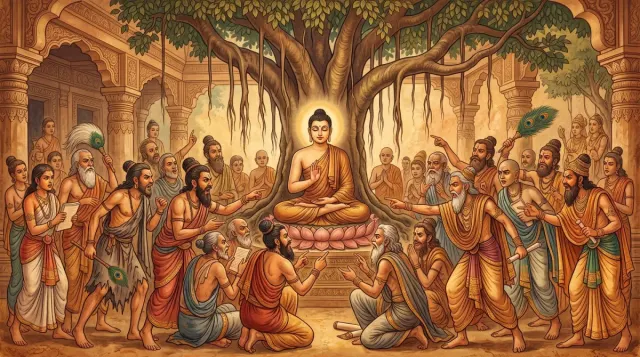
Niddesa on the Mahābyūha Sutta: When Every Teacher Says Theirs Is Right
MahāviyūhasuttaniddesoEvery school calls its own teaching complete and the others inferior. The praise won by prevailing is trifling…


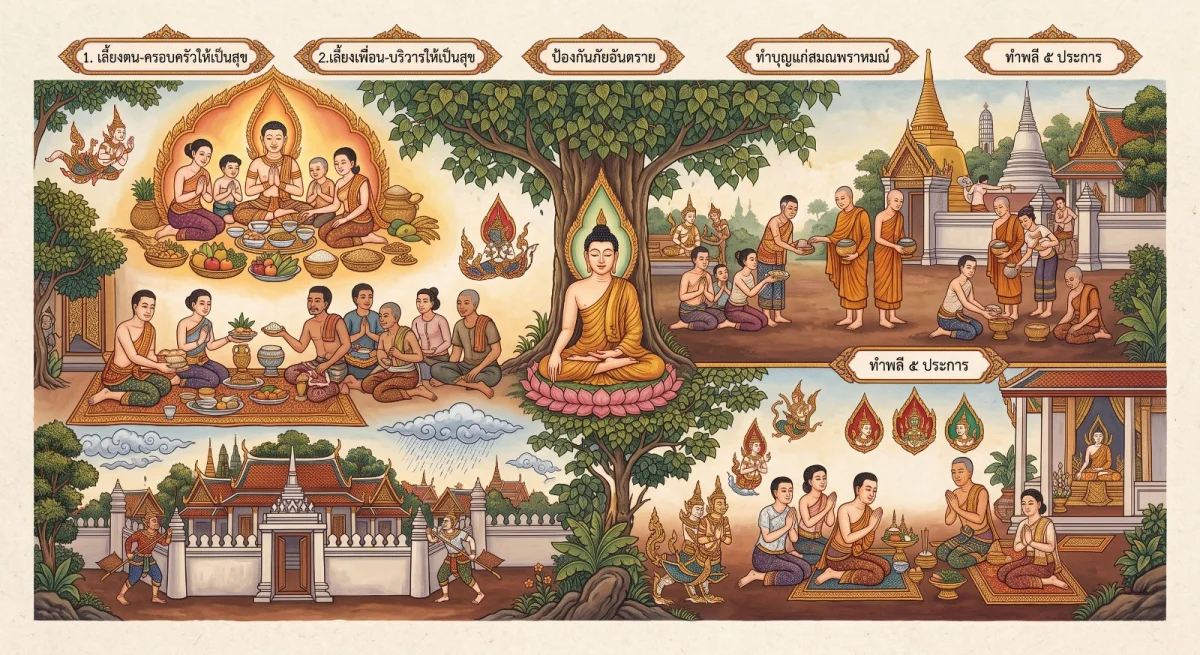
Pañca bhogādiyā
Five worthwhile uses for wealth honestly earned — from supporting yourself to supporting what is good, so there is nothing to regret later.
In the Ādiya Sutta the Buddha taught that wealth earned by effort and by rightful means should be put to five uses. Not hoarded untouched, and not spent without thought.
The key is how he closed: once wealth has been used in all five ways, then even if it runs out there is no cause for regret, because it went where it should have gone. That is the real measure of whether someone uses money well.
Using wealth to support yourself, your parents, your partner and your children in reasonable comfort. It comes first because it is the most basic duty.
Look after yourself in due measure: not so frugally that health suffers, not so lavishly that nothing is left for the rest. Sufficiency is what this one asks for.
Letting friends and those you work with benefit too, because our successes are almost never the work of one person alone.
Keep a small budget for hosting or helping those around you now and then. Relationships tended in advance are worth most on the day things go wrong.
Keeping wealth in reserve as protection when the unexpected arrives — illness, disaster, or the loss of income.
Aim for three to six months of expenses in reserve, and keep it in a separate account so it doesn't blur into everyday spending.
Directing wealth to the duties that are owed: helping relatives, receiving guests, making offerings for those who have died, duties to the state, and honouring what deserves honour.
Think of this as a "social expenses" line to budget for in advance rather than scrambling when it arrives, because these things come without warning.
Offering support to contemplatives who practise well, which is how the Dhamma continues to be available in society.
Give according to your means and with discernment, choosing places doing genuine good. Well-chosen giving accomplishes more than giving with the crowd.
Look at your own year and see whether all five are covered. Many people manage the first two but miss the third (no reserve for the unexpected) and the fifth (nothing set aside for the common good).
The Siṅgālaka Sutta also gives a formula for dividing wealth: one part for living expenses, two parts invested in your work, and one part kept in reserve. It works as a starting frame for a financial plan straight away.
Tap to read the actual passage on the page cited.
Every school calls its own teaching complete and the others inferior. The praise won by prevailing is trifling…

Recollecting death the right way — not to be afraid, but to ask each evening: "If I died tonight, is there any…

A chariot maker made one wheel in six months and the other in six days. The rushed wheel was crooked and fell …

The Yamaka asks questions in reversed pairs — is form the form aggregate? is the form aggregate form? — to sho…