
Kathāvatthu: The Book of Debates and the Question of Whether a Person Really Exists
KathāvatthuThe Kathāvatthu records debates that clear up mistaken views one point at a time. Its first debate asks whethe…


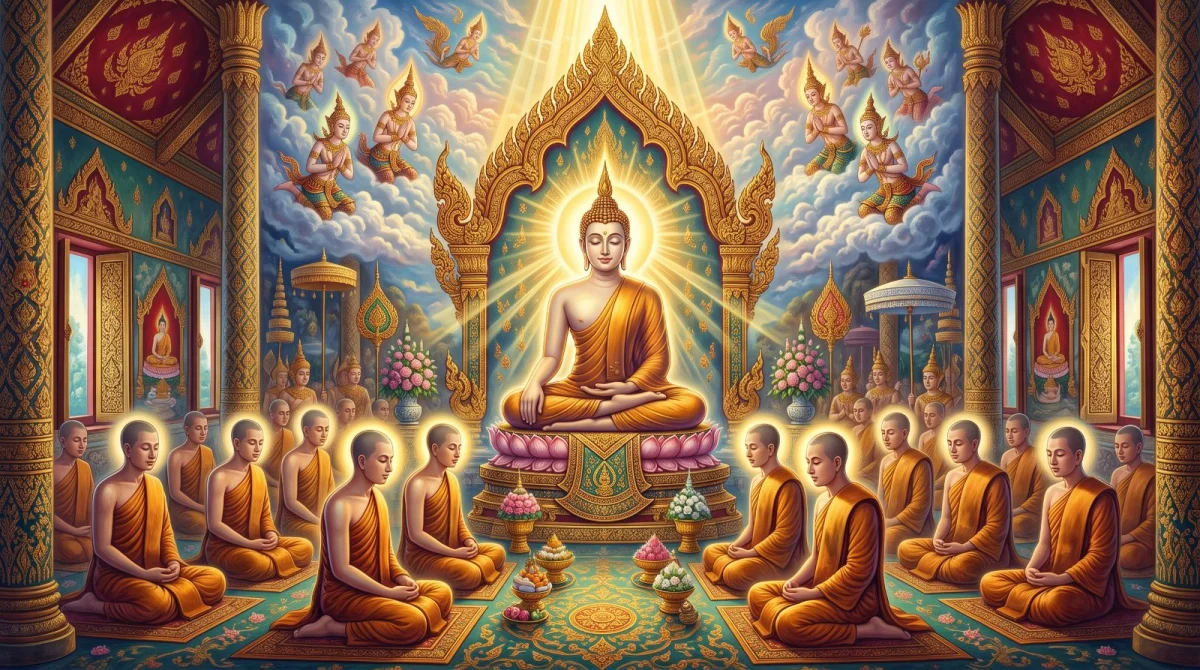
Chabbisodhanasuttaṃ
When a monk declares final knowledge, one should neither rush to approve nor to reject, but ask about the four kinds of expression, the five aggregates subject to clinging, the six elements, the internal and external bases, and the removal of conceit — then listen for whether the answers are those of one truly liberated.
In the Chabbisodhana Sutta of the Majjhima Nikāya, the Buddha says that if a monk declares final knowledge — "Birth is destroyed, the holy life has been lived, what had to be done has been done, there is no more coming to any state of being" — the monks should neither approve nor reject his words at once, but question him point by point.
The questions cover the four kinds of expression — the seen, the heard, the sensed and the cognized — the five aggregates subject to clinging, the six elements, the internal and external bases, and how one knows and sees so that there is no I-making, mine-making or underlying tendency to conceit. For each, the Buddha also shows how a monk whose taints are truly destroyed would answer.
In answering the last question, the monk recounts his training in order: hearing the Dhamma, going forth, keeping the precepts, restraining the senses, abandoning the hindrances, attaining the jhānas, and finally knowing the noble truths and destroying the taints. When he answers like this, the monks should rejoice and approve his words.
When a monk declares final knowledge, the Buddha says one should neither approve nor reject, but put questions respectfully to examine it.
When someone claims to be enlightened, or news spreads of an attainment, suspend judgement. Don't share it excitedly, and don't attack it out of irritation.
He is asked how he knows and sees so that his mind is liberated from the taints regarding the seen, heard, sensed and cognized. One truly liberated answers that he dwells regarding them unattracted, unrepelled, independent, unbound, released, detached, with a mind free of barriers.
Check how much what you saw or heard today pulled you towards liking or disliking. Freedom from that pull is a more honest measure than words.
One truly liberated answers that he has known form, feeling, perception, formations and consciousness as feeble, fading away and offering no comfort, and with the destruction, cessation and relinquishing of desire, attachment, clinging and underlying tendencies regarding them, he understands that his mind is liberated.
When you rely on your body or feelings as your main refuge, recall that they are always changing. A steadier refuge is a mind that doesn't cling.
Earth, water, fire, air, space and consciousness. One truly liberated answers that he has treated these elements as not self, and has not taken anything based on them as self; clinging and underlying tendencies regarding the six elements are destroyed.
When a bodily complaint like back pain annoys you, see it as elements working according to causes, without adding the story "Why me?"
Eye and forms, ear and sounds, nose and odours, tongue and flavours, body and tangibles, mind and mental objects. One truly liberated answers that desire, lust, delight, craving and clinging regarding the eye, forms, eye-consciousness and things cognizable through eye-consciousness are destroyed; likewise for the other doors.
Before scrolling further, ask whether you're looking because you need to, or because enjoyment is carrying you along.
Asked how he knows and sees so that there is no I-making, mine-making or underlying tendency to conceit, one truly liberated recounts that he was once a householder, heard the Dhamma and gained faith, saw household life as confining and went forth; he kept the precepts, was content, restrained his senses, had mindfulness and clear comprehension, dwelt in seclusion, abandoned the five hindrances, attained the four jhānas, then directed his mind to the knowledge of the destruction of the taints, knew the four noble truths, and his mind was liberated.
When someone tells of their spiritual progress, notice whether they describe a path in verifiable steps, or only special experiences with no clear basis.
When the monk answers like this, the Buddha says the monks should rejoice and approve his words as well spoken. The examination is not fault-finding; it is so that acceptance rests on truth. This point is for overall understanding.
When you check and find someone really has done well, praise them wholeheartedly, without hunting for more faults to save face.
This discourse describes a procedure within the Saṅgha, not a test for lay people to administer to anyone. But the attitude it shows is very useful: when you hear a claim of spiritual attainment, there's no need to believe it excitedly at once, nor to mock it at once.
What we can observe is whether words and way of life agree, whether the person is free of attachment to what is seen and heard, and whether they explain the path step by step in line with the teaching — rather than relying on mystery or boasting.
On the other side, the discourse reminds us that spiritual progress is measured not by announcements but by whether conceit has really diminished.
Tap to read the actual passage on the page cited.
The Kathāvatthu records debates that clear up mistaken views one point at a time. Its first debate asks whethe…
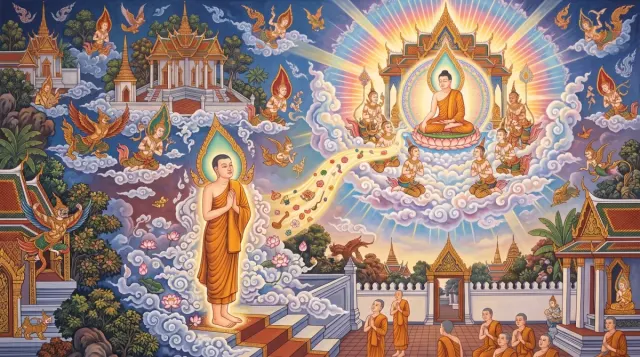
The final verses of the Theragāthā. Vaṅgīsa, a former poet, recalls how he used to wander drunk on poetry unti…

Four customs of the noble ones — contentment with what one receives, and delight in training. The kind of "eno…
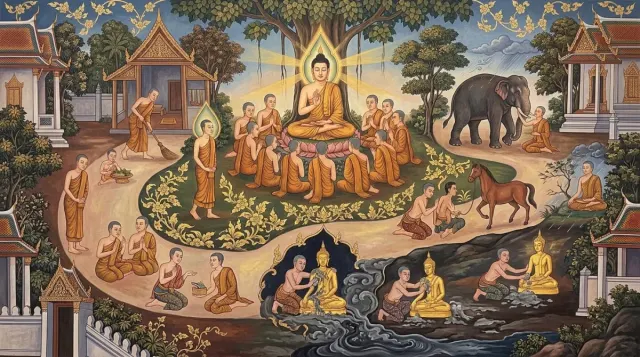
Jhāna is only pleasant abiding here and now, not yet effacement of defilements. True effacement is resolving, …