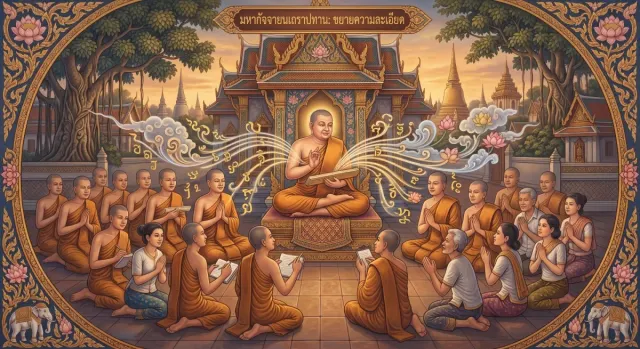
The Apadāna of Mahākaccāna: Expanding the Brief So People Understand
MahākaccāyanattherāpadānaṃThe past lives of Venerable Mahākaccāna in two Apadāna passages: a hermit who heard the Buddha praise a discip…


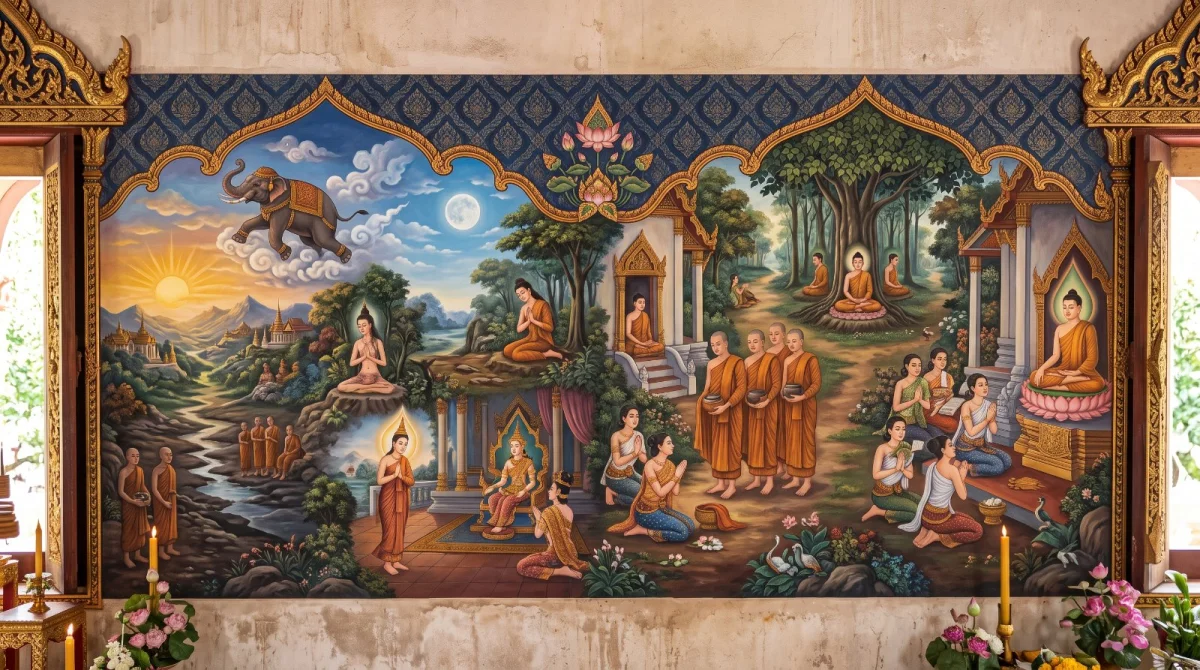
Aṭṭhānapāli
A series of sayings in the Book of Ones of the Aṅguttara Nikāya on what is "impossible, without opportunity": a person accomplished in view will not take anything as permanent or commit the gravest deeds; two Buddhas do not arise together in one world-system; misconduct does not bring a desirable result; and a woman cannot be a Fully Awakened Buddha, a wheel-turning monarch, Sakka, Māra or Brahmā. This page explains the last point in context.
In the Aṭṭhāna Pāḷi of the Book of Ones, Aṅguttara Nikāya, the Buddha tells the monks in a series that one thing "is impossible, there is no opportunity for it", while its opposite "is possible". The series comes right after the Etadagga Pāḷi, the list of outstanding disciples among monks, nuns, laymen and laywomen.
The content falls into groups. A person accomplished in view (the commentary explains this as a stream-enterer) will not take any formation as permanent or pleasant, nor any thing as self, and will not commit the gravest deeds such as killing mother or father, though an ordinary person may. Two Fully Awakened Buddhas, or two wheel-turning monarchs, do not arise together in one world-system. A woman cannot be a Fully Awakened Buddha, a wheel-turning monarch, Sakka, Māra or Brahmā, while a man can. Misconduct does not bring a desirable result, and good conduct does not bring an undesirable one.
The passage on women must be read exactly as it stands. It speaks of five specific positions; it does not say women cannot attain awakening. In the Vinaya, when Ānanda asks, the Buddha affirms that a woman who goes forth can realise the fruits from stream-entry up to arahantship. This page therefore presents both side by side.
A person accomplished in view will not take any formation as permanent or pleasant, nor any thing as self. That is impossible; an ordinary person may still take things that way.
When you grieve that something you love has changed, notice whether you had quietly assumed it would stay the same forever.
A person accomplished in view will not kill mother, father or an arahant, will not with a hostile mind draw the Tathāgata's blood, will not split the Saṅgha, and will not take another teacher. An ordinary person still might.
Right view works like a fence that keeps us from doing something terrible. Study and training the mind are protection in advance.
Two Fully Awakened Buddhas do not arise at the same time in one world-system; nor do two wheel-turning monarchs. This point is for overall understanding.
This point invites us to see that meeting the Buddha's teaching is a rare opportunity worth using well.
The text says it is impossible for a woman to be a Fully Awakened Buddha or a wheel-turning monarch, while it is possible for a man. "Possible" means it can happen, not that every man can become one.
When a passage feels unfair, read slowly to see exactly what it is about, before concluding more than the text says, whether in accepting it or rejecting it.
The text continues that a woman cannot be Sakka, Māra or Brahmā. These are ruling positions in the cosmology of ancient India, which society then pictured as male roles, like the role of king. This point is for overall understanding.
When reading ancient scriptures, distinguish the picture of society they reflect from the Dhamma they teach. The two are not necessarily the same thing.
A desirable, pleasing, agreeable result cannot arise from misconduct of body, speech or mind, and an undesirable result cannot arise from good conduct. One endowed with misconduct does not go to a good destination because of that misconduct; one endowed with good conduct does not go to a bad destination because of that good conduct.
Use this principle as a compass for choosing your own actions, not to judge what someone who is struggling must have done wrong.
In the Chapter on Nuns of the Vinaya, Ānanda asks whether a woman who goes forth is able to realise the fruits from stream-entry up to arahantship, and the Buddha says she is. And in the Etadagga Pāḷi, just before this series, he names thirteen outstanding nuns, such as Khemā, foremost in wisdom; Uppalavaṇṇā, in psychic power; Paṭācārā, in the Vinaya; and Dhammadinnā, in teaching the Dhamma.
When someone quotes the passage on positions to claim that women are inferior, set this affirmation beside it. The highest goal of Buddhism is open to everyone.
The main principle of this series is useful every day: telling what is possible from what is not. Hoping for a good result from a bad action, for example, is something the text says cannot happen. Knowing this keeps us from fooling ourselves.
As for the passage on women, an honest reading takes in both what the text says and what it doesn't say. The positions named are all ruling positions in the cosmology and social order of ancient India, which people of that time pictured as male roles. But on what matters most in Buddhism, the ending of suffering, the Buddha said plainly that women can do it, and he honoured many outstanding nuns.
In real life, no passage in any scripture should be used as a reason to look down on women or anyone else. Virtue, concentration and wisdom can be trained by everyone alike.
Tap to read the actual passage on the page cited.
The past lives of Venerable Mahākaccāna in two Apadāna passages: a hermit who heard the Buddha praise a discip…

A lay follower offers garlic to the nuns, two or three bundles each, but Thullanandā has far more carried off …

King Ajātasattu asks whether going forth yields any fruit visible in this life. The Buddha answers step by ste…

King Bimbisāra asks that monks gather on the eighth, fourteenth and fifteenth of the fortnight as other sects …