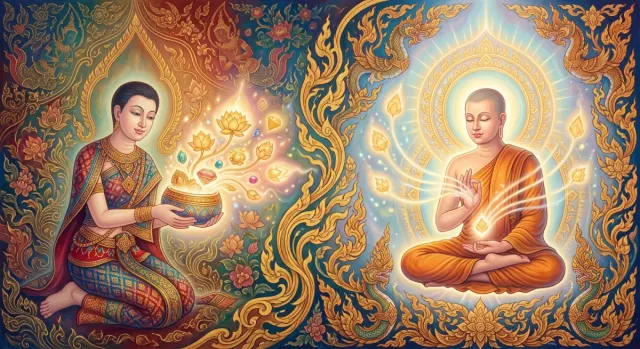
The Chapters on Gifts and Welcome: Giving Things and Giving Dhamma
Āmisadānañca dhammadānañcaGiving, offering, sharing, helping, welcoming, seeking, and even growth and treasures, all come in two kinds: …


Cūḷahatthipadopamasuttaṃ
A skilled elephant tracker does not conclude from a big footprint until he sees the elephant itself. True confidence in the Buddha comes from practising until you see the results yourself, not from others' praise.
In the Cūḷahatthipadopama Sutta of the Majjhima Nikāya, the wanderer Pilotika tells the brahmin Jāṇussoṇi that he has confidence in the Buddha because he has seen four "footprints": learned nobles, brahmins, householders and recluses who prepared questions to refute him, yet on hearing the Dhamma did not even ask them, and became his disciples.
When Jāṇussoṇi reports this, the Buddha says the footprint simile is not yet complete. A skilled elephant tracker who sees a large footprint in the forest does not yet conclude it belongs to a great bull elephant, because some female elephants there also leave large footprints. He follows the trail, sees scrapings high up and tusk marks, and still does not conclude — until he sees the bull elephant itself.
The Buddha then sets out the gradual training: hearing the Dhamma, gaining faith, going forth, virtue, sense restraint, mindfulness and clear comprehension, contentment, abandoning the five hindrances, up to the four jhānas and the true knowledges. He calls each stage a footprint of the Tathāgata, yet the noble disciple does not jump to a conclusion. Only when the mind is liberated and knows it is liberated does he conclude: the Blessed One is fully awakened, the Dhamma is well proclaimed, the Saṅgha practises well.
A skilled tracker knows a large footprint could belong to certain female elephants, so he does not conclude too soon. This caution isn't disbelief; it is honesty toward the evidence.
When you hear a method is excellent, tell yourself: "This is a footprint; I still need to follow it and see."
Pilotika gained confidence from seeing four kinds of wise people accept the Buddha. That is good evidence, but still indirect, because it is others' experience, not his own.
Good reviews or celebrity recommendations can spark interest, but shouldn't be the final reason for a decision.
The Buddha lays out the training step by step: virtue, sense restraint, mindfulness and clear comprehension, contentment, dwelling in seclusion and abandoning the five hindrances. Whoever wants to know whether the teaching is true must walk this trail themselves.
Pick the step you can do now — for example, keeping the five precepts purely first — then see how life changes.
The four jhānas, recollection of past lives and the divine eye he calls footprints, scrapings and tusk marks of the Tathāgata, yet the noble disciple does not conclude from them. Even lofty inner experiences are not the final word.
If you have a special experience in meditation, don't rush to conclude you've attained something. Keep watching whether defilements in real life decrease.
On knowing the four noble truths, with the mind liberated from the taints and knowing it is liberated, the noble disciple concludes that the Buddha is truly awakened, the Dhamma truly good and the Saṅgha truly practising well. Such confidence needs no one else's confirmation.
The firmest confidence in the Dhamma comes from results seen in your own mind, even small ones, such as genuinely getting angry less.
This discourse is a fine example of not believing simply because famous people believe. However impressive the indirect evidence, the Buddha himself says it is not enough.
It applies to everything: choosing a teacher, choosing a practice, even judging your own progress. Calm or special experiences in meditation are still only footprints, not the elephant. Look at the real result: are defilements decreasing?
Tap to read the actual passage on the page cited.
Giving, offering, sharing, helping, welcoming, seeking, and even growth and treasures, all come in two kinds: …
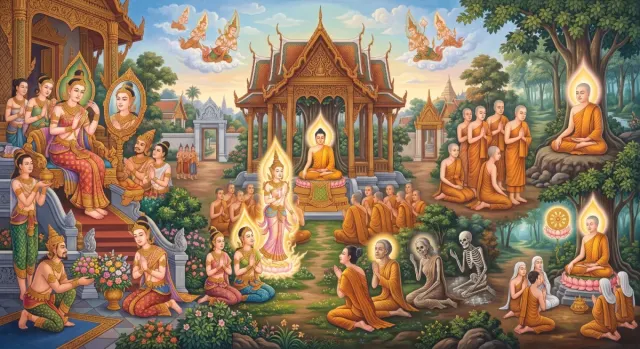
Queen Khemā, wife of King Bimbisāra, proud of her beauty, will not visit the Buddha for fear he will speak aga…
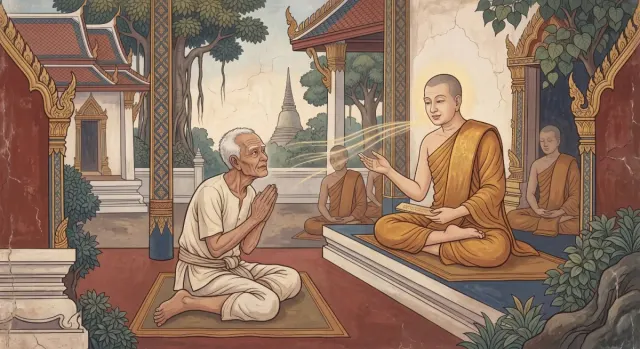
An old man with dim eyes and poor hearing asks for a Dhamma he can understand before he dies. The Buddha answe…
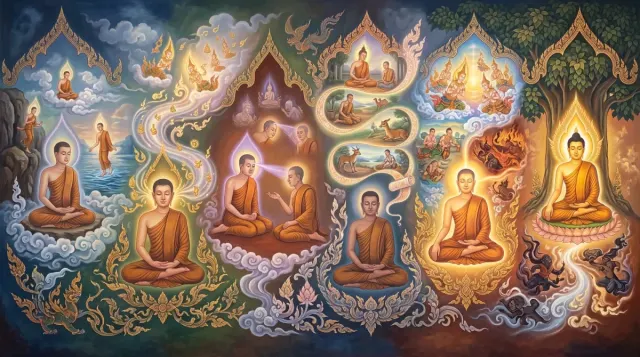
Six kinds of higher knowledge — the first five are side effects of concentration; only the sixth truly ends su…