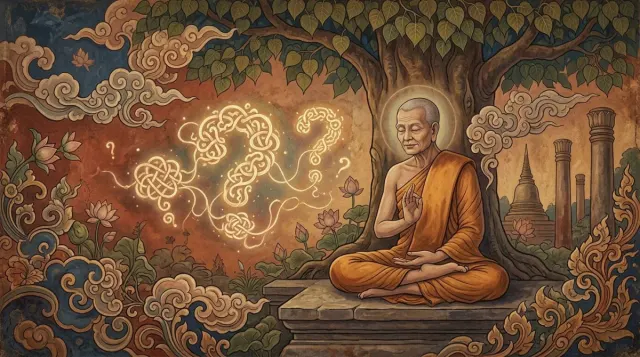
Dhotaka: No One Can Free Us from Doubt
DhotakamāṇavapucchāDhotaka asks the Buddha to free him from doubt. The Buddha says he cannot free anyone from doubt; by knowing t…


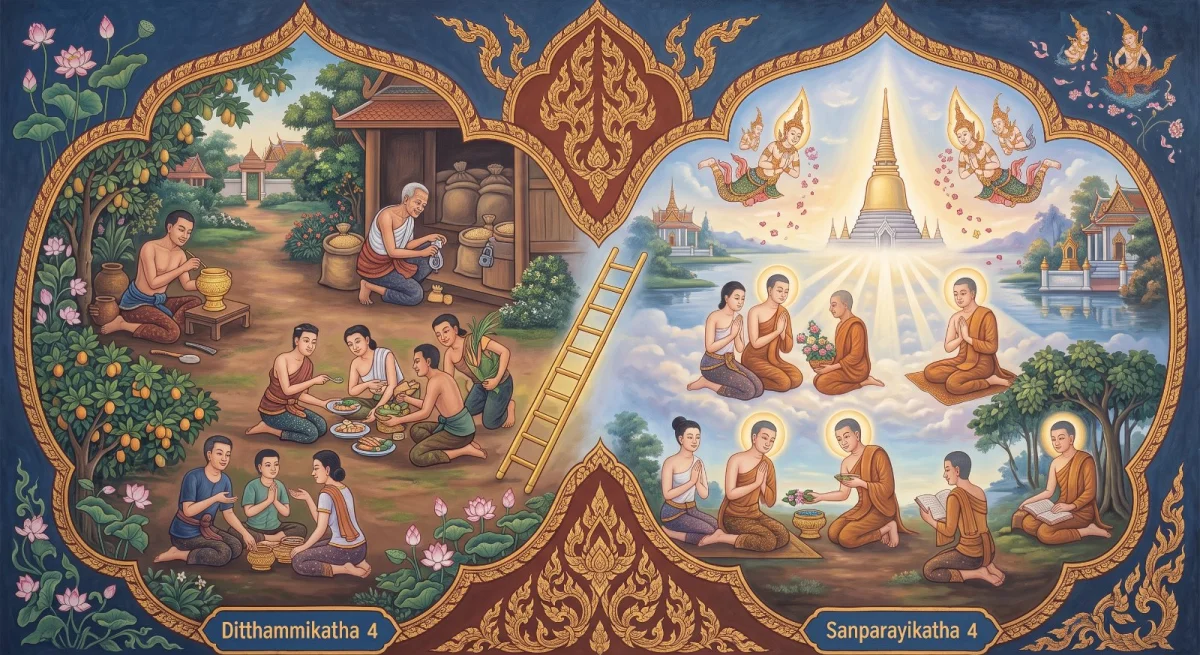
Diṭṭhadhammikatthasaṃvattanikā · samparāyikatthasaṃvattanikā
The Buddha's answer for working people with families — work hard, protect what you earn, keep good friends, live within your means, and don't forget faith, virtue, generosity and wisdom.
In the Book of Eights, Dīghajāṇu the Koliyan tells the Buddha that he is a householder living at home, sleeping crowded with children, using sandalwood and wearing garlands, and asks for teachings that lead to welfare and happiness both in this life and the next. The Buddha answers with eight qualities in two sets of four.
The first set brings benefit in the present life — remembered in Thai as "u, a, ka, sa". The second brings benefit hereafter. In the same discourse the Buddha also teaches four channels through which wealth is lost — womanising, drinking, gambling and bad friends — comparing them to a great reservoir with four inlets and four outlets: close the inlets and open the outlets, and the reservoir runs dry.
Being industrious in honest work, not lazy, and using wisdom to find good ways of working — able to organise and to do it oneself.
Diligence in the discourse comes paired with wisdom. Each year, learn one skill that makes your work better, rather than just working longer.
Diligently guarding rightfully earned wealth so it isn't lost to kings, thieves, fire, water or unloved heirs.
In today's terms: keep an emergency fund, have necessary insurance, store important documents safely, and beware of online scams.
Associating and conversing with those accomplished in faith, virtue, generosity and wisdom, and learning from their example.
Look at the five people you spend most time with and where they lead you in spending and in living.
Knowing wealth's income and outgo and living neither extravagantly nor too frugally — like a goldsmith who, holding the scales, knows whether they tip too far — so that income exceeds expenditure.
Record income and expenses for three months to see which way your "scales" lean. Balance starts with knowing the real numbers.
Having faith in the awakening of the Tathāgata — the first benefit hereafter.
The faith that works in practice is confidence that doing good bears fruit, which lets you choose the honest way even when a shortcut looks easier.
Refraining from killing, stealing, sexual misconduct, false speech and intoxicants.
Virtue is the best risk-management system there is. Many lawsuits, debts and broken families begin with breaking one precept or another.
A mind free of stinginess, delighting in giving and sharing, responsive to requests.
Set a proportion for giving in your budget at the start of the month, rather than giving only what's left over.
Having the noble wisdom that sees rise and fall, penetrates defilements and leads to the complete end of suffering.
Remember that everything you accumulate also rises and falls. Use it as a tool for a good life, but don't let it become who you are.
This discourse is the most complete personal-finance teaching in the Tipiṭaka: earn diligently and honestly, protect what you earn, stay close to people who lead you well, and keep spending balanced with income. Read it alongside "The Five Uses of Wealth" and "The Six Channels of Ruin".
What sets it apart from ordinary financial advice is the second set. The Buddha doesn't stop at "how to prosper", but continues with faith, virtue, giving and wisdom — because wealth not guided by these four ends up harming its owner.
Tap to read the actual passage on the page cited.
Dhotaka asks the Buddha to free him from doubt. The Buddha says he cannot free anyone from doubt; by knowing t…

Instead of suppressing bandits by punishment, the chaplain advised the king to give seed to farmers, capital t…

Twenty-one short suttas that use the same ten courses of action but call them by a different name each time: b…

The final Vibhaṅga opens with plain questions — how many aggregates, how many sense bases — then asks the same…