
The Eight Grounds for Robe-Cloth: It Goes to Whom the Giver Intended
Aṭṭhimā bhikkhave mātikā cīvarassa uppādāyaThe Chapter on Robes ends with eight headings saying who should share the robe-cloth that comes in, according …


Ānāpānassatisamādhi
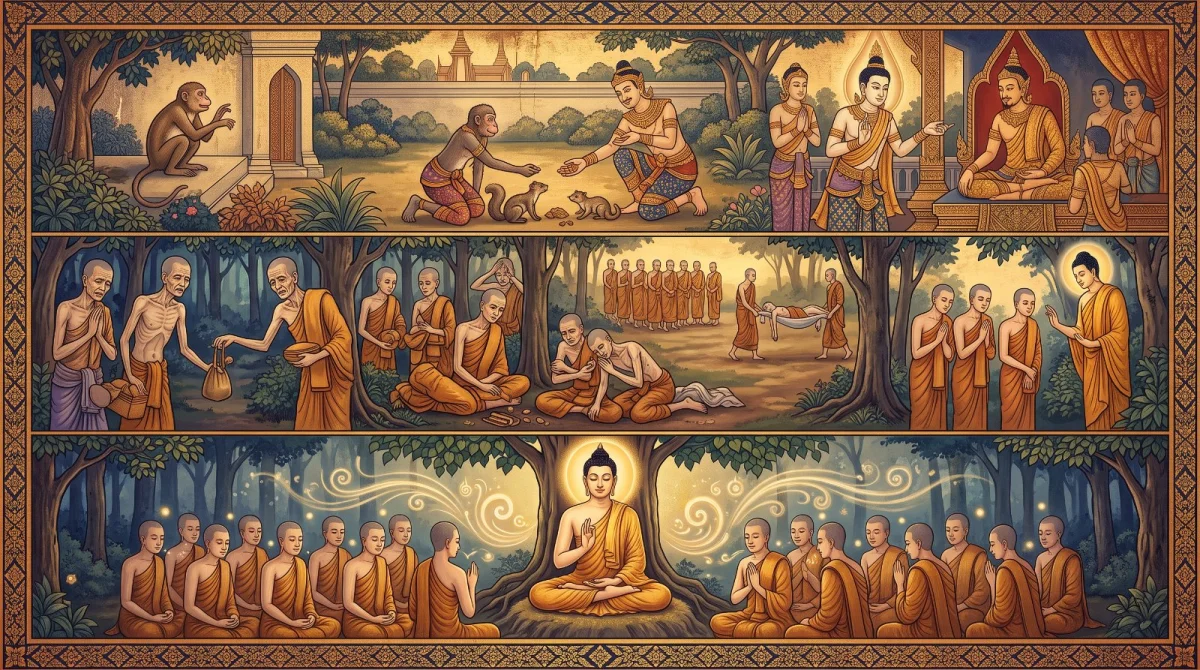
When misapplied meditation on unattractiveness led monks at Vesālī to loathe their own bodies, with tragic loss of life, the Buddha called the Saṅgha together and taught mindfulness of breathing, a practice that is peaceful, sublime and a pleasant abiding.
At the start of the third pārājika in the Mahāvibhaṅga of the Vinaya Piṭaka, the Buddha, staying in the Great Wood near Vesālī, gives many talks on unattractiveness (asubha) and praises its development, then withdraws into seclusion for half a month. Many monks throw themselves into asubha practice so intensely that they feel oppressed, repelled and disgusted by their own bodies. As a result many monks die: by their own hand, at each other's hands, and at the hands of a man named Migalaṇḍika whom some asked to end their lives.
The text says Migalaṇḍika was struck by heavy remorse afterward, but a deity "belonging to Māra's retinue" told him he had made great merit by helping those who had not crossed over to cross. The text thus places the idea that death is a way of helping people escape suffering in the mouth of Māra, as a delusion that leads astray.
When the Buddha emerged from seclusion and saw that the Saṅgha seemed diminished, Ānanda explained what had happened and asked him to teach another method. The Buddha had all the monks living around Vesālī gathered together and taught concentration by mindfulness of breathing as peaceful, sublime, refreshing and a pleasant abiding. He then laid down the third pārājika on killing a human being, which this page mentions only as context.
The Buddha gave talks on unattractiveness and praised its development, then withdrew for half a month, with only the monk who brought his almsfood allowed to visit. The monks trained intensely on their own with no one watching how it affected them.
When starting any new intensive practice, whether meditation, fasting or exercise, have someone knowledgeable keep an eye on you and be available for questions. Don't push hard alone.
The text says those monks felt oppressed, repelled and disgusted by their own bodies. Asubha, meant to loosen infatuation with the body, turned into intense self-disgust and led to loss of life.
Watch the effect of your practice on your mind. If you feel lighter and freer afterward, you are on the right track. If you feel more self-disgust or hopelessness, stop and seek advice.
Migalaṇḍika felt heavy remorse, but a deity of Māra's retinue told him he had made merit by helping people cross over. The text thus shows the idea of glorifying death as release from suffering to be Māra's deception.
If you meet messages or people that make death seem beautiful or a way out, recognise that voice as one leading astray, and turn toward people who can help you keep living.
When the Buddha asked why the Saṅgha seemed diminished, Ānanda told him honestly, then asked him to teach another method by which the Saṅgha could be established in final knowledge. The Buddha had Ānanda gather all the monks living around Vesālī in the assembly hall.
When you see that the method in use is hurting people, have the courage to say so plainly and ask for a new approach, whether in your family, at work or in a practice group.
The Buddha said that concentration by mindfulness of breathing, developed and cultivated, is peaceful, sublime, refreshing and a pleasant abiding. He then set out knowing the breath in and out, from knowing long and short breaths and calming bodily formations through to contemplating impermanence and relinquishment.
Try sitting with the breath for five minutes a day, simply knowing breathing in, breathing out, long or short, without forcing it. It can be done anywhere and needs no equipment.
He compared it to the dust and dirt swirling in the last month of the hot season, which a great unseasonal rain settles at once; in the same way, mindfulness of breathing quickly stills unwholesome states as they arise.
When your mind is scattered or heated, breathe slowly and follow about ten breaths, letting the dust in the mind begin to settle before deciding anything.
After this event the Buddha laid down the third pārājika forbidding monks from deliberately taking human life. Later, when a group of monks praised the beauty of death to a sick lay follower and he died, the Buddha added that praising death or inciting someone to die is also a pārājika. This point is for overall understanding.
Words really affect people's lives. When talking with someone seriously ill or in deep distress, say what helps them feel valued and not alone.
Among the case rulings under the same rule is a monk, overwhelmed by discontent with the holy life, who tried to end his own life. The Buddha said, "A monk should not throw himself down"; one who does commits an offence of wrongdoing (dukkaṭa). The Vinaya thus does not accept harming one's own life. This point is for overall understanding.
Mental suffering so heavy that you want to escape life deserves care, not solitary endurance. Tell someone you trust or contact a helpline.
The key lesson is that a practice good in itself can do harm when done wrongly, too intensely or without supervision. Asubha practice is meant to loosen attachment to the body, not to make you hate yourself. If any practice leaves you feeling disgusted with yourself or steadily more despondent, stop and consult a teacher or professional.
The Buddha's answer was not to practise harder, but to bring everyone together and give a gentler method: knowing the breath coming in and going out, which anyone can do anywhere and which quickly calms the mind, like an unseasonal rain settling the dust.
If you or someone close to you feels self-loathing or has thoughts of self-harm, please talk to someone you trust, or call the Thai mental health hotline 1323; outside Thailand, contact a local helpline.
Tap to read the actual passage on the page cited.
The Chapter on Robes ends with eight headings saying who should share the robe-cloth that comes in, according …

Six qualities that let one attain wholesome qualities not yet attained and develop those already attained: kno…

King Ajātasattu put the same question to six rival teachers: what visible fruit does the ascetic life bear her…

Thirty-eight things that make a life prosper, running from the nearest matters out to an unshakeable mind — bl…