
The Discourse to Sabhiya: A True Monk, Ascetic or Brahmin Is Measured by the Mind
SabhiyasuttaṃThe wanderer Sabhiya brings questions that famous teachers couldn't answer to the Buddha: what makes one a bhi…


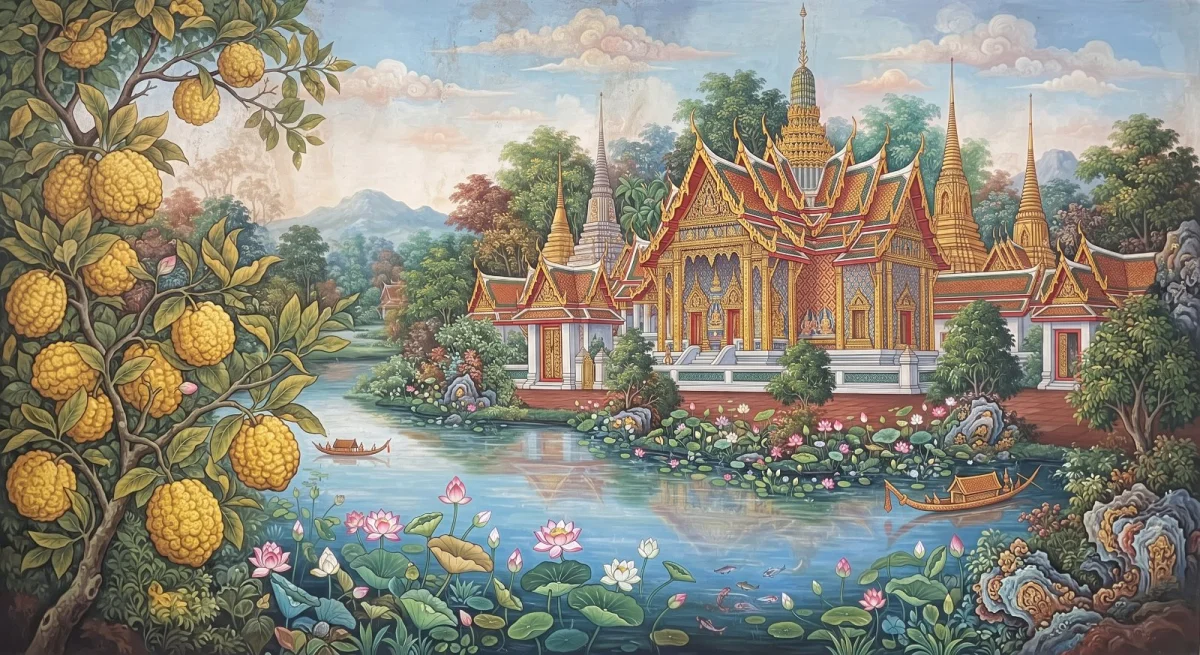
Kukkujātakaṃ
Three similes for leaders. A roof peak stays up because the rafters hold it, and a leader stands because of steadfast friends. A citron must be peeled skilfully to taste good, and wealth must be gathered without extortion. A lotus is unstained by mud, and one who judges honestly and without rashness is unstained by wrongdoing.
In the Kukku Jātaka of the Sattakanipāta, Khuddaka Nikāya, the canonical text consists of seven verses forming three sets of similes. The first asks how a roof peak made of heartwood stays in place without falling, and answers that thirty heartwood rafters are set evenly against one another and hold it firmly. So too a wise leader, well supported by friends and counsellors who are steadfast, undivided and upright, does not fall from fortune.
The second says that if a person with a knife doesn't peel a hard-skinned citron properly, it turns bitter; peeled well, it tastes good; peeled only thinly, it is still unpleasant. So too a wise leader should gather wealth in villages and towns without rashness, following the Dhamma and not harming others. The third says that just as a lotus growing in a pond is not stained by mud, dust or water, so one who judges honestly, is not rash, and whose deeds are pure is not stained by defiled action.
The story comes from the Jātaka commentary. According to the commentary, a king was ruling unjustly and extorting heavy taxes. The Bodhisatta, his minister, was looking for a way to advise him. When the king visited his park, saw a pavilion whose roof was not yet finished, was presented with citrons, and came to a lotus pond, the Bodhisatta used each sight as a simile. From then on the king ruled righteously. None of these details are in the verses.
The roof peak is made of good heartwood, yet the verse asks how it stays up without falling. The strength of the peak alone isn't enough. According to the commentary, the king saw the unfinished pavilion and, afraid the peak would fall on him, asked this question.
When a project succeeds, ask what is holding that success up, rather than assuming it's all down to your own ability.
Thirty heartwood rafters set evenly against each other hold the roof peak well, and pressed together by their strength, it does not fall. The commentary explains that without the peak the rafters cannot stand, and when the rafters separate the peak falls; each depends on the other.
In a team, value the people working behind the scenes as much as those out front. If the supporting base splits apart, the people on top can't stay up either.
A wise leader, well supported by friends and counsellors who are steadfast, undivided and upright, does not fall from fortune, like a roof peak borne up by its rafters. The qualities the verse names for those around the leader are steadfastness, unity and integrity.
When choosing people to work closely with you, look at their honesty and their ability to work with others, not just at whether they always agree with you.
A citron has a hard skin. If the person with a knife doesn't peel it properly, it turns bitter; peeled well, it tastes good; peeled only thinly, it is still unpleasant. According to the commentary, citrons were brought as a gift, and the Bodhisatta used them as a simile for levying taxes the right way.
When you need your team to take on more work, or need to raise prices for customers, think about a fair approach and explain the reasons, rather than imposing it all at once and souring the whole relationship.
A wise leader gathers wealth in villages and towns without rashness, following the Dhamma and bringing prosperity without harming others. The commentary compares this to termites building a mound and bees gathering pollen, accumulating gradually without destroying the source, and adds the ten royal virtues.
A good business earns profit the way bees gather pollen: customers still benefit and come back, rather than being squeezed once and never returning.
A lotus grows in a pond, yet mud, dust and water don't stain it. So too one who judges honestly, is not rash, and whose deeds are pure and free of evil is not stained by defiled action. The commentary explains this as deciding cases by the Dhamma, without being swayed by bias.
Before deciding something where people stand to gain or lose, such as a team dispute or who gets an award, hear every side first and take care that personal liking doesn't decide the outcome.
Although the verses speak of a king, all three principles apply to leaders at every level, from team leads and business owners to the head of a household.
The roof peak simile reminds us that no leader stands alone. The citron simile reminds us that asking others for resources or effort takes skill: take what is appropriate, without destroying what is good. The lotus simile reminds us that one can live amid competing interests without being stained, if one judges honestly and without haste.
These similes are also an example of how to counsel someone in power. In the commentary, the Bodhisatta doesn't criticise the king directly; he uses what the king sees right in front of him so the king can reflect for himself.
Tap to read the actual passage on the page cited.
The wanderer Sabhiya brings questions that famous teachers couldn't answer to the Buddha: what makes one a bhi…

Three consecutive debates asking whether an arahant still has ignorance, doubt, or dependence on being instruc…
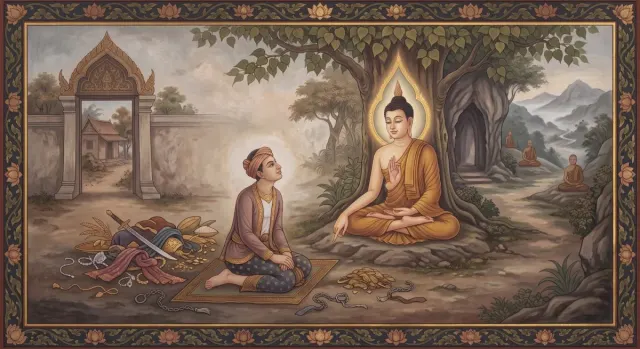
Potaliya the householder has handed his wealth to his sons and believes he has cut off all affairs. The Buddha…
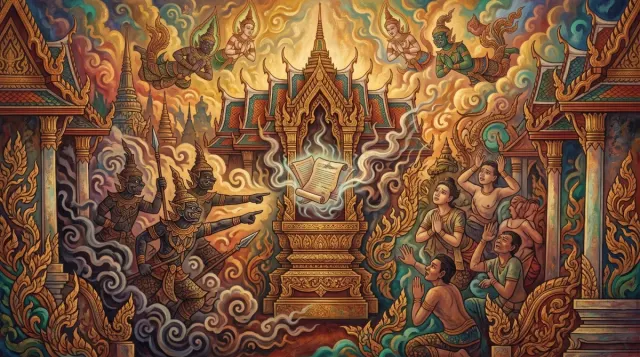
Two monks saw a pair of goats together, decided to call them by the names of people they resented, and claimed…