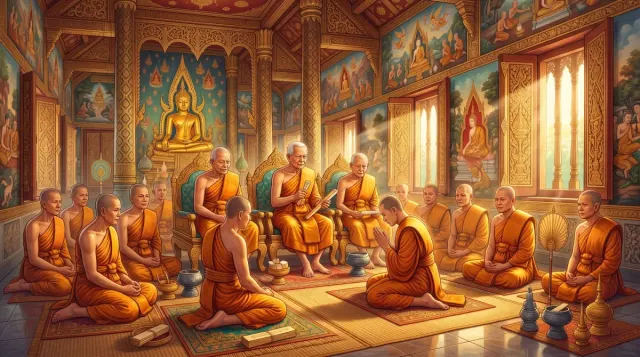
Choosing Who Sits on the Panel
Ubbāhikāya sammannitabboWhen a matter is too large for the whole assembly, the Saṅgha appoints a small committee instead. The Parivāra…


Dhiratthu taṃ yasalābhaṃ
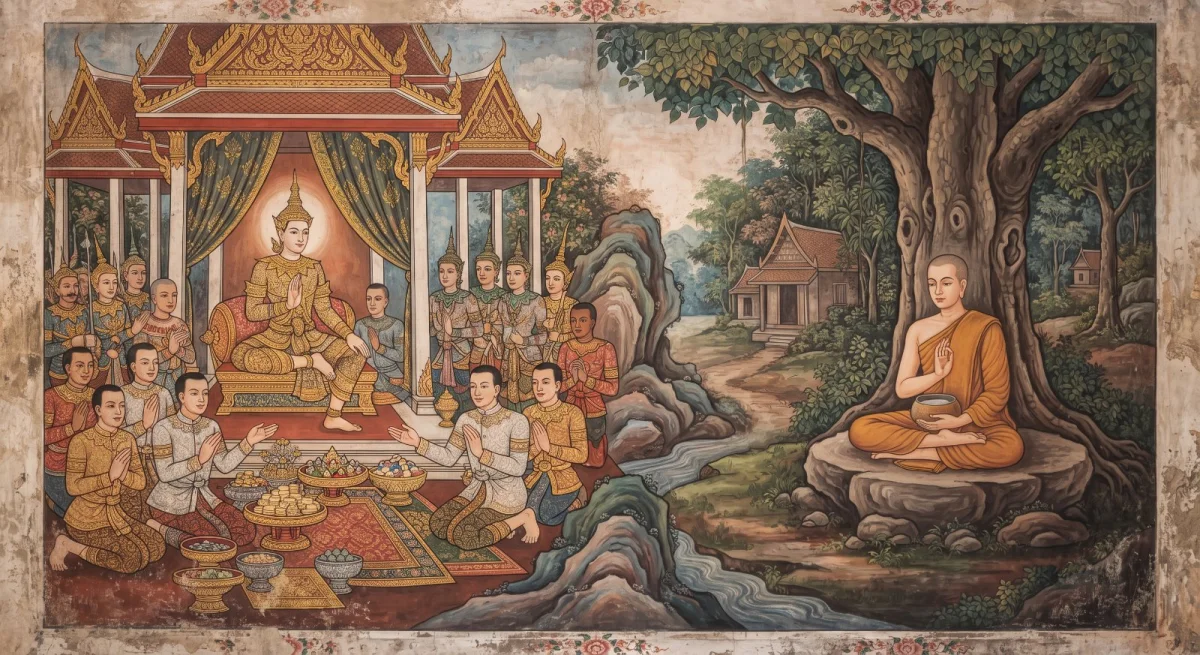
A king sends his minister Sayha to invite a friend who has gone forth to return and take high office, but he declines. Rank and wealth gained by degrading oneself or by unrighteousness are to be despised. Living on alms without harming anyone is better than a kingdom.
In the Sayha Jātaka of the Book of Fours, Jātaka, Khuddaka Nikāya, there are four verses. The speaker tells a minister named Sayha that a wise person would not want the whole earth ringed by the ocean if it came with blame, and despises rank, wealth and a livelihood gained by degrading oneself or by unrighteous conduct. Even going about with a bowl for alms is a better life than seeking by unrighteous means, and better even than kingship.
The background comes from the commentary. The Bodhisatta was the son of the royal chaplain, born on the same day as the king's son; they grew up together and studied the arts at Takkasilā together. When the prince became king, the Bodhisatta knew he would be made chaplain, but chose instead to go forth as a sage in the Himalayas. The king, missing his friend, sent the minister Sayha to invite him back to take the post. He declined, saying that what he had given up was like spittle already spat out, which the wise do not take back, and then spoke these verses.
According to the commentary, the Buddha told this story to a monk who was longing to disrobe, and it explains "degrading oneself" as giving up the happiness of jhāna to pursue rank. So the original setting concerns renunciants, but the principle of not trading integrity for position and wealth applies to everyone.
A wise person would not want the whole earth, ringed by the ocean like an earring, if it had to come with blame. The commentary explains the blame as being criticised for abandoning the happiness of the renunciant life to take up rank.
When you receive a tempting offer, imagine how the person who respects you most would speak of this decision.
The verse despises rank, wealth and a livelihood gained by degrading oneself. In this story it means giving up something better that one already has in order to take something lower.
If a new position means giving up what matters most in your life, weigh carefully whether you gain or lose more.
The second thing condemned is rank and wealth gained by unrighteous conduct. However great, it is still to be despised.
Set your line in advance: you won't sign, falsify figures, or hide information that harms others, whatever the bonus.
Even going forth homeless and taking a bowl for alms, that way of living is better than seeking by unrighteous means.
If you must choose between less income honestly earned and more income through cheating, adjust your spending to the honest income.
The last verse says: even going about with a bowl for alms, but not harming others in the world. Harmlessness is thus a key measure of a livelihood.
Ask whether your work causes anyone unnecessary hardship. If it does, look for ways to reduce it one point at a time.
Living without harming others is better even than kingship. The commentary says that Sayha pleaded many times without success, then paid his respects and went back to report to the king.
Once you've declined an offer, decline politely and firmly, without anger or contempt for the person who made it.
Many people have faced an offer that looks very good but requires lying, turning a blind eye to wrongdoing, or making themselves small to please the powerful. This jātaka offers a simple question: does what you'd gain come with blame you would deserve?
The jātaka doesn't say position or wealth are bad in themselves. What it condemns is how they are obtained. Gained honestly, there's no fault; if gaining them means degrading yourself or acting unrighteously, a simpler life is better.
For lay people, such choices must also consider those who depend on us. Sometimes declining means carefully finding a way out over time; you needn't abandon everything in a single day.
Tap to read the actual passage on the page cited.
When a matter is too large for the whole assembly, the Saṅgha appoints a small committee instead. The Parivāra…

The wanderer Vekhanassa exclaims "This is the supreme colour!" The Buddha compares lights from a firefly to th…

Rāhula asks for a brief teaching to practise alone. The Buddha asks the same set of questions — permanent or i…

The Dhammasaṅgaṇī opens with the mātikā, a list of 22 triads and 142 dyads for classifying phenomena — such as…