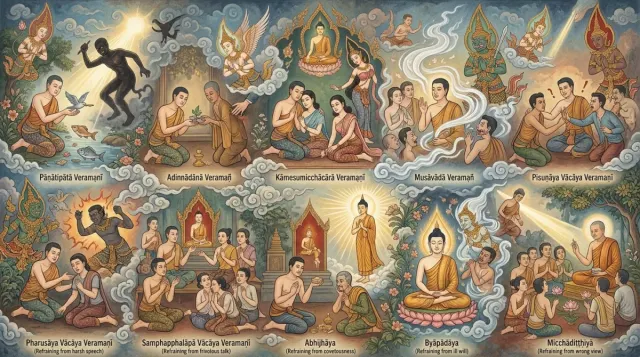
The Ten Wholesome Courses of Action
Dasa kusalakammapathāTen paths of good conduct covering body, speech and mind — finer-grained than the five precepts, because it in…


Isigilisuttaṃ
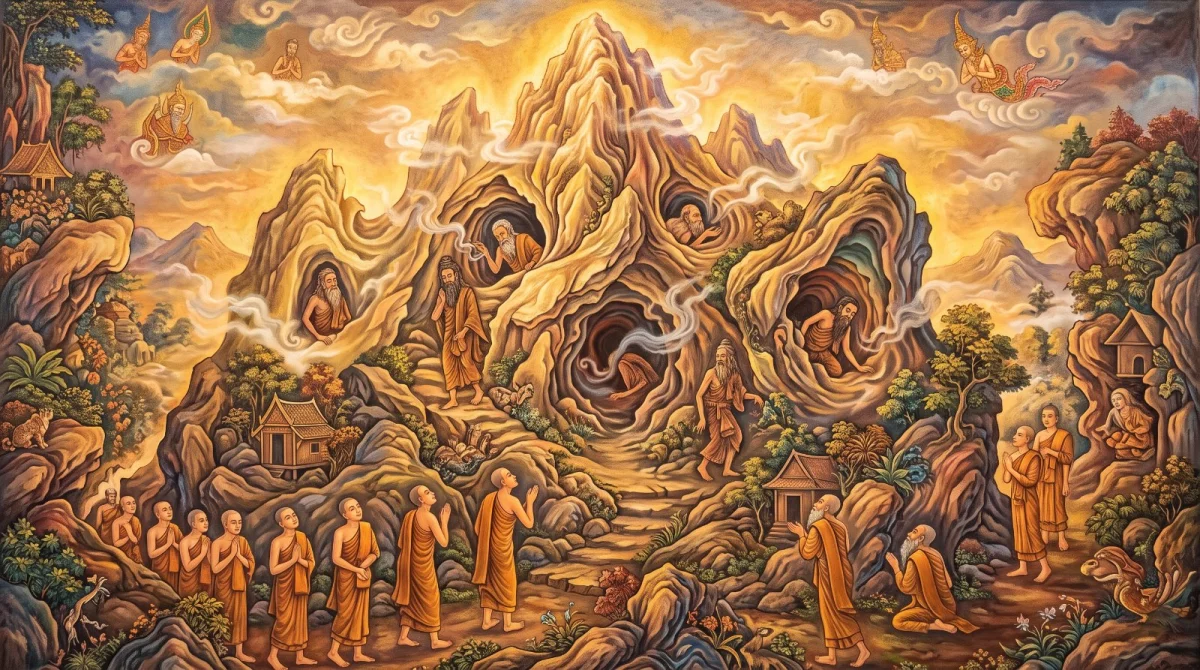
The mountains around Rājagaha once had other names, but Isigili has always had this one, because people saw five hundred paccekabuddhas walk into it and never saw them come out, so they called it the mountain that swallows sages. The Buddha names the paccekabuddhas one by one, then invites the monks to pay homage to those who have attained final nibbāna.
In the Isigili Sutta of the Final Fifty of the Majjhima Nikāya, the Buddha is staying on Isigili near Rājagaha. He points out the mountains around the city one by one, Vebhāra, Paṇḍava, Vepulla and Gijjhakūṭa, and says those mountains once had other names and designations, but Isigili has always had this name and designation.
He tells how five hundred paccekabuddhas once lived on this mountain for a long time. People saw them as they entered the mountain, but once they had gone in they were seen no more, so people said, "This mountain swallows these sages," and the name Isigili arose. He then names the paccekabuddhas, both one by one in prose and in a long verse.
The discourse ends by inviting the monks to pay homage to those paccekabuddhas who have attained final nibbāna, who have gone beyond all ties and whose virtues are immeasurable. Where on the mountain they lived, and what the other mountains used to be called, the discourse doesn't say.
The Buddha asks the monks whether they see Mount Vebhāra, Paṇḍava, Vepulla and Gijjhakūṭa, then says these mountains once had one name and another designation. The mountains are the same, but the words people use for them have changed.
When you cling to a title or label for yourself, remember it's only what people have agreed to call you, and it will change one day. What you really are lies in your actions.
Five hundred paccekabuddhas once lived on this mountain. People saw them walk in but, once inside, never saw them again, so they said the mountain swallows sages, and the name Isigili arose. No one gave it this name; it came from what people saw again and again.
Ask yourself: if the people around you gave you a nickname based on what they see you do every day, what would it be? Then adjust your daily actions to match the name you'd like to have.
The Buddha names the paccekabuddhas one by one, such as Ariṭṭha, Upariṭṭha, Tagarasikhī and Yasassī, and each name is followed by the same sentence: he was a long-time resident of this Isigili mountain. The place is remembered through those who once lived there peacefully.
How will your home, workplace or community be remembered because you lived there? Try to make where you are a little more peaceful, such as speaking more quietly and helping look after shared spaces.
The verse describes the paccekabuddhas as beings of essence, untroubled and without longing, who each attained awakening individually, free of the dart and highest among people. They didn't found a Saṅgha or proclaim a teaching as a fully awakened Buddha does.
Goodness doesn't need followers or a stage to be valuable. Someone who quietly does good where no one sees is doing something fully worthwhile.
In the verse, many names carry a description of virtue: one who cut the bonds of existence, one who cut off craving, one free of lust, one who reached the peaceful state, one who conquered Māra and his army, one whose mind is well liberated. All of them together are called those in whom the craving that leads to becoming is destroyed.
Write one phrase you'd like people to add after your name, such as "who never speaks ill behind others' backs" or "who keeps their word", and use it as a compass for small decisions each day.
The discourse ends: these and other paccekabuddhas of great power have destroyed the craving that leads to becoming; pay homage to them, who have gone beyond all ties, great seers, attained to final nibbāna, immeasurable.
Think of earlier generations who left good things you use every day: those who built the roads, teachers whose names you've forgotten, or ancestors. Thank them silently once, even without knowing their names.
This short discourse is about names. The names of mountains change with the ages, and so do the names of people. The titles, nicknames or reputation we hold on to today may be different words tomorrow. What lasts longer than a name is the goodness people remember.
The name Isigili arose because people repeatedly saw peaceful ones walking into that mountain. Our reputation likewise comes from what people see us do again and again, not from what we announce ourselves to be.
The end of the discourse invites us to pay homage to those who have passed, most of whom we know nothing of beyond their names. It is training in gratitude towards earlier generations who did good without anyone remembering them.
Tap to read the actual passage on the page cited.
Ten paths of good conduct covering body, speech and mind — finer-grained than the five precepts, because it in…
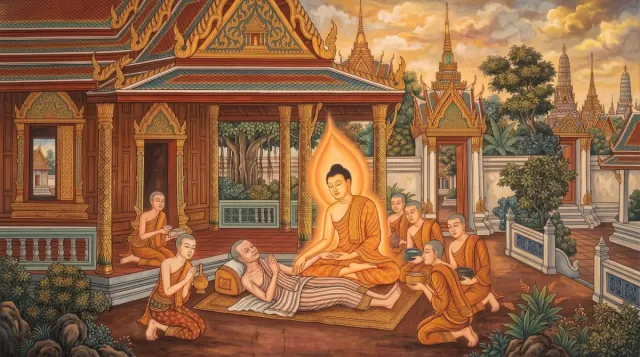
A monk sick with dysentery lay in his own urine and excrement with no one to care for him. The Buddha washed h…
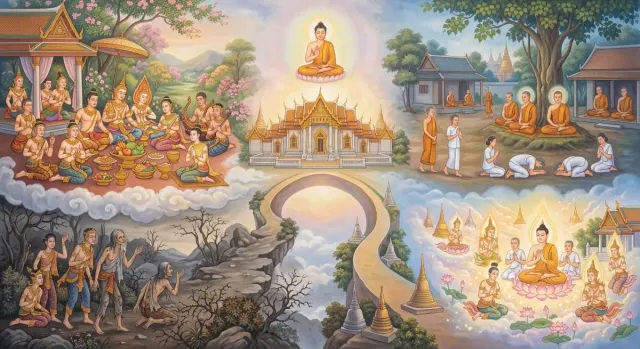
There are four ways of undertaking things, according to whether they are pleasant or painful now and what resu…

Puṇṇaka asks why people make offerings. The Buddha says they hope for this or that state and rely on ageing; t…